The Mile Dragić who consistently appears in Serbian business media, regulatory decisions, and major court proceedings is an industrialist and businessman based in Zrenjanin, Vojvodina. He is the owner of "Proizvodnja Mile Dragić", a company he has controlled since 1985 that manufactures ballistic protective equipment for military and police use, including protective vests and helmets. He later accumulated significant hospitality assets, most prominently a controlling stake in Hotel "Moskva" in Belgrade.
That is the Mile Dragić this article is about, and every figure below refers to him.
Why does disambiguation matter here? Because if you search his name in English you will find noise from unrelated profiles, and even in Serbian sources the name collision is real enough that the Competition Commission of Serbia (KZK) had to identify him by name and company in its formal documents to clarify beneficial ownership. The clearest identifiers: Zrenjanin address, defense/ballistics manufacturing, the "Pancir" litigation episode, and hotel group ownership in Belgrade, Kopaonik, and Vrnjačka Banja. If those elements are present, you have the right person.
The net worth estimate, straight up

The honest answer is that Mile Dragić is a private individual. Serbia does not require private businesspeople to publish personal wealth declarations, so there is no official number. What we have instead are company-level financial signals and asset disclosures in regulatory records, and we use those to build a range.
Based on the publicly available evidence as of April 2026, a credible estimated net worth for Mile Dragić sits in the range of 30 to 60 million EUR, with a central estimate around 40 to 45 million EUR. This is not a conservative guess made from thin air: it is grounded in specific financial outcomes and asset valuations discussed below.
But the range is deliberately wide because several key inputs, including the current market value of his hospitality portfolio and the long-run earnings of his manufacturing business, are not fully transparent.
One important caveat: a single-year accounting spike inflated reported company profit dramatically. Serbian outlet N1 reported that "Proizvodnja Mile Dragić" recorded a net profit of approximately 3.03 billion RSD in 2021, described as a "drastic" jump from very modest prior-year figures. That spike was tied to a court award or settlement effect arising from a long-running judicial dispute against the Republic of Serbia, not from recurring operational income. So that figure should not be read as annual earning power. Strip it out and the underlying business is profitable but far more modest. The net worth estimate above does not treat the 2021 windfall as a recurring income stream.
Where the money comes from
Defense and ballistics manufacturing
"Proizvodnja Mile Dragić" is the primary income engine. The blank" rel="noopener noreferrer">“Defense industry of Serbia” page lists “Proizvodnja Mile Dragić” among Serbian defense-sector firms, describing it as involved in uniforms, shoes, boots, and personal protection among other categories.
The company has been producing ballistic protective equipment since 1985, a remarkably long operating history for a private Serbian firm in a specialized defense-adjacent niche. Its products are used by Serbian military and police units, and it has pursued international positioning, appearing in Privredna Komora Vojvodine (PKV) industry catalogues as an export-oriented manufacturer. The Serbian Center for Demining (CZRS) is among the domestic institutional partners documented in cooperation with the firm.
Defense-sector suppliers with decades of institutional relationships tend to generate stable if unspectacular revenue, punctuated by larger contract wins. The exact annual revenue is not publicly disclosed, but the regulatory and media trail confirms consistent operations rather than a shell company.
The "Pancir" episode is the most discussed episode in the company's financial history. Serbian media, including archived Politika reporting, describe a major dispute involving military equipment procurement tied to Dragić's firm, with contested values running into figures cited in the range of hundreds of millions of EUR in public narratives. Whether those figures represent total contract scope, claimed damages, or inflated public narrative is unclear from open sources, but the 2021 profit spike reported by N1 appears to be the downstream accounting result of that litigation resolving (at least partially) in the company's favor.
Hotel and hospitality assets
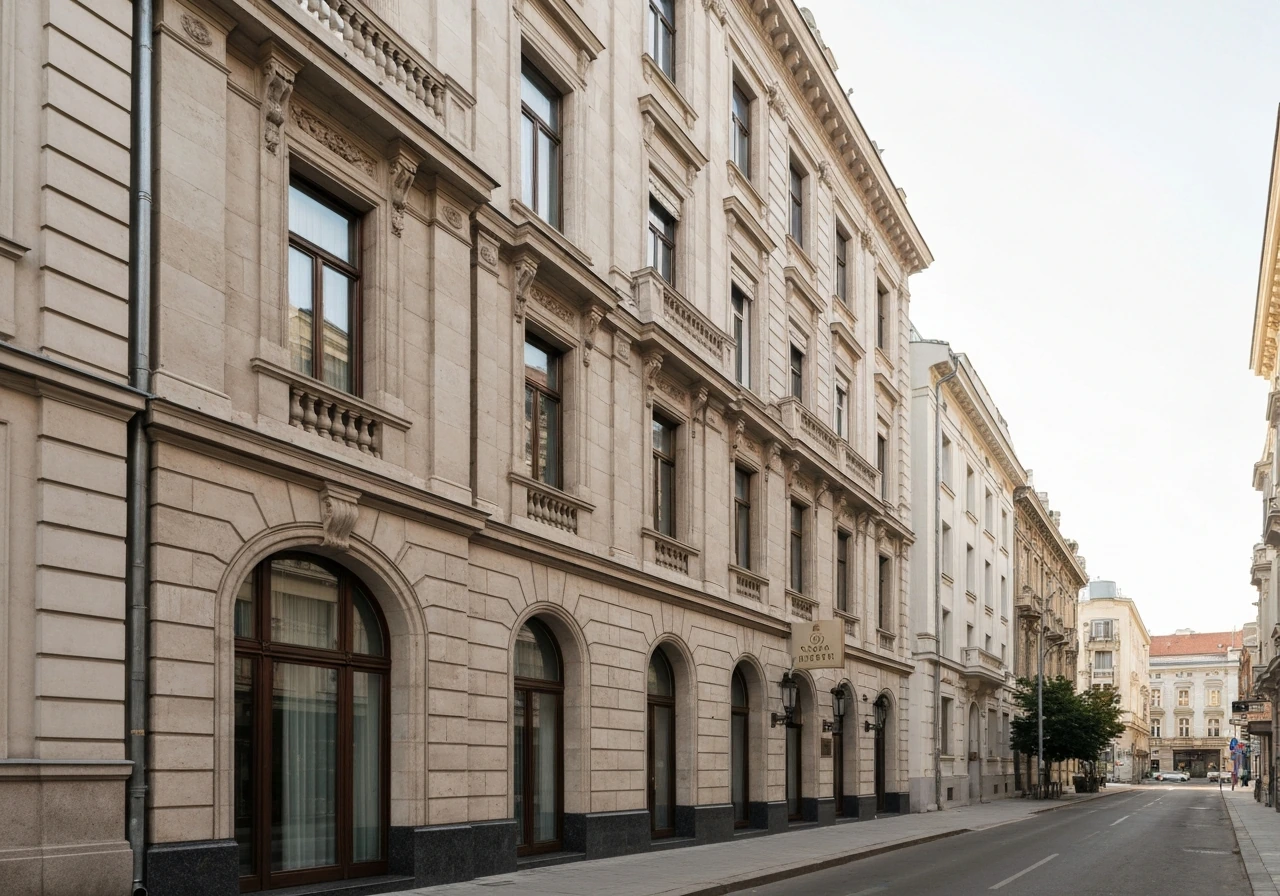
The second major income stream is hospitality. Dragić acquired an 82. 83% ownership stake in Hotel "Moskva", one of Belgrade's most iconic five-star properties, reportedly for approximately 11 million EUR, according to archived Serbian press reporting. Ownership was structured via an offshore vehicle, which the KZK identified and linked back to Dragić as ultimate beneficial owner.
Through the Hotel Moskva group, he also controls Hotel "Club A" on Kopaonik, Serbia's premier ski resort, and subsequently acquired Hotel "Tonanti" in Vrnjačka Banja, as confirmed by both the Competition Commission's published case outcomes and reporting by Nova Ekonomija and Politika.
In its ex officio proceedings, Serbia’s Competition Commission (KZK) documents the relevant concentration involving the “Moskva” acquisition of “Tonanti” in Vrnjačka Banja and identifies the participants linking the “Moskva”/Hotel “Moskva” context back to Mile Dragić as ultimate beneficial owner the Competition Commission's published case outcomes.
Three hotel properties in premium Serbian tourist locations represent meaningful recurring income through room revenue, events, and food and beverage operations.
Legal dispute windfalls
The 2021 profit surge is the most dramatic single financial event in the publicly available record. At roughly 3.03 billion RSD (approximately 25 to 26 million EUR at 2021 exchange rates), it would represent a meaningful one-time addition to personal wealth if retained at the company level or distributed. Whether it was reinvested, distributed as dividends, or deployed into further acquisitions is not disclosed. It is treated here as a potential one-time wealth-building event rather than ongoing income.
Known assets and wealth signals

- "Proizvodnja Mile Dragić" company: 100% ownership since 1985, operating manufacturing facility in Zrenjanin with defense/police sector contracts.
- Hotel "Moskva", Belgrade: 82.83% beneficial ownership stake, acquired for approximately 11 million EUR, one of Serbia's most historically significant premium hotels.
- Hotel "Club A", Kopaonik: ownership linked via the Hotel Moskva group; Kopaonik is Serbia's top ski tourism destination.
- Hotel "Tonanti", Vrnjačka Banja: acquired through Hotel Moskva-linked structure, confirmed by KZK competition proceedings.
- Offshore vehicle / "Tonanti" acquisition structure: use of non-domestic holding structures for the hotel group suggests some wealth may sit in vehicles not directly visible in Serbian company registries.
- 2021 court-linked profit windfall: approximately 3.03 billion RSD net profit recorded by "Proizvodnja Mile Dragić", attributed to judicial dispute resolution against the Republic of Serbia.
Property and lifestyle signals are harder to quantify. Dragić does not appear on social media or in the celebrity lifestyle press in the way sports stars or musicians might. His wealth footprint is institutional: company filings, regulatory decisions, and business media rather than visible personal consumption. That is actually a useful signal in itself: it points toward a businessperson whose wealth is embedded in operating assets rather than liquid personal holdings, which is typical for Serbian industrialists of his generation.
How this estimate is built
Wealth databases like this one use a layered methodology for private figures. The process starts with what is hard: documented asset values and company financial outcomes from primary sources such as regulatory filings, competition commission documents, and major business news outlets. For Dragić, those primary signals are the KZK documents naming him as ultimate beneficial owner of the hotel group, the approximate 11 million EUR acquisition price for the Hotel Moskva stake, and the N1-reported 2021 profit figure for "Proizvodnja Mile Dragić".
The next layer is inference. A hospitality portfolio of three premium Serbian properties, valued at acquisition cost plus operational appreciation, probably carries a market value significantly above the original purchase price for Moskva alone, particularly given Belgrade's property market appreciation since the early 2000s. Manufacturing businesses in niche defense sectors are typically valued at 4 to 8 times annual EBITDA by industry comparables, but we do not have a clean EBITDA figure for "Proizvodnja Mile Dragić", which forces the estimate wider. Debt levels, if any, are unknown, which is a further source of uncertainty.
The result is a range rather than a point estimate. The 30 to 60 million EUR range reflects genuine uncertainty about the hotel portfolio's current market value, whether the 2021 windfall was distributed or retained, and what recurring manufacturing profitability looks like outside the litigation spike. Sources used: KZK PDFs, N1 business reporting, Nova Ekonomija, Politika archived articles, Novosti archived coverage of the Hotel Moskva acquisition, and eKapija's business profile for Mile Dragić. None of these are personal wealth declarations. All are public record.
To put Dragić's estimated range in context, it helps to look at the broader Serbian wealth landscape. Serbia's wealthiest individuals, typically in construction, telecommunications, or retail, are estimated in the hundreds of millions to low billions of EUR. Dragić does not appear to operate at that tier. His profile is more consistent with successful mid-tier Serbian industrialists: significant, multi-decade operating businesses, meaningful real estate holdings, occasional large contract windfalls, but without the scale of the country's top ten wealthiest.
Within this site's coverage, the comparison that comes to mind most naturally is with other businesspeople and public figures whose wealth is tied to a mix of operating companies and property assets. For instance, Dragan Marković Palma's net worth reflects a similarly opaque mix of political influence, business interests, and real estate that makes precise estimation difficult, illustrating how common this challenge is for Serbian public figures outside pure athletics or entertainment.
Sports-world wealth offers a useful contrast for scale. Predrag Danilović's net worth, built on a celebrated European basketball career with major club contracts, lands in a very different structure: primarily career earnings and post-career ventures rather than manufacturing and hospitality assets. The comparison shows how differently wealth accumulates depending on the source industry. Another relevant contrast comes from the entertainment world: Oliver Dragojević's net worth, one of the Adriatic region's most beloved musicians, demonstrates that even decades of popularity in the regional music market produce a wealth profile that is modest compared to what a successful industrialist with hotel holdings can accumulate.
Within the same general surname cluster, it is also worth noting that Ivan Dragičević's net worth is an entirely separate profile, involving a different family and professional background. Name similarity does not imply shared financial profiles. And for another Balkan public figure where a manufacturing and business background intersects with a complex public image, Dragan Stojković Bosanac's net worth offers a useful regional parallel in how Serbian business media approaches opaque private wealth.
| Figure | Primary wealth source | Estimated range (EUR) | Transparency level |
|---|
| Mile Dragić | Manufacturing + hospitality | 30M – 60M | Low (private company, no public filings) |
| Predrag Danilović | Basketball career earnings + ventures | Lower-mid range | Moderate (career contracts partially documented) |
| Oliver Dragojević | Music career + royalties | Lower range | Low-moderate (entertainment income estimates) |
| Dragan Marković Palma | Business + political influence | Difficult to estimate | Very low (opaque structure) |
How to verify this and when to update it

If you want to stress-test or update these estimates, here is where to look. The Serbian Business Registers Agency (APR, agencija.rs) publishes annual financial statements for registered companies. Searching for "Proizvodnja Mile Dragić" in the APR system will give you the most recent reported revenues, profits, and equity figures, which are the closest thing to a verified income signal available. Check this annually: figures are typically published with a one-year lag, so 2025 financials will appear in mid-to-late 2026.
For the hotel assets, watch the KZK (kzk.gov.rs) for any new merger or acquisition notifications involving the Hotel Moskva group. If Dragić sells, restructures, or acquires additional hotel properties, that transaction will likely trigger a competition notification that becomes a public document. Real estate transaction values in Serbia are sometimes disclosed in these proceedings. Hotel industry news in Serbian outlets like Turistički svet or eKapija's hospitality section can also surface valuation signals.
For litigation-linked income, monitor Serbian court gazette announcements and investigative journalism from outlets like KRIK, CINS, or Insajder. The original "Pancir" dispute ran for years, and any new legal developments involving the firm or its owner would potentially affect the financial picture. N1's business desk has already flagged this connection, so it is a good outlet to follow for updates.
Figures on this site are updated when significant new evidence emerges: a major APR financial filing, a new KZK decision, credible investigative reporting, or confirmed sale/acquisition of a major asset. The current estimate should be treated as valid for 2025 to 2026 unless one of those triggers fires. If the hotel portfolio were sold at market value, or if a new round of government contracting generated publicly reported revenues, the range could shift meaningfully in either direction.