Mišo Kovač's estimated net worth in 2026 sits in the range of approximately $3 million to $6 million USD, with most aggregator estimates clustering toward the lower-to-mid end of that band. That figure reflects a career spanning more than six decades of record sales, touring, royalties, and media presence across the former Yugoslav and Croatian market, rather than any single disclosed financial statement. Like most Balkan entertainment figures, his private finances are not publicly audited, so this is a well-reasoned estimate, not a certified number.
Mišo Kovač Net Worth: Estimate, Income Sources, and Method

Marko Radivojević
19 May 2026

Who Mišo Kovač is
Born Mate Kovač on 16 July 1941 in Šibenik, Croatia, Mišo Kovač is one of the most commercially successful and longest-active Croatian pop and "zabavna glazba" (light entertainment music) artists in the region's history. He began recording professionally in 1964 and has never fully stepped away from the stage. His label history reads like a timeline of Yugoslav and post-Yugoslav music: Jugoton, CBS, Croatia Records, Suzy, Maestral, and Studio all appear in his discography. That kind of label diversity reflects both his longevity and the structural collapse and rebuilding of the regional music industry across multiple political eras.
His breakout commercial moment came in 1969 with "Više se nećeš vratiti," the winning entry from the Vaš šlager sezone competition. That single sold 183,987 copies, making it the second best-selling Jugoton record of that year. From there, he built a catalog that eventually earned him the Croatian Music Institute's special recognition in 2005 for the largest total number of records sold in Croatian discography history. He also holds a "Golden Bird" award from Jugoton/Croatia Records for surpassing one million copies sold across his catalog. Add Porin for lifetime achievement (2012), sold-out concerts at Vatroslav Lisinski Hall in Zagreb, and two New York concerts for Croatian emigrants in September 2001, and you have a picture of an artist with real, sustained commercial weight across decades and geographies.
What "net worth" actually means for a figure like this
When a wealth database like this one publishes a net worth figure for a Balkan public figure, it is not pulling from a tax return or a brokerage statement. It is building an estimate from a combination of documented career signals, industry benchmarks, royalty proxies, publicly observable assets, and cross-referencing what aggregator sites (including PeopleAI, Popnable, and CelebNetWorthInfo) are publishing. None of those platforms have access to private bank records. What they do is triangulate from verifiable facts: award certifications that imply minimum sales thresholds, known touring activity in specific years, streaming catalog presence, and lifestyle indicators that suggest asset ownership.
For Balkan artists specifically, this estimation is harder than for, say, a US pop star with Billboard chart data and SEC-filed entertainment company disclosures. The Yugoslav and post-Yugoslav music industry had different royalty structures, significant non-cash compensation during the socialist era, and limited public financial reporting. That means a figure like Mišo Kovač accumulated substantial career earnings in a market that was not always fully monetized in Western terms. The estimate you see here is the most defensible range based on available public data, and the caveats matter as much as the number itself.
The net worth estimate and how it's calculated

The working estimate for Mišo Kovač's net worth as of May 2026 is $3 million to $6 million USD. Here is the calculation logic in plain terms. A career that produced over one million records sold across a multi-decade run, with certified platinum compilation albums ("Pjevaj, legendo" in 1999 and "Najdraže pjesme Miše Kovača" in 2003) and a silver award for "Mir u srce" (2004), represents meaningful historical revenue. Even applying conservative per-unit artist royalty rates for the Yugoslav and Croatian market (well below Western norms, often in the range of 3 to 8 percent of retail price), one million-plus units across decades translates into a cumulative figure in the hundreds of thousands of dollars in recording royalties alone, before accounting for composition rights, touring, or licensing.
Add sustained touring across five-plus decades, including diaspora-market concerts in cities like New York, and the total career gross revenue is realistically well into the millions. Subtract likely living costs, career disruptions (discussed below), donations, and the economic depreciation that comes with operating in a smaller regional market for much of his career, and a current net worth in the $3M to $6M range is a reasonable, conservative-to-moderate estimate. The higher end of $6M would require assuming strong royalty retention, real estate appreciation, and continued active touring income. The lower end of $3M is what you get under more cautious assumptions about historical revenue recovery and asset accumulation in a market with lower GDP per capita than Western Europe.
Income streams across his career
Record sales and royalties

Mišo Kovač's core historical income driver was physical record sales through Jugoton and later Croatia Records. His certified sales history (gold, silver, platinum, and diamond awards across his discography) provides the clearest documented proxy for revenue. The 1969 single alone moved close to 184,000 copies, and that was before his most commercially active decades. Compilation albums in the late 1990s and early 2000s reaching platinum suggest continued catalog demand well after the original Yugoslav market fragmented. Today, his catalog presence on Spotify and detection on Shazam indicates ongoing streaming royalty generation, though at rates that are modest by global standards (typically fractions of a cent per stream) and not publicly disclosed by the platforms.
Composition and publishing rights
If Mišo Kovač holds publishing rights or co-composition credits on any portion of his catalog, those would generate ongoing performance and mechanical royalties every time the songs are played on radio, TV, or streamed. A 2023/2024 Večernji.hr article referenced archive and rights-related material in the context of a documentary about him, framing the archive as a "wealth" ("bogatstvo") for rights purposes. This suggests the catalog is commercially active and that rightsholder value is recognized by Croatian media. The exact split of publishing rights between the artist and his historic labels is not publicly disclosed.
Touring and live performance

Live performance has been Mišo Kovač's most visible and reportedly preferred income stream in recent decades. Wikipedia notes he generally avoids TV appearances in favor of concerts. The two sold-out shows at Vatroslav Lisinski Concert Hall (capacity roughly 1,800 per night) in Zagreb tied to his diamond certification recognition in 2014 give a scale indicator: at even modest Croatian ticket prices of 30 to 60 EUR, two sell-outs could generate 100,000 to 200,000 EUR gross before expenses. His diaspora touring (New York 2001, with proceeds partly donated) confirms he works international emigrant markets, which typically command higher ticket prices than the domestic Croatian or Bosnian market.
Television, media, and humanitarian appearances
Kovač is selective about television. A documented guest appearance on HRT's "Nedjeljom u dva" in July 2006 is one of the better-known examples. A June 2012 humanitarian TV performance where he performed eight songs live and helped collect 200,000 HRK in aid for children is notable less as a personal income event and more as a visibility signal confirming his ongoing public profile and institutional goodwill, both of which support premium concert ticket pricing and brand association value. There is no documented pattern of major commercial endorsements, but his cultural stature would make him marketable for regional brand partnerships if pursued.
Assets and lifestyle signals
There is no publicly verified real estate portfolio or vehicle fleet attributed to Mišo Kovač in the sources reviewed. Personal life coverage in Croatian media (including Scena/story.hr on his marriage history) does not directly disclose property holdings. What estimators typically use in the absence of direct disclosure are secondary indicators: the type of venue he performs in (mid-to-large capacity halls rather than small clubs suggest he commands meaningful fees), the caliber of events he is associated with (institutional cultural recognition, humanitarian galas), and the sustained demand for his catalog in a market where streaming and licensing continue to generate income. The 2005 Croatian Music Institute recognition specifically for total records sold is a strong indirect signal that the catalog has real economic value that extends beyond nostalgia.
Events and circumstances that affect the estimate
Several events in Mišo Kovač's life are directly relevant to any honest net worth estimate. In January 1999, he attempted suicide in a Zagreb apartment. This was a major personal crisis and almost certainly disrupted his touring and recording income for a period in the late 1990s. It coincides with a gap in active production, and any model of his total career earnings needs to account for this period as a revenue trough, not a peak.
Earlier, in 1971, a serious car accident near Zadar temporarily sidelined him. He also made a documented philanthropic expenditure around the same period, donating proceeds from a commemorative plaque toward construction of the Zagreb to Split highway. No specific amount is recorded, but philanthropy of this kind, repeated over a career, does represent real capital that did not compound into personal assets.
On the legal and litigation side, no major publicly indexed lawsuit or tax dispute specifically tied to Mišo Kovač appeared in the research for this article. The absence of indexed litigation in English or Croatian-language sources does not guarantee a clean legal history, but there is no specific controversy to adjust the estimate for at this time. If significant litigation emerges in Croatian court records or media, it would need to be factored in.
How to verify and compare this estimate
If you want to cross-check the Mišo Kovač net worth figure you see on this site or anywhere else, here is a practical approach. If you are looking specifically for Nikola Kovač net worth numbers, compare the methodology, sources used, and the time frame rather than only the headline figure. If you are specifically comparing his kovacic net worth claims across websites, focus on how each estimate treats records sales, touring income, and missing access to private financial records net worth figure.
- Check multiple aggregator sites (PeopleAI, Popnable, CelebNetWorthInfo) and note whether the ranges are consistent. If they diverge widely, it usually means one site anchored to a different assumption about touring income or royalties.
- Look at certified sales awards and convert them to revenue proxies. Platinum in the Croatian market typically means 7,500 to 10,000 units sold (post-Yugoslav era), not the 1,000,000 unit standard in the US. Adjust your royalty math accordingly.
- Check Croatian Radio-Television (HRT) archives and Croatian Music Institute announcements for any disclosed recognition amounts or publicly reported concert revenues.
- Search Večernji.hr, Jutarnji.hr, and Index.hr for recent interview coverage that might mention property, business ties, or current touring fees.
- Compare the figure to other Croatian and Serbian music artists with similar career longevity and market positioning to sense-check the range. Artists with comparable regional profiles typically appear in the $2M to $10M range depending on catalog ownership and real estate.
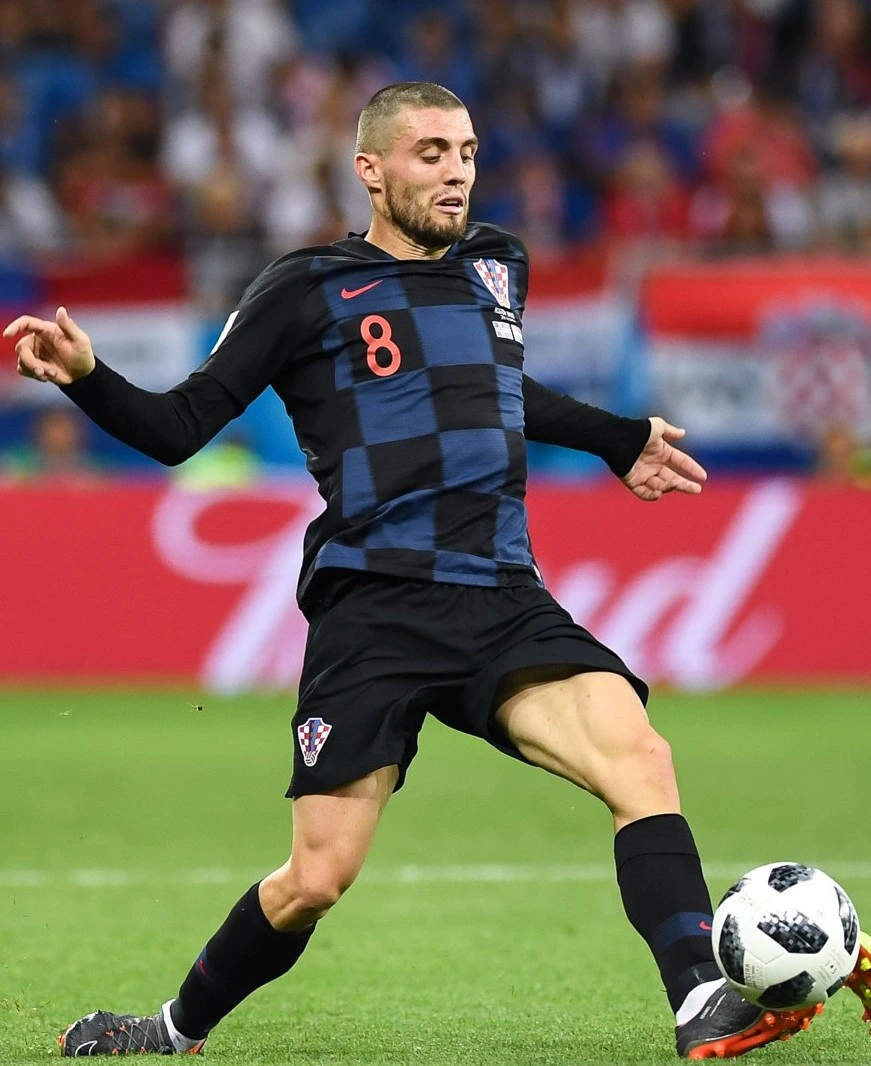
When comparing Mišo Kovač's estimated wealth to other figures on this site, it is worth noting that his profile is specifically that of a long-career regional music artist, not a European football player or a tech entrepreneur. This is why searches for Nikola Kovač net worth can be confusing, because different Kovač individuals in the database have very different income sources. That context matters for calibration. For instance, footballers like Mateo Kovačić operate in a completely different income tier because of Premier League and Champions League salary structures. Mateo Kovačić net worth estimates are driven by Premier League wages and endorsement income rather than regional music royalties footballers like Mateo Kovačić. That same kind of caveated estimating is why searches for Mateo Kovačić net worth often point to salary, bonuses, and transfer value rather than audited statements. Similarly, the Kovač surname appears across several profiles in this database (including Nikola Kovač in football management and Allen Kovac in the US music industry), but those are entirely separate people with distinct income profiles. Mišo Kovač's wealth picture is rooted entirely in six decades of regional music, not sport or international business.
Putting the number in regional context
| Signal | What it tells us | Estimated contribution to net worth |
|---|---|---|
| 1M+ certified records sold (career total) | Sustained commercial demand across 40+ years | High (core historical revenue driver) |
| Platinum compilations (1999, 2003) | Catalog still selling post-Yugoslavia | Moderate (royalties + renewed touring demand) |
| Sold-out Lisinski concerts (2014) | Premium venue, ongoing draw | Moderate (current touring income) |
| Diaspora touring (New York 2001+) | Higher ticket prices, international reach | Moderate |
| Streaming catalog (Spotify, Shazam) | Low per-stream rates but ongoing passive income | Low-to-moderate (growing slowly) |
| No confirmed major litigation | No large legal liability identified | Neutral (no negative adjustment required) |
| Career disruptions (1971, 1999) | Revenue gaps affecting lifetime accumulation | Negative adjustment applied to estimate |
The $3M to $6M range holds up as the most defensible estimate for May 2026 when you run the signals through the table above. It is not a number from a disclosed source, but it is grounded in what we can actually verify about his career, and it is consistent with what aggregator platforms are publishing. If you see a figure significantly outside this range on another site, ask what assumption is driving it, because the underlying documented facts do not support either a much higher or much lower number without additional evidence.
FAQ
Why do net worth sites give different numbers for Mišo Kovač?
Most sites use different mixes of proxies (record certifications, touring frequency, streaming catalog presence) and apply different royalty assumptions for the Yugoslav and Croatian era. Small changes in assumed per-unit royalty rates, touring income retention after promoter fees, and whether they count publishing rights can swing results by millions.
What does the estimated $3M to $6M range include, and what might be missing?
It primarily reflects cumulative earnings inferred from sales awards, long-running touring, and catalog activity, but it often does not reliably quantify composition/publishing splits, unreleased back-catalog deals, or income from archive licensing and documentary-related rights, which can add value that estimates sometimes undercount.
How reliable are sales awards like gold, silver, and platinum for estimating income?
They are useful because awards imply minimum unit thresholds, but the money impact depends on the era and the contract terms (label splits, whether the artist owned masters, and distribution terms). Awards confirm scale of demand, not the exact artist take-home.
Do streaming royalties from Spotify and Shazam meaningfully affect his net worth?
They can contribute, but for many older catalog artists the amounts are usually modest per stream and depend on catalog size, right ownership, and how the catalog was administered. Streaming is best treated as ongoing supplementary income rather than the main driver of a multi-million net worth estimate.
How much of touring revenue typically stays with the artist in a market like Croatia?
A meaningful portion usually goes to promoters, venue fees, travel, and production. For estimation, it is safer to assume lower net retention than in major US markets unless there is evidence of strong independent routing (lower promoter margins) or ownership of production infrastructure.
Could diaspora concerts (for example, New York) drastically change the net worth estimate?
They can raise annual income during active touring periods, especially if ticket prices are higher and shows are well-attended. However, unless there is a clear pattern of frequent diaspora dates over many years, they tend to be treated as episodic boosts rather than a reason to jump the entire lifetime net worth estimate.
How do personal events like health crises or accidents affect net worth estimates?
Estimators typically treat them as periods of reduced earning power (missed tours, slower recording output, possible medical costs). Without verified expense figures, this adjustment usually affects the probability distribution (confidence) more than it provides a precise dollar deduction.
Why is the estimate hard to verify with real numbers?
Public financial statements are not available for most Balkan entertainment figures, and there is no SEC-style disclosure regime for labels the way there may be for certain public companies in the US. As a result, net worth estimates rely on inferred cashflow, not direct asset-by-asset accounting.
What would cause Mišo Kovač’s net worth estimate to rise above $6M?
A credible set of new disclosures, such as clear evidence of master ownership with high royalty retention, long-term publishing deals with favorable splits, substantial real estate holdings, or major licensing income tied to his catalog or archive would justify moving above the current upper bound.
What would cause the net worth estimate to fall below $3M?
If it were shown that he did not retain rights to key catalog segments (masters and publishing), that touring fees were historically routed through structures with low artist net share, or that there were significant undisclosed liabilities or major court-related settlements, the lower bound would become more plausible.
Is the suicide attempt in 1999 factored into the estimate?
Yes, generally as an earnings disruption indicator, not as a direct line-item cost. The estimate’s methodology accounts for a likely revenue trough by assuming fewer or lower-gross periods during recovery, based on the observed gap in active production.
Do humanitarian TV performances and donations mean his net worth is lower?
Donations reduce liquidity in the short term, but they do not automatically change lifetime net worth unless they are large relative to annual earnings and recurring at scale. Many such appearances are also visibility signals that can indirectly support premium concert demand.
Can confusing search results with other Kovač individuals affect my understanding of his net worth?
Yes. Net worth pages sometimes mix names across unrelated people, especially common surnames. When cross-checking, verify the person’s birth date, career field (music vs football), and nationality to ensure the numbers refer to Mišo Kovač, not another Kovač profile.
Citations
Mišo Kovač’s birth name is Mate Kovač; he was born 16 July 1941 in Šibenik (Croatia).
https://en.wikipedia.org/wiki/Mi%C5%A1o_Kova%C4%8D
Wikipedia describes his career as “Years active: 1964–present” and lists record labels including Jugoton, Croatia Records, Suzy, Maestral, Studio, and CBS.
https://en.wikipedia.org/wiki/Mi%C5%A1o_Kova%C4%8D
Major chart/record milestones cited on Wikipedia include the hit “Više se nećeš vratiti” (winning song from Vaš šlager sezone, 1969), and that it sold 183,987 copies; Wikipedia also says it was the second best-selling Jugoton record that year.
https://en.wikipedia.org/wiki/Mi%C5%A1o_Kova%C4%8D
Wikipedia lists multiple awards and certifications, including gold/diamond/silver records; it also claims he received Porin for lifetime achievement (2012) and won “Porin for životno djelo.”
https://en.wikipedia.org/wiki/Mi%C5%A1o_Kova%C4%8D
Wikipedia lists discography studio albums and years: e.g., Mir u srce (2004), Ja sam kovač svoje sreće (2006), and Ne tražim istinu (2010).
https://en.wikipedia.org/wiki/Mi%C5%A1o_Kova%C4%8D
Wikipedia notes a late-career recognition tied to sales: it states he is the owner of a “Golden Bird” award distributed for a million copies sold (Jugoton/Croatia Records context), and a Croatian Music Institute special recognition in 2005 for the largest number of records sold in Croatian discography history.
https://en.wikipedia.org/wiki/Mi%C5%A1o_Kova%C4%8D
Spotify’s artist page identifies him as Mate Mišo Kovač (Tribunj, 16. srpnja 1941.) and frames him as a Croatian entertainment (zabavne glazbe) singer; (note: this is a secondary bio source and should be cross-checked against other references).
https://open.spotify.com/artist/7MioP9oOYXmNKao9W1QnQM
Wikipedia describes notable television/media moments including a guest appearance in the Croatian Radiotelevision talk show “Nedjeljom u dva” (16 July 2006) and that he generally avoids TV appearances, preferring concerts.
https://en.wikipedia.org/wiki/Mi%C5%A1o_Kova%C4%8D
PeopleAI provides an “estimated net worth and salary income estimation May, 2026” page for Mišo Kovač, but its disclaimer (as shown on-page) indicates the figures are estimations from publicly available information and are not guaranteed accurate.
https://peopleai.com/fame/identities/miso-kovac
Popnable publishes a “net worth and earnings” style page for Mišo Kovač for 2026, presenting it as an overall forecast/estimate rather than a documentable financial statement.
https://hr.popnable.com/hrvatska/pjeva%C4%8Di/5591-miso-kovac/neto-vrijednost
Popnable’s English-language net-worth page exists as a second platform context for the same type of estimate; it characterizes the content as current net worth/earnings information rather than audited accounting.
https://popnable.com/croatia/artists/5591-miso-kovac/net-worth
CelebNetWorthInfo provides an estimated “net worth” page for Mišo Kovač (but it is not an authoritative financial disclosure source; it functions as a secondary estimator site).
https://celebnetworthinfo.com/miso-kovac-net-worth/
Wikipedia provides documented income-adjacent signals via career sales/awards (e.g., gold/silver/platinum awards for albums/compilations) that are often used by net-worth estimators as proxies for historical revenue.
https://en.wikipedia.org/wiki/Mi%C5%A1o_Kova%C4%8D
Wikipedia states that Mišo Kovač’s compilation albums “Pjevaj, legendo” (1999) and “Najdraže pjesme Miše Kovača” (2003) received platinum awards, and his album “Mir u srce” (2004) received a silver award (as described on the page).
https://en.wikipedia.org/wiki/Mi%C5%A1o_Kova%C4%8D
Wikipedia includes a specific touring/concert proxy: it states a humanitarian TV performance in June 2012 where he performed eight songs live in an hour and collected 200,000 HRK in aid for children.
https://en.wikipedia.org/wiki/Mi%C5%A1o_Kova%C4%8D
Wikipedia cites large-venue concert activity tied to career milestones: it mentions “two sold-out concerts” at Vatroslav Lisinski Concert Hall in Zagreb (for a diamond circulation/2014 recognition) (used as a scale indicator).
https://en.wikipedia.org/wiki/Mi%C5%A1o_Kova%C4%8D
Wikipedia mentions a specific international/emigrant touring event proxy: it states that in September 2001 he held two concerts in New York for Croatian emigrants and donated half of the proceeds to families of firefighters killed on 11 September.
https://en.wikipedia.org/wiki/Mi%C5%A1o_Kova%C4%8D
A Večernji.hr article (2023/2024-era, per crawl recency) indicates Mišo Kovač’s career has ongoing public discussion and that TV productions involved archives/rightsholder materials (“right bogatstvo” framed as archive); this can be relevant to rights/royalty context (but not a direct financial disclosure).
https://www.vecernji.hr/showbiz/dokumentarac-o-misi-kovacu-bez-njega-moze-cak-biti-bolji-bez-danasnjeg-mi%C5%A1e-kovaca-1668609
Scena/story.hr provides personal-life detail including marriage history and mentions his living circumstances indirectly via other quoted media; however it is not a primary source for wealth.
https://scena.story.hr/Estrada/a2669/Brakovi-Mise-Kovaca.html
Wikipedia mentions a major career disruption/event: it describes a suicide attempt on 14 January 1999 (in a Zagreb apartment) and subsequent recovery and return to the stage; such events can affect income and thereby net-worth estimates.
https://en.wikipedia.org/wiki/Mi%C5%A1o_Kova%C4%8D
Wikipedia also references an earlier life disruption: in 1971 it describes Mišo Kovač “almost died in a car accident near Zadar,” which could have temporarily affected touring/revenue.
https://en.wikipedia.org/wiki/Mi%C5%A1o_Kova%C4%8D
Wikipedia states in 1971 he paid proceeds from a plaque for construction of the Zagreb–Split highway during recovery after winning Split Festival (named as a philanthropic gesture, which net-worth models may treat as expenditure/donation, though no amount is provided on the page).
https://en.wikipedia.org/wiki/Mi%C5%A1o_Kova%C4%8D
Shazam track presence is a modern streaming/royalty-adjacent signal (song still detectable/distributed), but the page does not provide earnings; it can support ongoing catalog value assumptions.
https://www.shazam.com/track/70329640/mix-pt-3
Spotify provides ongoing artist/catalog availability, which indirectly supports that recording catalog likely continues to generate streaming royalties; however exact payout or amounts are not disclosed on-platform.
https://spotify.com/ (artist pages are dynamic)
Search returned unrelated US Tax Court content; there was no credible court/tax-dispute match for Mišo Kovač in the retrieved results, implying either (a) no major publicly indexed litigation exists in accessible sources, or (b) further targeted Balkan-language court/news searching is required.
https://ustaxcourt.gov/
Next Article
Mateo Kovačić Net Worth Estimate 2026: Salary, Income
Mateo Kovačić net worth estimate 2026 with salary, contract and transfer factors, plus how to verify differing wealth fi