Željko Obradović's estimated net worth as of May 2026 sits in the range of $10 to $15 million USD, with the most defensible midpoint being around $12 million. That figure reflects roughly three decades of elite head coaching salaries at some of Europe's biggest clubs, nine EuroLeague titles worth substantial bonus payouts, and a modest but real layer of endorsement and business income. No audited financial disclosure exists for him, so every number you see on the web is an estimate, including this one. But the career footprint is well-documented enough that a reasonable range is possible.
Zeljko Obradovic Net Worth: Estimate, Sources, and Growth

Marko Radivojević
5 May 2026
Who Željko Obradović is and why his earnings matter

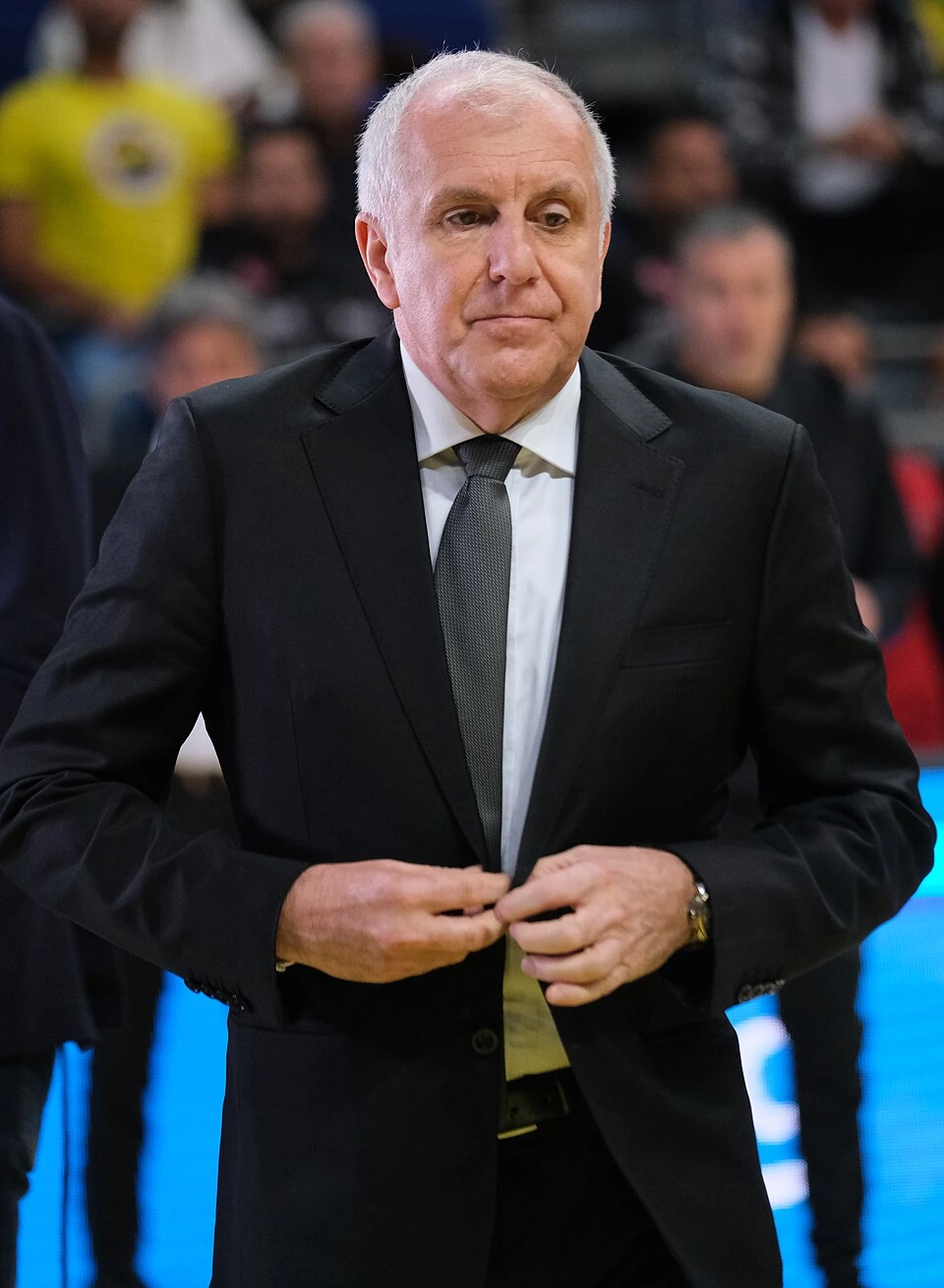
Obradović is the most decorated coach in EuroLeague history, full stop. Born in 1960 in Serbia (then Yugoslavia), he transitioned from a professional playing career into coaching in the late 1980s and never looked back. His nine EuroLeague titles with five different clubs, including Partizan (1992), Joventut (1994), Real Madrid (1995), Panathinaikos (2000, 2002, 2007, 2009, 2011), and Fenerbahçe (2017), make him the benchmark against which every European coach is measured. That kind of track record is not just a sporting story: it is a long-running salary negotiation advantage. Every club that wanted him had to compete with the market value his trophy cabinet commanded.
For a site tracking Balkan wealth, Obradović is one of the clearest case studies in how elite coaching in European basketball can generate real wealth over a multi-decade career. Unlike most Serbian public figures whose income comes from domestic markets, his entire career has been paid in euros by clubs in Turkey, Greece, Spain, and Serbia, insulating his earnings from dinar volatility and local wage norms. His wealth is also a useful comparison point for other Serbian coaching and sports figures whose careers have crossed EuroLeague circles.
The net worth estimate today and what it actually covers
The $10 to $15 million USD range for May 2026 is built from the bottom up using known contract data, reasonable assumptions about savings and investment behavior, and a conservative discount for taxes and spending. It is not a balance-sheet figure. What the estimate tries to capture includes accumulated post-tax coaching salary income across roughly 35 years at the elite level, bonus payments tied to EuroLeague championships, his brand ambassador role with Plazma Sportske igre mladih (a youth sports initiative that adds a non-salary endorsement line), and his registered business entity in Belgrade (Željko Obradović PR, Maksim) which suggests some degree of personal business income structuring.
The $10.2 million figure that circulates from People AI for April 2026 sits inside this range, but it is worth being clear about what that number actually represents: it is a social-signal model, not a financial model. People AI explicitly states its methodology is based on a combination of social factors including Google, Wikipedia, YouTube, Twitter, Instagram, and Facebook signals, and it acknowledges his actual income may vary substantially from the figure shown. The year-over-year growth they show (from $6.13M in 2022 to $10.2M in 2026) tracks at a suspiciously even pace that reflects their model updating rather than any known career event. Use it as a rough anchor, not a precise valuation.
How the wealth estimate is calculated

For a coaching career like Obradović's, wealth databases typically use a career earnings model: multiply known or reported contract values by duration, apply a regional tax estimate, discount for living expenses, and then add credible secondary income streams. The challenge is that European basketball coaching contracts are rarely disclosed in full, so analysts rely on leaked figures, regional sports journalism, and club financial filings where available.
For Obradović specifically, the two most reliable data anchors are his 2013 Fenerbahçe contract (reported at €3 million net over two years) and a 2025 Serbian sports report placing his Partizan salary package at €3.5 million per season for him and his coaching staff. A separate Turkish outlet (Ajansspor) claimed his total guaranteed Fenerbahçe earnings including bonuses could reach €15 million across his full tenure there. These figures cannot be independently verified from public filings, but they are consistent with the upper range of EuroLeague coaching market rates, where Eurohoops confirms top coaches routinely earn above €500,000 per season with elite clubs paying well above that threshold.
The confidence level on the overall estimate is moderate. The salary anchors from Fenerbahçe and Partizan are credible and corroborated across multiple outlets. The uncertainty lies in the exact length of high-salary contracts, bonus payment structures, what portion of earnings were saved versus spent, and whether business or investment activity has meaningfully grown his wealth beyond direct coaching income.
Where the money actually comes from: a breakdown
Coaching salaries

This is by far the largest contributor to his net worth. Over a career spanning Partizan, Real Madrid, Joventut, Panathinaikos, Fenerbahçe, and a return to Partizan, Obradović has been one of the top-paid coaches on the continent for most of the past 25 years. Even conservative estimates for average annual earnings across elite EuroLeague stops produce a total gross career salary well above €30 million when spread over three decades. The two confirmed data points (€3M net for two Fenerbahçe years and €3.5M per season at Partizan for the coaching staff) suggest his personal slice of high-period earnings was in the €1.5 to €2.5 million per year net range at peak.
Championship bonuses and title-related income
Nine EuroLeague titles generate significant bonus payouts on top of base salary. EuroLeague coaching contracts at top clubs typically include performance clauses tied to Final Four appearances and championship wins. The Ajansspor report specifically mentioned primers and bonuses as the mechanism pushing Fenerbahçe's total commitment to Obradović above €13 million in guaranteed earnings and toward €15 million with extras. Across nine titles at clubs with varying bonus structures, the cumulative bonus income is likely in the €3 to €5 million range, though this is the most speculative part of the estimate.
Endorsements and ambassadorial income
This is a smaller but real income line. Obradović's role as ambassador for Plazma Sportske igre mladih is corroborated by both Euronews.ba and Pink.rs, though neither report discloses a fee. Given the profile of the campaign (a national youth sports initiative backed by a major brand), ambassadorial fees in this space in the Balkan market typically range from €20,000 to €150,000 per year, making it a meaningful but secondary income stream rather than a wealth driver.
Business interests
Companywall.rs lists a business entity registered as Željko Obradović PR, Maksim in Belgrade. This type of sole proprietorship or personal business registration is common among high-income professionals in Serbia as a vehicle for consulting, speaking, or image rights income. The financials of the entity are not publicly visible, but its existence indicates some structured non-salary income. This is included as a minor component in the overall estimate.
How his net worth has shifted across career phases
| Career Phase | Key Clubs / Role | Estimated Annual Earnings (Net) | Net Worth Impact |
|---|---|---|---|
| Late 1980s – mid 1990s | Partizan, Joventut, Real Madrid | €200K–€500K/year (est.) | Foundation building, modest accumulation |
| Late 1990s – 2012 | Panathinaikos (5 titles) | €800K–€1.5M/year (est.) | Major wealth phase, consistent high salary |
| 2012–2013 | Sabbatical year | Minimal active income | Net worth stabilized, no major inflows |
| 2013–2019 | Fenerbahçe (1 title, €3M+ contract) | €1.5M–€2.5M/year net (reported) | Peak earnings period, largest single contract anchor |
| 2019–2022 | Returned to Partizan | €3.5M/season for staff (reported, personal share est.) | Continued high earnings in domestic context |
| 2022–2026 | Partizan / senior career stage | Declining or stable vs. peak | Consolidation phase, wealth maintained |
The Panathinaikos years (roughly 1998 to 2012, with a gap) were the longest sustained high-salary stretch. Five EuroLeague titles across that period, combined with long-tenure contracts at a club that was financially strong during the pre-Greek-financial-crisis era, almost certainly represent the largest single accumulation window in his career. The Fenerbahçe period added the most verifiable data. His return to Partizan brought reported staff payments of €3.5 million per season, though it is important to note that figure covers his full coaching staff, not just his personal salary.
How Obradović compares to other top EuroLeague and Balkan coaching figures
Obradović sits at the very top of EuroLeague coaching wealth by any reasonable measure. No other European basketball coach has nine titles across five clubs, which translates directly into a sustained salary premium over peers. For context within the Balkan sports coaching and public figure space, he comfortably outearns nearly all regional contemporaries. Veljko Paunović, for instance, has had a solid career in soccer coaching across Europe and North America, but at a different salary level than elite EuroLeague basketball. If you are also tracking Veljko Paunović net worth, his coaching path and contract profile can be compared at a different salary level than elite EuroLeague basketball. Musicians and entertainers like Željko Joksimović occupy a different wealth category driven by royalties and domestic entertainment markets rather than international club contracts. Željko Joksimović net worth is often discussed in a similar way, but his wealth is driven more by entertainment royalties and media revenue than by club coaching contracts. Actor Zeljko Ivanek, operating in Hollywood's industry, has a wealth profile built on decades of screen work rather than sports contracts.
Within basketball coaching specifically, Eurohoops places Obradović in the upper tier of EuroLeague earners, characterizing club offers to him as involving a 'big bundle of money.' Compared to NBA assistants or mid-tier EuroLeague coaches, his salary history is exceptional. The closest regional comparison would be Sasha Djordjevic or Dusko Ivanovic in terms of Serbian coaching careers, though neither has matched his title count or peak salary.
| Figure | Domain | Est. Net Worth (USD) | Primary Income Source |
|---|---|---|---|
| Željko Obradović | Basketball coaching (EuroLeague) | $10M–$15M | Elite coaching contracts + bonuses |
| Veljko Paunović | Soccer coaching (Europe/North America) | Lower-mid range (est.) | Club coaching salaries |
| Željko Joksimović | Music / entertainment (Balkans) | Varies, domestic market driven | Royalties, concerts, TV |
| Zeljko Ivanek | Acting (Hollywood) | Est. multi-million USD | Screen residuals, TV contracts |
How to verify these estimates and what to do next
No public database has audited Obradović's personal finances, so every figure requires interpretation. The best approach is to triangulate: check multiple sources, understand their methodology, and weight figures accordingly. Social-signal platforms like People AI produce numbers that look precise but are not grounded in contract data. Sports journalism reports from outlets like Eurohoops, Sportal.rs, and Ajansspor are closer to the source but still rely on leaks and anonymous reports. Club financial filings (where accessible through Turkish or Serbian company registries) are the most reliable but rarely break out individual coaching salaries.
The signals worth tracking if you want to update this estimate over time are contract announcements (his next club move will trigger new salary reporting), EuroLeague Final Four appearances and wins (each one plausibly adds a bonus event to the model), any new ambassadorial or sponsorship announcements in the Serbian or regional market, and any updates to his registered business entity in Belgrade. If he retires from active coaching, watch for any transition into sporting director roles or advisory positions, which carry their own compensation.
- Cross-reference any net worth figure you find with the methodology that produced it: social signal models (like People AI) are not the same as career earnings models.
- Use known contract anchors (the €3M Fenerbahçe deal and the €3.5M Partizan staff package) as floor references, not ceilings.
- Check Serbian company registry data for his business entity (Željko Obradović PR, Maksim) if you need to assess non-coaching income.
- Treat the $10M to $15M range as a reasonable working estimate for 2026, with $12M as the most defensible midpoint.
- Revisit the estimate after any major career event: new contract, title win, or public business announcement.
The broader takeaway is that Obradović is genuinely wealthy by any Balkan standard and competitive with mid-tier wealth figures in global sports coaching. His fortune is almost entirely career-earned rather than inherited or business-built, which makes it relatively straightforward to model but also means it is tied to the duration and terms of his active coaching career. As that career winds toward its senior phase, the estimate is likely to stabilize rather than grow significantly unless a new high-value contract or commercial opportunity changes the picture.
FAQ
Why do different sites report wildly different zeljko obradovic net worth numbers?
Use ranges, not single numbers. Contract-based models usually treat net salary as the anchor, then add bonuses, and finally apply a conservative savings rate and tax haircut. Because coaching contract terms in Europe are rarely fully public, the safest approach is to keep a 2 to 5 million USD band around any midpoint estimate, and update only when a new contract length or guaranteed bonus structure becomes known.
Is the People AI $10.2M figure a reliable valuation, or should I ignore it?
People AI style figures are social-signal models, so they can jump or drift even without any verified income change. If you want to sanity-check a social-signal number, compare it to contract anchors you trust (for example, reported net salary or staff packages) and ignore year-to-year “growth” unless there is a corresponding career event like a confirmed multi-year extension.
How can I tell if a reported coaching salary includes Obradović’s personal pay or the whole staff?
Check whether a reported figure is “net for him” versus “package for the staff.” For Obradović, at least one widely cited Partizan figure describes the broader coaching staff package, not only his personal pay slice. If you mix staff and personal numbers, you can overstate his net worth by a significant margin.
What portion of his net worth estimate depends on championship bonuses, and why is it hard to quantify?
Bonus uncertainty is one of the biggest drivers. EuroLeague-related clauses can be tied to Final Four, championship, and sometimes intermediary milestones. If bonus details are not disclosed, model a lower, conservative bonus share (for example, a small percentage of total base salary) rather than assuming every title produces the maximum payout.
Why isn’t it enough to sum up his coaching contracts and call that his net worth?
For net worth specifically, “income” is not enough. You would need to estimate how much of that salary and bonus was saved and invested after taxes, while also accounting for high living costs in multiple countries and any family expenses. That is why two people with similar earnings over a career can have very different net worths depending on spending and investment behavior.
What does the Belgrade business registration (Željko Obradović PR, Maksim) tell us, and how should it affect the estimate?
A registered sole proprietorship or PR entity usually signals consulting or image-related monetization, but it does not prove high profits. To interpret it, treat the business line as a small add-on unless there are publicly visible revenue or profit indicators. In net worth modeling, give it a conservative weight rather than assuming it equals a large separate income stream.
If he stops coaching, will his net worth estimate change, or does it usually stabilize?
If he fully retires from coaching and moves into roles like sporting director, adviser, or media work, income can shift from contract-driven pay to consulting fees or advisory retainers. The net worth estimate may stabilize, but it can still move if a new role includes multi-year guarantees or if he takes equity or equity-linked commercial opportunities.
What new information would most improve or update the zeljko obradovic net worth range going forward?
Track two update triggers: verified contract renewals or new hires, and any confirmed sponsorship or ambassador deal that names a fee or provides enough details to estimate one. Also watch for recurring public appearances tied to youth sports campaigns, because ambassador compensation can be updated annually even when coaching news is quiet.
Next Article
Veljko Paunović Net Worth 2026: Income, Salary, Assets
Veljko Paunović net worth estimate for 2026 with income breakdown, career-based sources, assets, and methodology limits