
Tadej Pogačar's net worth in March 2026 sits somewhere in the range of €30 million to €50 million, depending on how conservatively you model his taxes, spending, and investment activity. His annual gross income is much easier to pin down: around €12 million in 2025 according to La Gazzetta dello Sport, made up of an €8 million base salary, performance bonuses of roughly €1–2 million, and the rest from personal sponsorships and merchandising. This article walks through each piece, explains where online estimates go wrong, and gives you a simple method to build your own sanity-check.
Tadej Pogačar Net Worth: How to Estimate Earnings

Marko Radivojević
27 Mar 2026
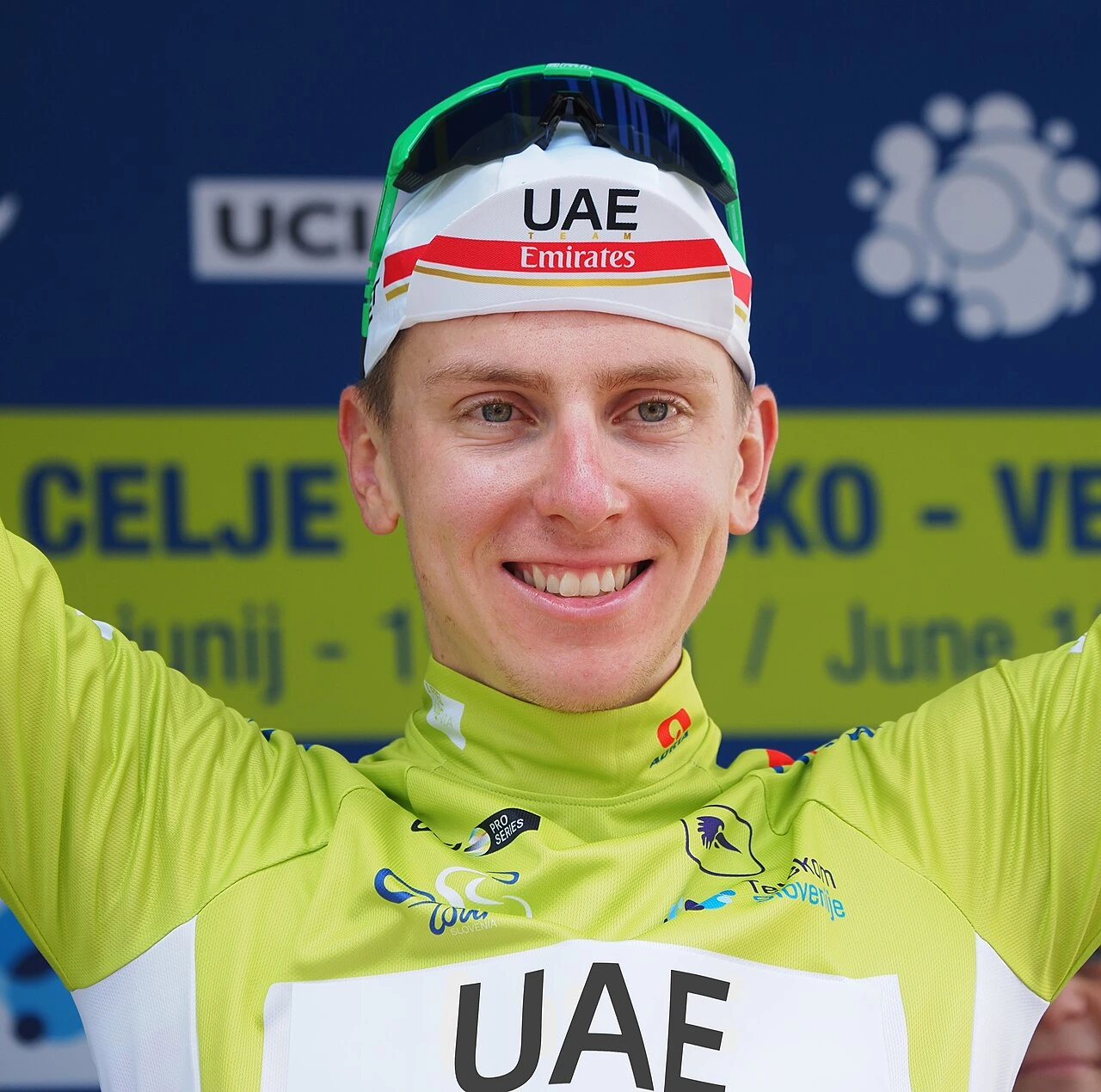
What 'net worth' actually means for a pro cyclist

Net worth is a snapshot of assets minus liabilities, not a paycheck. For Pogačar that means: everything he owns (cash, investments, property, vehicles, business stakes) minus anything he owes (mortgages, loans, taxes payable). It is not his salary. It is not his contract value. It is not his gross earnings for the year. This distinction matters a lot when you see headlines quoting a €50 million contract over six years because that is a nominal contract value spread over future years before a single euro of tax, agent fees, or living costs is removed.
The €200 million buyout clause reported in that same contract story is even further from reality. A buyout clause is a legal deterrent, not money sitting in an account. It represents what another team would theoretically need to pay to break him out of his UAE Team Emirates deal early. Nobody should count that as part of his net worth.
Why do estimates online vary so much? Three main reasons: (1) some sites report gross salary, others attempt a post-tax figure, (2) some include sponsorship and bonuses while others use the base salary only, and (3) celebrity net-worth aggregator sites often just copy each other and never update. Treat any single number you find as a rough midpoint, not a fact.
The estimate you can actually trust: €30M to €50M
Working from what is publicly confirmed: Pogačar earns north of €8 million per year in base salary (confirmed by multiple Cyclingnews salary investigations), with total annual gross income reported at approximately €12 million in 2025 once bonuses, personal sponsors, and merchandising are included. He turned professional in 2019 and has been one of the sport's highest-paid riders since at least 2021. If you assume his gross earnings averaged €6–7 million annually across 2019–2022 and scaled up toward €10–12 million in 2023–2025, total gross career earnings through end of 2025 land somewhere around €45–55 million before any deductions.
Apply realistic deductions: Slovenian income tax (top marginal rate around 50%), agent fees typically running 4–15% of salary contracts and 10–20% of endorsement value, plus living and training costs. After all that, a reasonable estimate of retained wealth after six-plus years is €30–50 million, assuming some portion is invested rather than spent. The lower end of that range assumes higher taxes and little investment growth. The upper end assumes smart financial management, property purchases that retain value, and modest lifestyle spending relative to income.
For comparison, his Slovenian countryman Primož Roglič operates in a broadly similar income bracket given his years at Team Jumbo-Visma and Red Bull Bora Hansgrohe, so that article gives useful context on how high-earning Slovenian athletes approach wealth accumulation.
Where the money actually comes from

Team salary: the biggest single number
Pogačar's base salary at UAE Team Emirates is reported at €8 million per year, making him the highest-paid rider in the men's WorldTour. Cyclingnews confirmed the team's total salary bill was €27.3 million in 2024, and Pogačar's slice alone represents nearly 30% of that. His contract runs until 2030, locking in this income level for several more years, which is highly unusual job security in professional sport.
Performance bonuses: big races only

Gazzetta dello Sport's reporting (including a March 2026 piece) makes clear that Pogačar's bonus structure is selective: he receives performance bonuses only for the Tour de France, Giro d'Italia, Vuelta a España, and the World Championships. This is actually a sign of his negotiating power. Earlier in his career he earned bonuses across more races; now the team accepts that he is going to win smaller races anyway, so bonuses are reserved for the monuments that matter commercially. Tour Magazin cited a €1 million Tour de France bonus as one reference point. Gazzetta pegged his variable earnings at roughly €1.75 million in 2024 and €1.25 million in 2025, reflecting which big races he prioritized and won in each season.
Race prize money: real but smaller than you'd think
The Tour de France GC winner receives €500,000, which sounds substantial but is typically split across the team's support riders and staff. In the 2024 Giro d'Italia, Pogačar personally accumulated over €400,000 in prize money across stages and classifications during that race alone. That said, prize money is the smallest of his income streams by a wide margin. Across a full season of racing, prize money might add €500,000 to €1 million to the gross total, much of which is shared before it reaches him.
Personal sponsorships and endorsements
This is where things get genuinely hard to pin down. Eurosport's coverage identified nine active sponsors and partners: Colnago (bikes), DMT (shoes), Met (helmets), Continental (tires), Enervit (nutrition), Jana (water), Plume (Wi-Fi), the Slovenian tourism board, and MyWhoosh (virtual training). Some of these are personal deals separate from his UAE Team Emirates kit obligations; others overlap with team partnerships. His ambassador role with Carthago (a Slovenian travel brand) is another confirmed relationship. At €12 million total annual income with the salary and bonuses accounting for roughly €9–10 million, sponsorship and merchandising are filling the remaining €2–3 million gap, which is consistent with an athlete of his profile who competes in a niche sport globally but commands outsized attention in Europe.
Appearance fees: the underreported stream
Cyclingnews reported that Pogačar was paid €150,000 to ride the Andorra Masters criterium, a post-Tour exhibition race. These appearance fees are not always disclosed and are hard to aggregate annually, but even two or three such appearances per year can add €300,000 to €500,000 to his gross income. They do not show up in salary trackers or prize-money databases.
Net worth vs annual earnings: stop mixing these up
This is the most common error in searches for athlete wealth. One reason these numbers can look wildly different is that some sites try to guess the <a data-article-id="A8987DE9-AC9D-4356-8CB1-99B156698760">orce kamcev net worth</a> figure without using transparent, source-backed assumptions. For a different example of how athlete wealth figures can get repeated without clear sourcing, see peter korbačka net worth. Annual earnings (or salary) is what comes in each year, gross and before deductions. Net worth is the accumulated balance of everything retained and invested over a career. A rider earning €12 million per year does not have €12 million in net worth after one year. And a rider with €50 million in net worth is not necessarily earning €50 million per year. They are different measurements on different timescales. A common related query is Ben Koracevic net worth, which is often discussed in the same context as athlete wealth versus yearly income.
| Concept | What it measures | Pogačar estimate (2025/2026) |
|---|---|---|
| Annual salary (base) | Fixed team pay per year, gross | €8 million |
| Total annual earnings | Salary + bonuses + sponsorships + prize money (gross) | ~€12 million |
| Contract nominal value | Total base pay across all contract years combined | ~€50 million (2025–2030) |
| Buyout clause | Legal deterrent, not cash or assets | Reported at €200 million |
| Net worth | Total assets minus liabilities, accumulated over career | Est. €30–50 million |
When you see a headline saying 'Pogačar signed a €50 million deal', that is the contract nominal value spread across roughly six years. It is a useful signal of his earning power but tells you nothing directly about how much wealth he has built. If you are comparing different athlete wealth figures, also look at kosta kantchev net worth as a related example of how these numbers get discussed online.
Build your own estimate: a simple step-by-step method
You do not need a financial model to do a reasonable sanity-check. A basic spreadsheet with the following structure gets you 80% of the way there.
- List confirmed annual income by category: base salary (€8M), performance bonuses (€1–1.75M depending on race calendar), personal sponsorships (est. €2–3M), race prize money net share (est. €200–400K), appearance fees (est. €300–500K). Sum to gross annual income.
- Apply an effective tax rate. Slovenia's top marginal rate is around 50%. A conservative effective rate given possible tax planning might be 40–45%. Multiply gross income by 0.55–0.60 to estimate post-tax income.
- Subtract agent and management fees. Use 5–10% of salary as a rough proxy (Wikipedia's sports agent overview suggests 4–15% is standard on playing contracts). On €8M that is €400K–€800K annually.
- Estimate annual living and training costs. Elite athletes commonly spend €200K–€500K per year on travel, training camps, coaches, physiotherapists, and equipment not covered by the team.
- What's left is annual net retained income. Multiply by each year of career at each income level (lower in early years, higher now) and sum across his career start (2019) to today.
- Add investment appreciation if you want to model wealth growth. Even at a conservative 4–5% annual return on retained cash, six years of compounding adds meaningfully to the total.
- The resulting range is your personal estimate. Compare it to published estimates to sense-check your assumptions, not to find the 'right' answer.
Running this with conservative assumptions (45% effective tax, 8% agent fees, €400K annual costs, no investment growth) gives a retained career total through end of 2025 of roughly €28–32 million. With moderate investment returns and slightly more favorable tax treatment, you reach the €40–50 million range. That is why the €30–50 million range is the honest answer: the spread reflects genuine uncertainty in inputs you cannot verify from the outside.
How to verify the numbers today
Most celebrity net-worth sites (Celebrity Net Worth, Wealthy Gorilla, and similar) are not useful for athletes like Pogačar because they copy from each other and update rarely. Here is a practical checklist of sources worth checking instead:
- Cyclingnews salary investigations: they have published multiple salary-focused reports with actual figures, including team budget breakdowns. Search 'Cyclingnews Pogačar salary' or 'WorldTour salaries' for the most recent version.
- La Gazzetta dello Sport: the Italian cycling press consistently publishes the most granular contract and earnings figures for top riders. Their October 2025 and March 2026 pieces on Pogačar are the most detailed available.
- UAE Team Emirates official announcements: contract term lengths and extensions are announced officially even when salary is not disclosed. This confirms the structure even when the number is missing.
- ASO (Tour de France organizer) prize money tables: official race prize breakdowns are published before each race and confirm what the GC winner receives.
- HypeAuditor or similar social analytics tools: useful for a rough ballpark on Instagram-based sponsorship value (one secondary signal, not a standalone estimate).
- BikeRadar and VeloNews: both publish earnings context pieces that triangulate multiple sources and are more reliable than aggregator sites.
Quick fact-check process: Start with the base salary figure (€8M is the most recently confirmed number). Check whether the source you are reading includes bonuses or not. Check whether it is gross or post-tax. Then look at the total earnings figure (€12M for 2025) and confirm whether personal sponsorships are included. If a site quotes a number dramatically different from those anchors without explaining why, treat it with skepticism.
What could move his net worth from here
His contract through 2030 provides remarkable income certainty. At €8 million per year in base salary alone, he is looking at another €32+ million in contracted base pay before the deal expires, not counting bonuses or sponsorship income. That makes a dramatic downward revision to his net worth unlikely unless something unusual happens.
What could push it higher: continued Grand Tour dominance drives performance bonuses and keeps his sponsorship leverage strong. A major non-endemic sponsor (a luxury brand, a tech company, or a financial services firm) entering cycling and wanting Pogačar's face would be a step-change in endorsement income. Riders like this also sometimes build business equity stakes rather than just endorsement fees, which can compound significantly over time.
What could pull it lower: injury is the most obvious risk. A serious injury that keeps him out for a season would not reduce his salary under a guaranteed contract but would likely reduce bonuses, sponsorship appeal, and appearance fee income. A major change in team finances at UAE Team Emirates (they are backed by Abu Dhabi sovereign wealth) seems unlikely but is worth monitoring. Tax changes in Slovenia or wherever he declares residence could also shift the retained-income calculation meaningfully.
New sponsorship announcements are the easiest thing to track in real time. When a brand publicly confirms a deal with Pogačar, that is an immediate, verifiable signal to update the sponsorship line in your estimate. His current sponsor roster (nine confirmed partners as of early 2026) is already substantial for a cyclist, but there is room to add more non-cycling brands as the sport's global audience grows. The SBS Tour de France broadcasts alone drew over 5.7 million Australian viewers, which speaks to the scale of audience that sponsors are buying access to.
If you want to track the broader wealth landscape of athletes from the same region, articles covering figures like Klemen Prepelič and Borut Pahor give useful context on how public figures from Slovenia build and report their financial profiles, even if the income scales are very different.
FAQ
If Tadej Pogačar earns about €12 million per year, should his net worth be around €12 million too?
No. Net worth is your estimate of assets minus liabilities at a point in time. To sanity-check, you would compare his retained career total (as the article estimates for end of 2025) to what he is contractually earning each year plus sponsorship income, then subtract realistic taxes, agent fees, and living or training costs. A good rule is to avoid treating any annual earnings figure as “money in the bank.”
Why do some websites give a Tadej Pogačar net worth number that doesn’t match the article’s €30–50 million range?
It depends on whether the number is meant to be gross (before deductions) or net (after taxes and fees). Use anchor figures from the article, such as €8 million base salary and about €12 million total gross in 2025, then adjust only for what’s missing: taxes, agent fees, and living or training costs. If a site’s number is far from these anchors without explaining whether it includes sponsorship, bonuses, or post-tax amounts, treat it as unreliable.
Should the reported €200 million buyout clause be included in Tadej Pogačar net worth?
A buyout clause is not cash he has received. It is a deterrent amount another team would theoretically need to pay to end the contract early. In a net-worth context, you count money actually earned and retained, not contract break values, because the latter might never be paid.
Do appearance fees and exhibition races change estimates of Tadej Pogačar net worth?
Not usually. Personal appearances (criteriums, exhibitions, charity rides) can add meaningful gross income, but they are not consistently tracked, and they may be paid partly through appearance fees, appearance plus sponsor obligations, or packages routed through management. If you want to include them, estimate them separately from salary and prize money, then cap how much you add per year to avoid double-counting.
How can Pogačar’s net worth move if his yearly results or bonuses change?
Because net worth can rise even if annual income drops, and it can stagnate even with high earnings if spending or large purchases increase liabilities. For example, a year of reduced bonuses from fewer peak results may still leave net worth stable if he has low lifestyle burn and continues investing. Conversely, a big property purchase can reduce “liquid” wealth while long-term net worth stays similar.
What input changes most affect an estimate of Tadej Pogačar net worth?
Try a quick sensitivity check: start from the article’s retained-income method, then run two scenarios for the largest uncertain inputs, taxes and investment returns. If you change effective tax by 5 to 10 percentage points or assume modest vs. higher investment growth, your retained total through end of 2025 can swing several million euros. That’s the main reason the article keeps a range instead of a single number.
Can business equity or investments be a major driver of Tadej Pogačar net worth beyond sponsorship fees?
Yes, but only if they are structured in a way that creates ongoing ownership value, such as equity stakes, a business interest, or a royalty-style arrangement. Many sponsorship deals are payments for promotion, which generally count as income rather than as equity. If you see “business ventures” mentioned, the useful question is whether he owns a share of a profitable entity or just receives a fee.
What’s the most common mistake when building your own spreadsheet estimate?
To avoid double-counting, separate streams: base salary, performance bonuses, prize money, sponsorship payments, and merchandising or ambassador fees. Then also decide whether your “costs” bucket already covers travel, training, and staff. If you include a costs figure that already assumes travel or staff are paid from somewhere else, you may undercount or overcount deductions.
What should I update first if I want to revise my estimate of Tadej Pogačar net worth in real time?
Track new sponsorship confirmations, because they are the most “updatable” line item. The article notes that a few non-cycling partners and ambassador roles can shift endorsement leverage quickly. In contrast, salary and most prize money patterns are slower-moving year to year, so sponsorship changes are often what make the largest near-term difference to annual gross income assumptions.
What events could realistically push a Tadej Pogačar net worth estimate lower even with a guaranteed salary?
If he stays in a stable team structure, the contract provides strong income certainty, but net worth can still be pulled down by shocks like a long injury layoff, reduced bonus eligibility, or a sharp drop in appearance demand. Also consider tax residency changes, since the retained-income math can shift meaningfully if his effective tax rate changes.
Next Article
Nikola Kovač Net Worth: Identify, Estimate, Verify Correct Person
Workflow to identify the right Nikola Kovač, estimate net worth, explain methods, income sources, and how to verify.