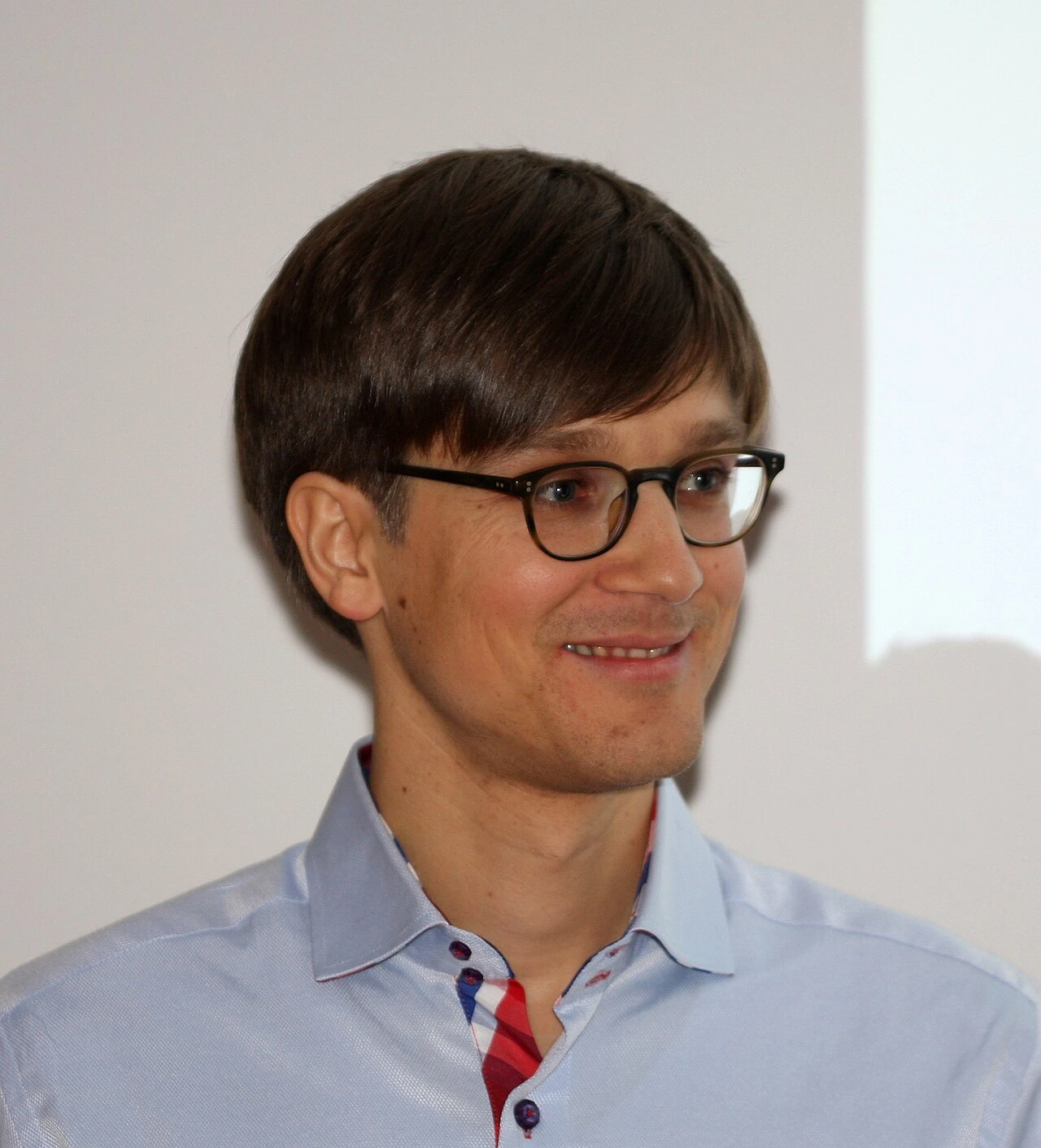
edu/news/big-questions-big-data-stanfords-jure-leskovec) He did his undergraduate degree in Computer Science at the University of Ljubljana in Slovenia (graduating Summa Cum Laude in 2004), then earned a PhD in machine learning at Carnegie Mellon University under Christos Faloutsos. His early career included research stints at Yahoo Research, Microsoft Research, Hewlett Packard Laboratories, and the Jožef Stefan Institute in Ljubljana.
He also co-authored PyTorch Geometric (PyG), a graph machine learning library whose work has been incorporated into products at Facebook, Pinterest, Uber, YouTube, and Amazon. That is the person this article covers.
If you landed here looking for a Balkan athlete or entertainer with a similar name, this is likely not your match. Leskovec fits the broader Balkan profile on this site as a high-achieving Slovenian public figure with verifiable international career credentials, but his wealth story is rooted in academia, Silicon Valley startups, and venture-backed technology, not sports contracts or media deals.
The net worth estimate and what it is actually based on
The most widely circulated figure comes from PeopleAI, which placed Jure Leskovec's net worth at approximately $5.6 million as of February 2026. Their own prior-year breakdown shows a steady upward trend: roughly $3.36 million in 2022, $3.92 million in 2023, $4.48 million in 2024, and $5.04 million in 2025. That pattern suggests their model is applying a fairly mechanical annual growth rate rather than responding to specific financial events.
PeopleAI's own disclaimer is important: the figure is "calculated based on a combination of social factors" and is explicitly described as "just estimation" and not accurate. There is no disclosed asset, tax filing, or equity document behind it. So treat the $5.6 million figure as one data point in a range, not a confirmed balance sheet number.
A more grounded estimate, built from what is actually verifiable, would put Leskovec somewhere in the $4 million to $15 million range, with the upper end being realistic only if his equity stake in Kumo AI carries significant current value. That is a wide range, deliberately so, because the honest answer is that no public filing pins down his personal wealth precisely.
Where the money likely comes from

Stanford faculty salary
Full professors at Stanford in computer science typically earn between $250,000 and $400,000 per year in base salary, with some senior professors earning more through named chairs or additional appointments. Leskovec holds an endowed professorship and is affiliated with the Stanford AI Lab, the Machine Learning Group, and the Center for Research on Foundation Models. Over a career of 15-plus years at Stanford, cumulative salary alone could represent $3 million to $5 million before taxes, investments, and any outside income.
Pinterest and the Chief Scientist role
Leskovec served as Chief Scientist at Pinterest for seven years. Chief Scientist compensation at a publicly traded tech company of Pinterest's scale (which went public in 2019) typically combines a base salary with equity grants. Pinterest stock has been publicly traded, meaning any vested shares during his tenure would have had a clear market value. He also co-founded Kosei, a recommendation engine startup that Pinterest acquired in January 2015. Acquisition payouts for co-founders of venture-backed startups vary enormously, but even a modest acquisition adds meaningfully to a net worth figure.
Kumo AI equity

As co-founder and Chief Scientist of Kumo AI, Leskovec holds an equity stake in the company. Kumo has received $37 million in venture capital funding to date, with Sequoia Capital listed as a backer since 2021. At a $37 million funding level, the implied company valuation is almost certainly higher (VCs rarely own 100%), which means co-founder equity could represent several million dollars on paper. However, startup equity is illiquid until an exit, so this portion of net worth is speculative until Kumo is acquired or goes public. This is the single biggest variable in any estimate of his wealth.
Research impact and consulting
Senior AI researchers of Leskovec's profile frequently earn consulting or advisory fees from technology companies. His research has been embedded in production systems at some of the world's largest platforms. While there is no public disclosure of consulting income, it is a standard income stream for professors at his level and would add to the overall picture.
Nonprofit affiliation (not a wealth signal)
Leskovec is listed as a Vice President of the American Slovenian Education Foundation in their IRS 990-EZ filing for fiscal year 2022. The extracted compensation table shows $0 in officer compensation, and the organization itself reported total revenue of $136,597 with net assets of $262,408 and zero liabilities. This is a cultural and philanthropic affiliation, not an income source, but it is worth noting because it appears in public records searches and could cause confusion.
Why different sites report different numbers
Net worth aggregator sites like PeopleAI, Celebrity Net Worth, and similar platforms rarely have access to primary financial documents for private individuals. They typically infer figures from one or more of the following: estimated salary ranges for known job titles, social media follower counts and engagement proxies, public records (property deeds, business filings), press coverage of company valuations, and formulaic growth models applied year over year. When a site lists Leskovec at $5.6 million and another lists $2 million, neither is lying outright; they are just using different proxy assumptions and weighting them differently.
The key problem with Leskovec specifically is that his largest potential asset, co-founder equity in a venture-backed startup, is not publicly traded and has no disclosed valuation per share. Different sites handle this differently: some ignore it entirely (producing a lower number), others apply a rough multiplier to reported funding rounds (producing a higher number). Neither approach is technically accurate.
Liabilities are almost never factored into these estimates. Mortgages, loans, and other obligations that would reduce actual net worth are generally invisible to outside researchers unless they appear in court records or public filings. So whatever figure you see is almost always a gross assets estimate, not a true net worth in the accounting sense.
How he compares to similar Balkan personalities
Leskovec's profile is unusual compared to most high-profile names tracked on this site. His wealth is built on academic credentials, Silicon Valley equity, and tech industry roles rather than athletic contracts or entertainment deals. For context, Slovenian and Balkan public figures in the same rough wealth tier include Croatian sports figures and regional tech entrepreneurs. For instance, Vedran Corluka's career earnings and net worth reflect a long professional football career in the Premier League and European club football, a very different wealth engine than Leskovec's. Similarly, goalkeeper Dominik Livakovic's estimated net worth is driven primarily by club salaries and performance bonuses, where figures are at least partially verifiable through reported transfer fees.
On the Serbian side, entrepreneur and investor profiles such as Boris Nikolic's net worth offer a closer structural comparison: wealth built partly through scientific and investment activity rather than sport or entertainment. Serbian tennis player Kecmanovic's net worth reflects prize money and sponsorship income, which is at least partially trackable through ATP earnings data, making it more transparent than Leskovec's situation.
| Name | Primary Wealth Driver | Estimated Range | Transparency Level |
|---|
| Jure Leskovec | Academic salary + startup equity + tech roles | $4M – $15M | Low (private equity, no disclosures) |
| Vedran Corluka | Football contracts + endorsements | Mid millions | Medium (transfer fees public) |
| Dominik Livakovic | Club salary + transfer fees | Low-mid millions | Medium (some fees public) |
| Miomir Kecmanovic | ATP prize money + sponsorships | Low millions | Higher (ATP data public) |
Filmmaker Emir Kusturica's net worth is another useful reference point for understanding how creative and intellectual professionals from the region accumulate wealth over long careers, though the revenue model (film royalties, festival prizes, real estate) differs substantially from Leskovec's tech-driven income. Meanwhile, younger regional athletes like Dominik Kuzmanovic and Boris Krcmar are earlier in their earning curves and sit at lower estimated net worths, while basketball player Kreshnik Gjergji's net worth profile illustrates how Balkan athletes in team sports build wealth through club contracts across multiple leagues.
How to actually verify this estimate
Here are the most practical steps to pressure-test any net worth figure for Leskovec, or to update it as new information becomes available: For any publicly traded company employment and equity disclosures, check the SEC EDGAR filing database for the relevant 10-K, proxy statements, and related documents SEC EDGAR for public company filings.
- Check Kumo AI funding announcements: Crunchbase and TechCrunch track funding rounds. If Kumo raises a Series B or is acquired, that is the single biggest event likely to move Leskovec's net worth meaningfully. The current $37 million total funding figure from Fortune (published May 2025) is the latest public marker.
- Look at Pinterest equity disclosures: Pinterest's SEC filings (10-K, proxy statements) list named executive officers and their compensation. As a Chief Scientist rather than a C-suite officer, Leskovec may not appear in those tables, but if he was ever named, the data is on the SEC's EDGAR database for free.
- Search IRS 990 filings: The American Slovenian Education Foundation 990-EZ is searchable via ProPublica's Nonprofit Explorer. This won't tell you his personal wealth, but it confirms his public record footprint and can rule out confusion with other individuals of the same name.
- Cross-reference property records: County assessor websites in Santa Clara County (where Stanford is located) allow public property searches. Real estate holdings are one of the few personal asset categories that are often publicly recorded.
- Apply a credibility filter to net worth sites: Any site that shows a suspiciously smooth year-over-year increase (like the $560,000 annual increment in PeopleAI's table) is almost certainly using a formula, not real financial data. That does not make the number useless, but it means you should treat it as a rough floor, not a precise figure.
- Watch for Kumo exit news: A startup acquisition or IPO would likely generate press coverage that includes valuation figures. At that point, back-calculating a co-founder's approximate equity value becomes much more feasible.
The honest summary is this: Jure Leskovec's net worth is most credibly estimated in the $4 million to $15 million range as of early 2026, with the PeopleAI figure of $5.6 million sitting in the lower-middle of that range. The number is dominated by uncertainty around Kumo AI's valuation and Leskovec's exact equity stake. Stanford salary and Pinterest compensation history provide a solid floor; the startup equity ceiling is the open question. If Kumo has a liquidity event, that figure could move significantly, and this estimate would need to be revisited immediately.