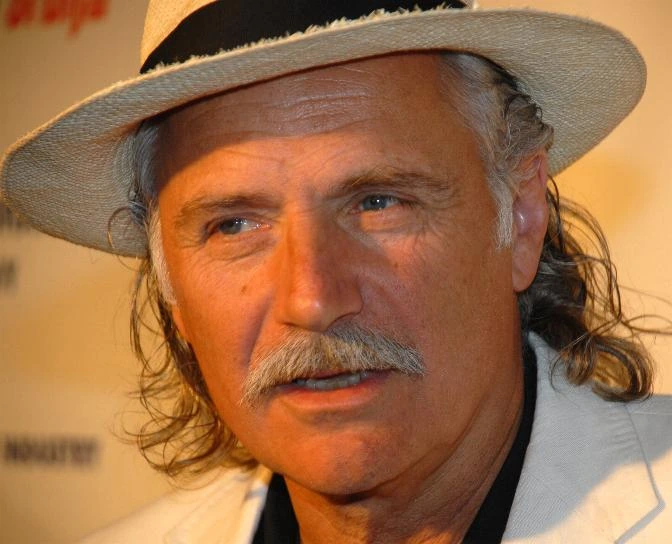
He also appeared as Dmitri Gredenko across multiple episodes of 24 (season 6), and those two roles alone put him on the radar of international audiences who might not know his full name or spelling. Rotten Tomatoes lists Šerbedžija in the cast for 24 (Day 6) episode 16 as Dimitri Gredenko.
His IMDb profile consolidates well over a hundred film and television credits under the anglicized spelling 'Rade Serbedzija', which is the variant most people type into search engines.
Beyond Hollywood, he is a decorated figure in regional cinema. He is a four-time winner of the Golden Arena for Best Actor at the Pula Film Festival, taking the award for Bravo maestro (1978), Evening Bells (1986), 72 Days (2010), and Fishing and Fishermen's Conversations (2020). He also won the Critics Award for Best Actor at the 51st Venice International Film Festival for Before the Rain (1994). Those are not minor accolades. This combination of international Hollywood credits and deep regional prestige makes him genuinely unique in the Balkan entertainment landscape, and it is also why his name surfaces across multiple wealth-tracking sites.
Why the net worth numbers you find online will not all agree

Before you land on any figure, it helps to understand why the numbers differ depending on where you look. CelebrityNetWorth, one of the most commonly cited sources, explicitly states: 'All net worths are calculated using data drawn from public sources. ' Their estimate for Šerbedžija, [last updated on December 5, 2025](https://www. celebritynetworth.
com/richest-celebrities/actors/rade-serbedzija-net-worth/), sits at $2 million. A separate AI-driven site, People AI, uses what it describes as 'social factors' rather than audited financials to generate a time-series estimate, putting the figure at $3. 41 million for 2025 (with $3. 07 million for 2024 and $2.
73 million for 2023). NetWorthSpot, another commonly referenced aggregator, uses 'publicly available data collection and a proprietary algorithm' but we did not find a specific page dedicated to Šerbedžija during our research pass.
The core reasons estimates diverge are straightforward: different sites pull from different public datasets, apply different multipliers to career earnings, use different update cycles, and make different assumptions about what counts as an 'asset.' None of these platforms have access to audited financial statements, tax returns, or property records in the way a court or bank would. When you see a figure labeled as a net worth estimate for a Balkan public figure like Šerbedžija, treat it as an informed approximation, not a verified balance sheet.
The most credible net worth range right now
Taking the available data together, the most defensible estimated net worth range for Rade Šerbedžija as of early 2026 is $2 million to $3.5 million. The lower bound comes from CelebrityNetWorth's publicly sourced estimate ($2 million, updated late 2025), and the upper bound is anchored by People AI's 2025 figure of $3.41 million. Given that neither platform has access to private financial data, and given the breadth of his career, the realistic midpoint is probably around $2.5 to $3 million.
| Source | Estimate | Methodology | Last Updated |
|---|
| CelebrityNetWorth | $2 million | Public data aggregation | December 5, 2025 |
| People AI | $3.41 million | Social factors / algorithmic | 2025 (year-end) |
| Our composite range | $2M – $3.5M | Cross-referenced estimate | April 2026 |
The spread between the two main sources ($1.4 million) is actually modest by industry standards. For a long-career actor who has worked across Hollywood studio productions, European arthouse films, and regional Yugoslav and Croatian cinema for over five decades, a figure in the low-single-digit millions is consistent. He is not a billionaire, and nobody is claiming he is. But $2 to $3.5 million represents a meaningful accumulation for a European character actor who has consistently worked across three different market tiers (Hollywood, European festival circuit, and regional Balkan cinema).
Breaking down where the money comes from

Acting fees across multiple markets
Šerbedžija's income is built on a long runway of acting work that stretches from the 1970s to the present. Hollywood character actors with his profile typically earn anywhere from $50,000 to $300,000 per film depending on the project's budget, their billing, and negotiating leverage. His roles in major productions like Snatch, Eyes Wide Shut (1999), and The Saint (1997) would have commanded fees in that range. Television work such as 24 adds episodic fees on top.
For regional and European productions, fees are lower, often in the $10,000 to $50,000 range per project depending on the country and budget. With well over a hundred credits across five decades, the cumulative gross earnings from acting alone could reasonably reach $3 to $5 million before expenses, taxes, and agent commissions.
Music and directing

Beyond acting, Šerbedžija is a working musician. His music career (primarily in the rock and folk-influenced space) generates income from recordings and live performances, though likely at a smaller scale than his acting fees. He has also directed, and directing fees for regional productions add another layer. These income streams are supplementary rather than primary, but they contribute to a diversified revenue picture that is common among Balkan performers who span multiple creative disciplines. This multi-discipline pattern is something you also see in figures like <a data-article-id='51324BBB-8112-4152-B78B-8D0BE1F85B14'>Srdjan Todorovic</a>, another Serbian actor whose income spreads across acting and performance work.
Festival appearances and prestige engagements
Film festival appearances, retrospective screenings, and jury roles generate honoraria. Someone with Šerbedžija's Venice and Pula credentials would regularly be invited to juries and tribute events, particularly across the Adriatic and Balkan festival circuit. These fees are modest individually, typically a few thousand euros per engagement, but they provide steady recurring income alongside any acting work.
Assets, property, and lifestyle signals
Šerbedžija has been publicly associated with properties in Croatia (his country of residence), and there are references in press coverage to his connection to the Istrian region. Real estate in Croatia, particularly in coastal or culturally significant areas, has appreciated significantly over the past decade as tourism and foreign investment have driven up prices. A modest property portfolio in that region would be a plausible and meaningful asset, potentially representing $300,000 to $700,000 or more depending on location and size.
His public lifestyle does not suggest excessive or ostentatious spending. Press coverage and interviews position him as someone engaged in artistic projects, political commentary (he has been publicly critical of war and nationalism), and cultural advocacy. This is broadly consistent with someone who has accumulated modest but stable wealth rather than someone spending at a high-consumption pace. No credible reporting links him to major luxury purchases, yachts, or business ventures of the kind that would dramatically shift the estimate upward.
When trying to assess assets for regional entertainment figures, it is worth comparing him to peers. For context, <a data-article-id='A0D89AE1-9027-42E8-AFF8-E800252A7808'>Darijo Srna</a>, the Croatian football captain and a recognized name from the former Yugoslav space, represents a different tier of wealth driven by professional sports contracts. If you are comparing sports-driven wealth, you can also review darijo srna net worth for context. This comparison can help you understand why Darijo Srna net worth figures often appear higher than an actor like Rade Šerbedžija. Šerbedžija's wealth profile is more in line with the upper end of what long-career regional actors accumulate rather than what elite athletes or music superstars generate.
Career milestones, controversies, and earnings inflection points
Understanding how Šerbedžija's earning power has shifted over time is the key to interpreting any net worth figure you see. His career has several clear chapters, each with different financial implications.
- 1970s–1980s (Yugoslav film peak): He built his reputation through Yugoslav state cinema and stage work. Earnings in this period were controlled by socialist-era compensation structures, meaning he was well-regarded but not commercially wealthy in the Western sense. His first two Golden Arena awards (1978, 1986) reflect this high-prestige, lower-compensation era.
- 1991–1995 (War and displacement): The collapse of Yugoslavia and the Croatian War of Independence created enormous personal and professional disruption. He left Croatia under difficult political circumstances. This period likely involved significant income instability and career recalibration.
- 1994–2000 (International breakthrough): Before the Rain (1994) and his Venice Critics Award opened the door to Hollywood and international European productions. The mid-to-late 1990s, with roles in Eyes Wide Shut, The Saint, and Mission: Impossible II (2000), represent his peak Hollywood earning window.
- 2000–2010 (Sustained international work): Snatch (2000) and ongoing Hollywood character roles kept his profile strong. This decade added substantial cumulative earnings.
- 2010–present (Regional return and sustained awards): His 2010 Golden Arena for 72 Days and his 2020 win for Fishing and Fishermen's Conversations mark a return to regional prestige alongside continued international work. At his age, high-volume Hollywood work is less likely, but selective prestige projects continue.
The political controversy surrounding his departure from Croatia during the war years is worth noting. He was accused by some Croatian authorities of draft-evasion-related issues, and the episode generated significant press. Controversies of this type can affect endorsement viability and public perception but do not typically alter an actor's ability to earn acting fees in international markets, and the Croatian courts eventually resolved the legal questions. His eventual return to recognition in Croatia (evidenced by the 2020 Golden Arena) suggests the professional and reputational damage did not permanently cap his earning trajectory in the regional market.
Career longevity is itself a financial asset for actors. Unlike athletes, whose earnings drop sharply after retirement, character actors can keep working into their 70s and 80s. At 79 years old in 2026, Šerbedžija is still active, and any new major role could push updated estimates upward. This is a dynamic that distinguishes entertainment-sector wealth from, say, athletic wealth. Compare this to Alek Krstajic, whose career-based wealth is more tightly tied to a defined playing period. If you are also looking at Alek Krstajic net worth, his career path follows a different earnings curve than a long-time character actor like Šerbedžija.
What drives estimates up or down in his specific case
Several factors could push the real figure above or below the $2M to $3.5M range. On the upside: any undisclosed real estate in Croatia or elsewhere, music royalties that accumulate over a long back catalog, or a high-profile role in a major international production. On the downside: acting work at his age tends to be less frequent, and if he has funded any personal arts or cultural projects (he has been involved in theater and cultural initiatives), those can consume capital rather than generate it.
It is also worth flagging that wealth estimates for Croatian and Serbian cultural figures in particular tend to be understated by aggregator sites, which rely heavily on English-language press. Regional income, property in Croatia, and earnings from Yugoslav-era work that were partially reinvested locally may not be captured by platforms that mostly scrape Western media. That is one reason the People AI figure ($3.
If you are also checking other Serbian entertainment profiles, the Srdjan Spasojevic net worth page can help you compare how these aggregator sites build their numbers People AI. 41M) being higher than CelebrityNetWorth ($2M) is not automatically suspicious: different weighting of regional versus international data can produce that kind of gap.
For a comparison point within the same general entertainment space, the profile of Srdjan Spasojevic illustrates how Serbian directors and filmmakers are tracked on this platform, and the methodology challenges are similar.
How to verify this estimate yourself

If you want to cross-check the figure independently, here is the practical approach. Start with IMDb's credits page for Rade Serbedzija: count the number of film and TV roles, note the production sizes (major studio vs. independent), and then apply rough industry-standard fee ranges to get a ballpark cumulative gross. That is essentially what the better aggregator sites do, and you can replicate it in about an hour.
- CelebrityNetWorth: Check the December 2025 estimate directly and note the update date. If it has been refreshed since then, the new figure is the more current data point.
- People AI: Use their year-on-year table as a trend indicator rather than a precise figure. The trajectory (2023: $2.73M, 2024: $3.07M, 2025: $3.41M) suggests a consistent upward revision, which is plausible for an active working actor.
- Croatian and regional press: Outlets like Jutarnji list or Večernji list occasionally run financial profiles or interview-based features on major cultural figures. These are in Croatian but Google Translate handles them adequately. The Los Angeles Times archive also has older interview-style features from the Before the Rain era that provide useful career context.
- Property registries: Croatia's land registry (Zemljišna knjiga) is partially accessible online. If he holds property in Croatia under his name, it may appear there, though the valuation will require separate research.
- Award records: The Pula Film Festival's official award history confirms his wins and years, which you can use as anchors for triangulating active career periods and likely higher earnings windows.
One comparison that calibrates expectations well: look at other well-known Serbian-descended performers and public figures tracked in this space. For example, <a data-article-id='1259C39B-8C30-4971-833C-D17082B0316E'>Srdjan Djokovic</a>, a prominent public figure in the Serbian context, has a net worth profile built on a very different set of income drivers than a long-career actor. If you want to understand how net worth estimates work for tennis-related public figures, the srdjan djokovic net worth guide is a helpful next read. Comparing the two helps illustrate how differently wealth accumulates depending on profession and market access. If you are also comparing other income figures in the Serbian entertainment scene, look up Srdjan Todorovic net worth for a related benchmark.
For additional calibration within the Serbian and Balkan entertainment space, the profiles of <a data-article-id='A0A09F65-88EA-4668-B4F5-29EA7A6F7114'>Serif Konjevic</a>, a well-known Balkan folk music figure, and Filip Krajinovic, whose wealth is driven by a completely different professional sport, show how wide the range of estimated net worths can be across the region depending on career path. Šerbedžija's figure sits in the middle of that spectrum: above regional-only entertainment figures, but well below elite athletes or political figures with access to state-adjacent resources. If you are curious about how tennis-related wealth stacks up across the region, the Krajinovic net worth profile is a useful reference point for that comparison.
The bottom line on Rade Serbedzija's net worth
The most credible current estimate for Rade Šerbedžija's net worth is in the range of $2 million to $3. If you want to compare to another tennis-related wealth profile in the region, check the Krajinovic net worth guide Rade Šerbedžija's net worth. If you are also researching Balkan folk artists, you can compare with the serif konjevic net worth estimate. 5 million, with $2.
5 to $3 million being the most defensible midpoint as of April 2026. That figure is built on five-plus decades of acting work across Hollywood, European arthouse, and regional Balkan cinema, supplemented by music and directing income, and likely anchored partially in Croatian real estate. If you want, you can also review how the Srdjan Todorovic net worth discussion compares with other Serbian performers who diversify across acting and performance work. No source has access to his audited financials, so treat any specific number as an informed estimate rather than a fact.
The trend across available sources is modestly upward, which makes sense for an active working actor with a long back catalog and ongoing regional prestige. If a major new role or significant disclosure surfaces, that is the signal to revisit the estimate. If you are tracking his finances, you may also want to compare the current estimates for his net worth across different sites.