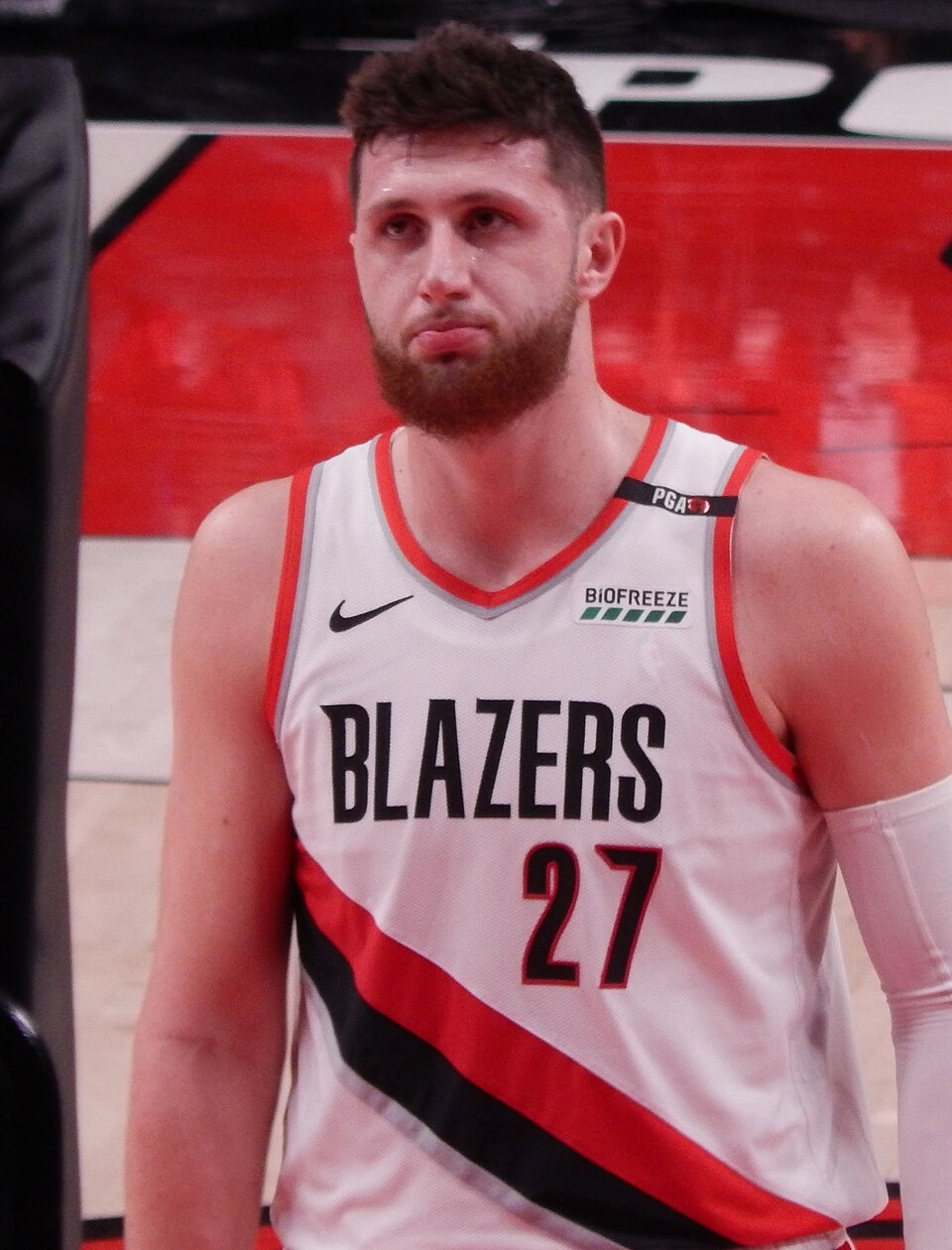
Quick answer: what is Nikola Vučević worth in 2026?

As of April 2026, the most credible range for Nikola Vučević's net worth sits between $80 million and $100 million, with some aggregator sites pushing the figure considerably higher. CelebsWiki places him at $80–100 million, Mabumbe lands on roughly $80 million, and SalarySport prints a specific single-number figure of $213,838,639. That last number looks precise but is actually a model output, not a disclosed balance sheet, and it includes aggressive assumptions about investment returns and asset appreciation. The honest answer is: somewhere in the $80–100 million band is the most defensible estimate based on what we can verify publicly, and anything north of $150 million requires assumptions that most analysts would flag as optimistic.
| Source | Estimate | Type |
|---|
| CelebsWiki (2026) | $80–100 million | Range-based estimate |
| Mabumbe (late 2025/2026) | ~$80 million | Single-point estimate |
| SalarySport | $213,838,639 | Model-derived single number |
| This article's working range | $80–100 million | Consensus of verifiable inputs |
Where these numbers actually come from
Net worth estimates for NBA players are almost never drawn from disclosed financial statements. Instead, they are built in layers. The baseline is always contract salary data, which is genuinely public. Sites like Spotrac aggregate every season's cash payment and publish cumulative career-earnings tables, so a researcher can look up exactly how much Vučević has been paid by each franchise. That salary total is the most reliable number in any model.
From there, estimators apply a set of assumptions to convert gross salary into net wealth. They subtract estimated taxes (federal, state, and sometimes city), apply a savings/investment rate, project asset growth over time, and add estimated off-court income from endorsements and appearances. Each of those steps introduces a range, and when you compound multiple uncertain assumptions over a 15-plus year career, you can end up with outputs that differ by $50–100 million depending on how conservative or aggressive the model is. That is precisely why one source says $80 million and another says $213 million for the same person.
The methodology gap between pay-based celebrity sites and more rigorous outlets like Forbes is also worth understanding. Forbes weights private-asset documentation, company equity disclosures, and cross-referenced business filings more heavily than salary aggregation alone. For athletes like Vučević whose off-court business portfolio is not publicly detailed, Forbes-style verification is harder to do, which is why most estimates rely on the salary-plus-endorsement-plus-investment heuristic instead.
Career earnings: the salary foundation

Vučević was drafted 16th overall by the Philadelphia 76ers in 2011 and quickly developed into one of the more productive centers in the league. His biggest financial milestone came on June 28, 2023, when ESPN and Sports Illustrated both confirmed he had agreed to a three-year, $60 million extension with the Chicago Bulls, all of it guaranteed, for an average annual salary of $20 million. ESPN reported that the Bulls and Nikola Vucevic agreed to a blank" rel="noopener noreferrer">3-year, $60 million contract extension. That contract runs through the 2025–26 season and is the anchor for virtually every current net-worth model.
Before that extension, he had already signed significant deals. His two-year, $26.25 million contract with the Bulls (referenced in WealthyGorilla's estimate breakdown) and the $16.6 million he earned in the first half of the 2020–21 season with Orlando before his mid-season trade are two other data points that appear in net-worth modeling. Across more than 14 NBA seasons, his cumulative gross salary from Spotrac's career-earnings tables comfortably exceeds $150 million before taxes.
After federal and state tax obligations (Illinois has a flat 4.95% income tax; California and New York road games trigger additional jock-tax liabilities), a realistic after-tax estimate on total career salary brings the retained amount to somewhere in the $80–95 million range before factoring in living expenses and asset accumulation. That is why the $80–100 million net worth range is coherent: it roughly matches what a carefully saving, well-invested career NBA player at Vučević's salary level would realistically hold.
Endorsement income is the component that makes or breaks the higher-end estimates. Vučević's sponsor relationships are listed on AthleteAgent.com's endorsements page, but specific dollar values on those deals are not publicly disclosed. Secondary estimators treat listed partners as a proxy for income and apply standard NBA-player endorsement rate assumptions, typically ranging from a few hundred thousand to low single-digit millions per year for a player of his profile. He is not a global marketing phenomenon like Nikola Jokić, so his endorsement income is almost certainly meaningful but not transformative relative to his salary.
His community involvement, documented on his NBA.com biographical page through work with the Orlando Magic Youth Foundation and various charitable initiatives, does build public profile and brand equity, which can indirectly support sponsorship renewals and new partnerships. But this is a qualitative factor, not a calculable income line.
The asset picture: what wealth looks like for a player at his level

For a player with Vučević's career arc, wealth is typically distributed across four broad categories. Real estate tends to be the most visible: NBA players in his salary bracket frequently own primary residences and investment properties in their team's city and often in their home country. Vučević, who was born in Geneva and grew up in Montenegro before playing for the Montenegrin national team, likely holds real property in multiple jurisdictions, though no public filings confirm specifics.
- Real estate: primary residence plus potential investment properties in the US and Europe
- Equity and market investments: standard for athletes with long-term financial advisors, often index funds and diversified portfolios
- Business interests: private equity stakes or small-business involvement are common but rarely disclosed for players at his public profile level
- Endorsement/brand equity: ongoing sponsor relationships that generate passive-style income even during off-seasons
- Cash and deferred compensation: guaranteed contract structures mean predictable cash flow, which supports liquidity planning
The reason estimates vary so widely is that the last four of those five categories involve private valuations. As NetWorthAnalysis notes in its methodology discussion, private-asset valuation and subjective assumptions around investment returns and liabilities are not observable from the outside. Two analysts using the same salary data can still produce dramatically different net worth outputs if one assumes a 6% annual investment return and the other assumes 10%.
How Vučević compares to other Serbian and Balkan NBA players
Vučević sits in a competitive tier when you line him up against other Balkan basketball players who have built wealth through the NBA. Nikola Jokić is the undisputed outlier at the top of the Balkan NBA wealth table, with supermax contracts and an enormous global endorsement portfolio pushing his estimates into completely different territory. Below that elite tier, Vučević is broadly comparable to other long-serving NBA centers and forwards from the region.
For example, Nikola Peković's net worth reflects a similarly long NBA career anchored by a significant contract with the Minnesota Timberwolves, though his career was cut shorter by injury, which affects the career-earnings comparison. Jusuf Nurkić's net worth tracks a comparable trajectory for a Bosnian center who has stayed relevant in the league across multiple franchises, making him another useful benchmark.
On the younger end of the spectrum, Nikola Jović's net worth is still in early-career accumulation mode, while Nikola Mirotić's net worth represents an interesting comparison case since Mirotić left the NBA for a highly lucrative European deal with Barcelona, which shifted the composition of his wealth away from NBA salary and toward European club payments and endorsements.
| Player | Estimated Net Worth Range | Primary Wealth Driver | Career Status (2026) |
|---|
| Nikola Vučević | $80–100 million | NBA salary (15+ seasons) | Active, Bulls |
| Nikola Peković | Lower range (injury-shortened career) | NBA salary + retirement assets | Retired |
| Nikola Mirotić | Mid-range, European shift | NBA + EuroLeague contracts | Active, Europe |
| Jusuf Nurkić | Mid-range, comparable trajectory | NBA salary, multi-franchise | Active |
| Nikola Jović | Early-career accumulation | NBA rookie/sophomore deals | Active, developing |
It is also worth noting that Serbian and Montenegrin athletes are not the only regional names worth comparing here. Luka Jović's net worth offers a football/soccer lens into how Balkan athletes in different sports accumulate wealth, with European club salaries structured differently from NBA guarantees. And if you want a broader regional picture, comparing with entertainment figures like Lepa Lukić's net worth or media personalities like Nikola Đuričko's net worth shows just how large the gap is between top-tier NBA salaries and wealth accumulation in other sectors of the regional entertainment industry.
Why the estimates will keep changing
The $60 million Bulls extension runs through the 2025–26 season. What happens to Vučević's contract after that, whether he signs a new deal, takes a veteran minimum, or moves to a European league, will be the single biggest variable in net-worth models for the next 12–24 months. A new NBA contract at $15–20 million per year would keep the wealth-accumulation engine running; a move to Europe or retirement shifts the model entirely.
Investment performance is the other major floating variable. If you assume Vučević's retained earnings have been invested conservatively (say, 5–6% annually), the $80–100 million range holds. If someone builds a model assuming 10–12% returns (which is plausible for equity-heavy portfolios in recent market conditions), you can get to $120–150 million without much difficulty. This is why the SalarySport figure of $213 million is not necessarily wrong in its own modeling framework, it just uses more aggressive assumptions than most analysts would apply.
Real estate valuations also float with market conditions, particularly for US residential and commercial property. Any significant shift in property values in Illinois or other markets where he holds assets will ripple through the estimates, even if his salary picture stays flat.
How to track the number going forward
The most practical approach is to treat the estimate as a living number with a clear update schedule. When Vučević's current contract ends after 2025–26, watch for new deal announcements from ESPN, Sports Illustrated, and Spotrac. Those will give you the new salary baseline, and the net-worth models will update accordingly within a few weeks. For ongoing contract tracking, Spotrac's year-by-year cash tables are the cleanest free resource: they break out base salary, incentives, and cumulative totals in a format that maps directly into net-worth calculations.
For endorsement income, AthleteAgent.com's sponsor listings give you a directional view of active partnerships. When brand logos appear or disappear from that page, it is a signal that off-court income may have changed, even if the dollar figure is never disclosed. Finally, keep an eye on Luka Jović's wealth profile and comparable Balkan athletes as reference points: if the broader regional athlete wealth tier is trending up or down due to market and sponsorship conditions, Vučević's estimate will likely move in the same direction.
- Check Spotrac for updated contract terms whenever Vučević's current deal expires or a new extension is reported
- Monitor ESPN and Sports Illustrated for trade or signing news that changes his annual salary
- Use AthleteAgent.com's endorsements page to spot new or dropped sponsor relationships
- Revisit CelebsWiki and Mabumbe estimate pages after major career events, since those sites update their ranges following contract announcements
- Apply a personal sanity check: if a site claims more than $150 million without explaining their investment-return assumptions, treat it as a high-end outlier rather than a consensus figure