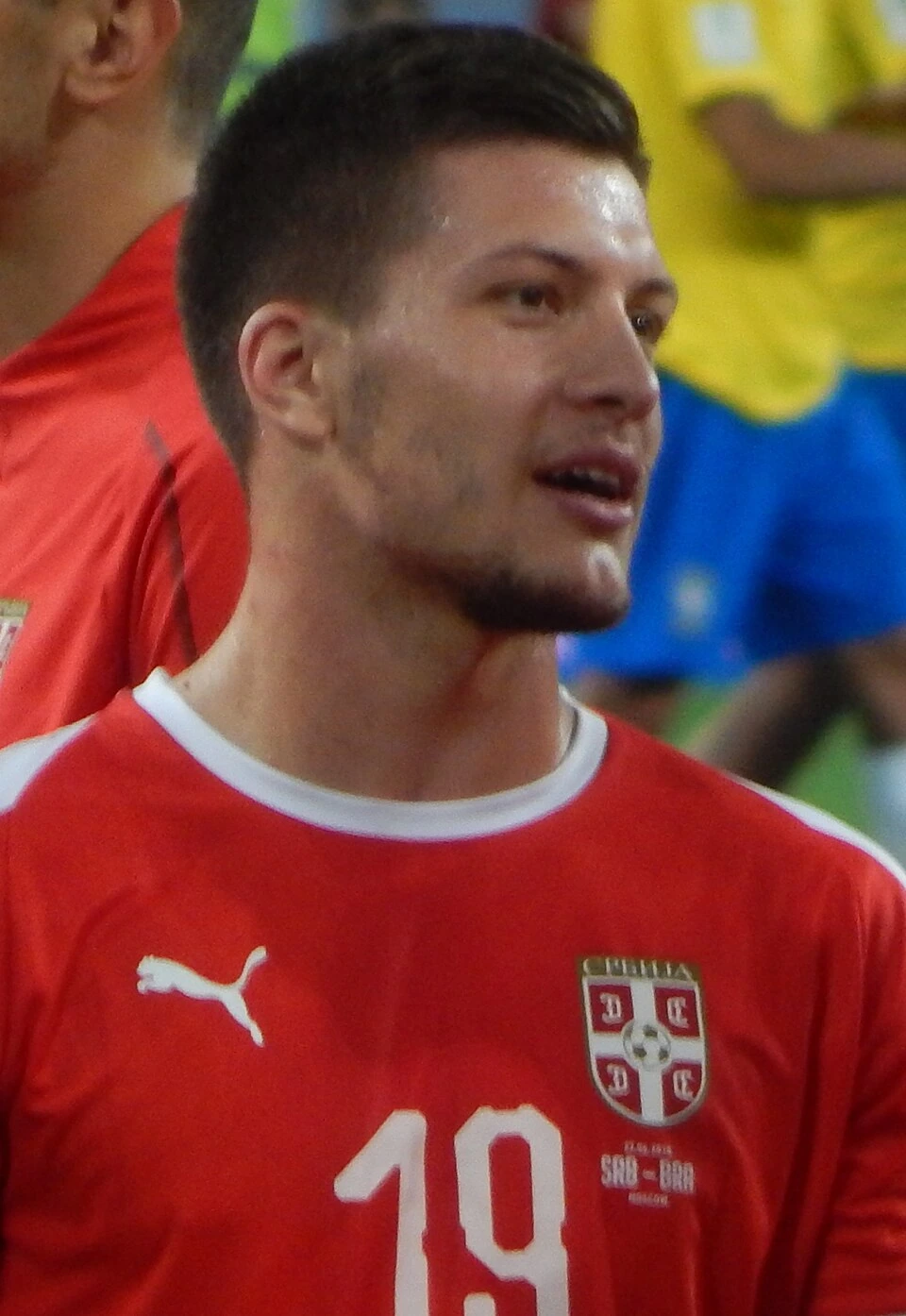
As of May 2, 2026, Luka Jović's net worth is most credibly estimated in the range of $8 million to $15 million USD, based on his documented football contract history, reported salary figures, and reasonable assumptions about endorsements and image rights. That range is far more grounded than the wildly inflated $450 million figure floating around some celebrity aggregator sites, and it's also more substantial than the sub-$6 million social-influence estimates produced by algorithm-based tools. The realistic number sits comfortably in the low-to-mid eight figures, driven almost entirely by his club football earnings accumulated since breaking out at Eintracht Frankfurt.
Luka Jović Net Worth: Estimate, Breakdown, and How to Verify

Marko Radivojević
2 May 2026
Which Luka Jović Are We Talking About?

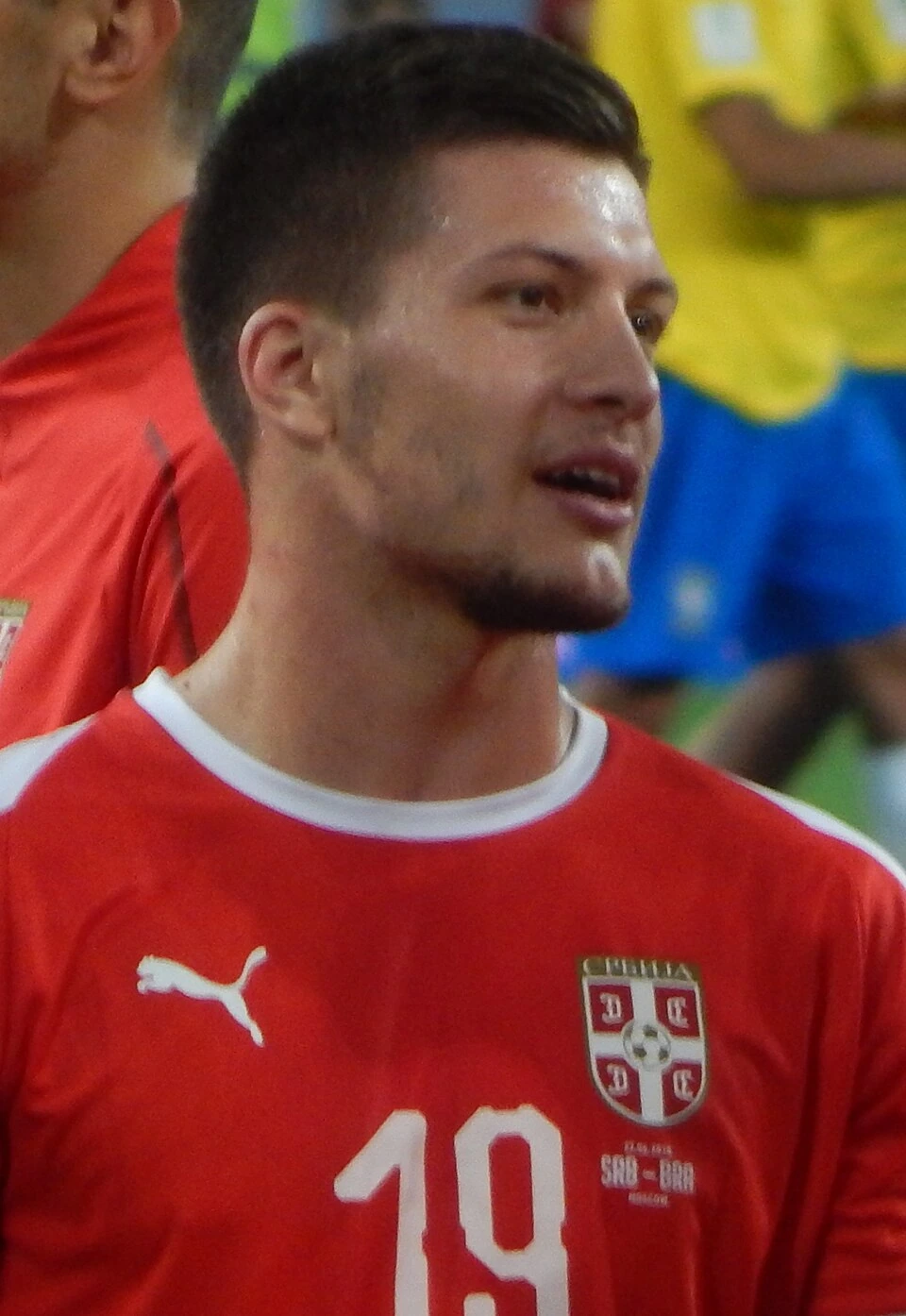
This article is about Luka Jović the Serbian professional footballer, born December 23, 1997. He is a striker who rose to prominence with Eintracht Frankfurt, earned a high-profile move to Real Madrid, and has since played for clubs including Fiorentina and AC Milan. As of 2026, he is reported to be playing for AEK Athens while continuing to represent the Serbia national team. He is not to be confused with Nikola Jović, the Serbian NBA basketball player whose profile appears on this site separately. If you meant Nikola Jović, the Serbian NBA player, you can find a separate breakdown of Nikola Jović net worth on this site. The footballer Luka Jović is the one almost universally searched under this query, and he is squarely within the Serbian and Balkan sports focus this site covers.
The Net Worth Range Right Now
Net worth is not a bank balance. It is an estimate: total assets (cash savings, property, investments, car fleet, etc.) minus liabilities (taxes owed, loans, agent fees). For professional footballers, the dominant driver is career earnings from club contracts, since endorsement income at Jović's level is significant but secondary. Given everything publicly reported about his contract history, a range of $8 million to $15 million is the most defensible bracket as of mid-2026. The lower bound assumes conservative spending, modest endorsements, and that he set aside a reasonable proportion of peak earnings during his Real Madrid and AC Milan stints. The upper bound assumes stronger savings discipline, meaningful property holdings, and that endorsement income added meaningfully over the years.
How His Football Contracts Built the Foundation

Jović's earnings trajectory has several distinct chapters. His breakthrough at Eintracht Frankfurt (on loan from Benfica) in the 2018-19 season, where he scored 17 Bundesliga goals, triggered a reported €60 million transfer to Real Madrid in summer 2019. His wage at Madrid was widely reported in Spanish football media as approximately €6-7 million per year gross, though his playing time was limited. A loan back to Frankfurt and subsequent move to Fiorentina followed, with reported salaries in the €3-4 million per year gross range. His time at AC Milan from 2023 onward brought reported wages of around €3-4 million per year. His current deal at AEK Athens represents a step down in gross wage but still comfortably above what most workers in Serbia or the Balkans would earn in a lifetime.
Across those years, accumulated pre-tax earnings from contracts alone likely total somewhere in the €25-35 million gross range. After taxes (Spain's Beckham Law may have helped during the Madrid years, but Italian and German tax rates are significant), agent fees typically running 5-10%, and normal living expenses, the net retained amount is considerably lower. This is why salary-based net worth estimates for footballers almost always overstate what actually stays in the athlete's pocket.
Bonuses and Performance Incentives
Top-tier club contracts typically include appearance bonuses, goal bonuses, and Champions League or Europa League qualification clauses. Jović's contract structures have not been fully disclosed publicly, but standard Bundesliga and Serie A contracts at his reported base level include goal bonuses in the range of €50,000 to €150,000 per milestone. Given that his form has been inconsistent across clubs, it is unlikely he maxed out performance bonus clauses at every club. International bonuses from Serbia's federation are also relatively modest compared to Western European national team payouts.
Endorsements, Sponsorships, and Social Media Value
Jović is not in the same endorsement bracket as Novak Djokovic or even some of the NBA players from the region. His social media following is solid for a Serbian footballer but not at a level that commands mega-deal sponsorships. He has had kit-related exposure through his clubs (Nike, Adidas partnerships flow through the clubs rather than the individual player at his level) and has been linked with regional brand partnerships in Serbia and the Balkans. A realistic estimate for annual endorsement income at his peak would be in the €200,000 to €500,000 range, contributing perhaps €1-2 million cumulatively to his net worth over a full career to date.
Social media is a growing income stream for athletes at his level. Instagram sponsored posts for players with his follower count (in the low millions) can command anywhere from €5,000 to €30,000 per post from regional and global brands, but this income is irregular and typically not disclosed. Some net worth aggregator sites, particularly those using social-influence-based methodology like PeopleAI's 2026 estimate of roughly $5.44 million, are essentially modelling social presence rather than real asset accumulation. That method captures something real about brand value, but it is not a substitute for actual contract and asset analysis.
Why the Numbers You See Online Vary So Wildly
This is the part that frustrates most readers doing this research. You will find figures ranging from under $6 million to over $450 million for Luka Jović depending on which site you land on. If you are specifically searching for his lepa lukic net worth, this same contract-and-earnings logic is the most reliable way to sanity-check the numbers you see online. That $450 million figure from NetWorthList is almost certainly a data error or a formula gone wrong. Real Madrid's entire transfer record has not produced that many millionaires at that level, and no Serbian footballer has ever accumulated anywhere near that amount. SurpriseSports places the figure around £33 million (roughly $40 million), which is more defensible as an upper-bound gross career earnings estimate but likely overstates retained net worth after taxes and expenses. PeopleAI's ~$5.44 million is a social-influence model that probably understates total assets.
The fundamental problem is that most net worth sites use one of three broken methodologies: they take a reported annual salary and multiply it by years active without deducting taxes or expenses, they use social media follower counts and engagement rates as a proxy for wealth, or they simply copy figures from other aggregator sites without verification. None of these methods are transparent about their assumptions. This is why the same person can show up with wildly different numbers across Celebrity Net Worth, NetWorthList, PeopleAI, and sports-specific aggregators. For Nikola Djuricko, the same idea applies, since net worth figures online are often built from assumptions rather than verified assets and liabilities Nikola Djuricko net worth. For anyone doing serious research on Balkan athlete wealth, triangulating across multiple source types is the only responsible approach.
| Source | Estimate | Methodology |
|---|---|---|
| NetWorthList | $450 million | Unknown / likely data error |
| SurpriseSports | ~£33M / $40M | Gross career earnings estimate |
| PeopleAI (2026) | ~$5.44 million | Social influence / algorithmic model |
| This site's estimate | $8M – $15M | Contract history + endorsements minus taxes/expenses |
How to Verify the Estimate and Keep It Updated

Net worth estimates for active footballers can shift meaningfully within a single transfer window. A new contract at a higher wage, a lucrative move to a Gulf league club, or a major sponsorship announcement can all move the needle. Here is a practical checklist for verifying and updating Jović's net worth estimate yourself over time.
- Check transfer and contract reports from reputable football journalism outlets (Transfermarkt for transfer values, Capology or Salary Sport for reported wage estimates) whenever Jović moves clubs or signs a contract extension.
- Look for any officially announced sponsorships or endorsement deals via his official social media accounts or club press releases, as these are the most reliable signals of endorsement income.
- Use Transfermarkt's market value tracker as a rough proxy for where he sits in the global footballer hierarchy, which correlates loosely with earning power.
- Cross-reference any net worth figure you find with at least two other sources and check when each was last updated. Figures more than 12 months old without a noted revision are almost certainly stale.
- Apply a tax and expenses haircut mentally: for a footballer earning €5M gross per year in a country like Italy or Germany, retained take-home after tax is typically 40-55% of gross, before agent fees and lifestyle costs.
- Check Serbian sports media (such as Sportski žurnal or B92 sport) for regional reporting on his contracts and any locally announced brand partnerships that Western aggregators may miss.
- Revisit the estimate after major career events: a move to a Gulf club (Saudi Pro League, UAE league) would significantly inflate the figure, while retirement or a long injury layoff would freeze new accumulation.
How Jović Compares to Other Balkan Athletes
For context, Jović sits in a tier of Balkan sports wealth that is comfortable but not elite by global standards. NBA players from the region like Nikola Vučević or Jusuf Nurkić have accumulated net worths in broadly comparable or somewhat higher ranges due to the scale of NBA contracts relative to even top European football wages. Nikola Mirotić, having earned substantial NBA money before moving to European basketball, is another useful comparison point. Nikola Mirotić net worth is often discussed in similar terms, though his NBA contract history is the main driver. If you are specifically searching for Nikola Peković net worth, you can use the same contract and asset-based approach to separate plausible estimates from social-influence guesses. Within Serbian football specifically, Jović is among the highest earners of his generation, particularly given the €60 million transfer fee that Real Madrid paid, which while not directly enriching him personally, reflects his peak market position and the wage level that came with it. Serbian and Balkan athletes at this level typically invest in domestic real estate as a primary asset class, which is worth factoring in when thinking about where his wealth might actually be held.
The bottom line: $8 million to $15 million is the most honest range for Luka Jović's net worth as of May 2026. It accounts for a genuinely impressive football career with peak wages at one of Europe's biggest clubs, without pretending that gross salary equals net wealth or that a $450 million figure makes any sense for any footballer at his level. Use the checklist above to update this estimate as his career evolves, and treat any single-source figure you find online with healthy skepticism.
FAQ
Why do some sites claim Luka Jović net worth is hundreds of millions, and how can I quickly tell it is wrong?
Check whether the figure is justified by disclosed assets or a clear calculation model. If the site only mentions a transfer fee, an annual salary, or social media metrics, it likely inflates net worth by not subtracting taxes, agent fees, and living costs. A simple sanity test is to compare the claimed net worth to the scale of Real Madrid’s overall spending and to Jović’s actual wage range, not his transfer value.
Should I treat the $8 million to $15 million range as his exact net worth?
No. The article frames it as a defensible band, not a verified statement. Net worth can swing if he buys or sells real estate, takes on or repays loans, or if tax assumptions change (for example, different residence or tax treatment during Madrid and subsequent leagues). Treat the range as an updateable estimate, not a fixed number.
How do taxes change Luka Jović net worth between Spain, Italy, Germany, and Greece?
Taxes are not only rate-based, they also depend on residency rules and whether a player qualifies for special tax regimes during specific years. The net retained amount can vary even with similar gross wages, so using one average tax rate across his whole career will usually misstate retained wealth.
What is the most common mistake when estimating a footballer’s net worth from salary?
Multiplying annual gross salary by the number of years active. Net worth should be based on retained earnings after taxes, plus or minus savings and liabilities, and it should account for high-impact deductions like agent fees and performance bonus payouts that may not be consistent year to year.
Do appearance and goal bonuses meaningfully affect the final net worth estimate for Luka Jović?
They can, but likely not enough to change the overall range dramatically. Bonuses are typically smaller than base wages, and if form is inconsistent, not every year maxes out incentive clauses. A good approach is to add a reasonable bonus allowance to the wage totals rather than assuming full maximums at every club.
Could endorsement and social media income push Luka Jović above the $15 million upper bound?
It’s possible but unlikely based on the kind of endorsement exposure described. At his level, sponsorship tends to be regionally meaningful but generally not mega-deal scale. For it to exceed the upper bound, you would need unusually strong deals plus disciplined long-term investing, and ideally evidence of sizable asset purchases beyond housing.
How can I validate Luka Jović’s earnings timeline if contract details are not public?
Triangulate reported base salary ranges, transfer dates, and loan or injury periods. Pay attention to the distinction between gross salary and reported net or “take-home” figures in media, and cross-check whether the same season is being counted twice when a player moves mid-season between competitions or countries.
Does the transfer fee, like Real Madrid’s €60 million for Luka Jović, mean he personally got that money?
No. Transfer fees mostly compensate the selling club and do not directly equal player cash. A player may receive signing bonuses or wage increases linked to the move, but net worth should be built from what he actually retained through wages, bonuses, and any signing-related payments, not the fee paid by the buying club.
If Luka Jović invests mainly in property in Serbia, how should that be treated in a net worth estimate?
Property can be a large part of an athlete’s “invisible” wealth, but you need to model it conservatively. Use an estimated purchase price, consider whether multiple properties exist, and remember that property values can change and may be leveraged by mortgages, which are liabilities that reduce net worth.
What sign would indicate Luka Jović net worth estimates should be updated sooner?
Major life and career events. Examples include a new contract with a materially higher wage, a move to a league with substantially different tax or pay structure, a public signing bonus announcement, or verified real estate acquisitions. Without such triggers, large swings between estimates usually reflect methodology differences rather than new facts.
Next Article
Luka Jovic Net Worth 2026 Estimate and Money Breakdown
Luka Jović net worth 2026 estimate with money sources, Real Madrid vs later clubs, and why figures vary.