Zlatko Dalić's estimated net worth as of April 2026 sits in the range of $3 million to $5 million, with the most credible anchor point being the publicly reported salary of approximately €1.5 million gross per year from his Croatian Football Federation (HNS) contract. That figure comes from tportal's benchmarking of World Cup coach salaries, and it's the most reliable base input available for any earnings model right now. Everything above that salary floor is inference: performance bonuses, accumulated career savings, and whatever private assets or investments he holds. So if you've seen wildly different numbers online, it's because almost every site is doing a different kind of math with different assumptions.
Zlatko Dalić Net Worth: Estimated Wealth and Income Sources

Marko Radivojević
13 Apr 2026
Who Zlatko Dalić Is (and Why Net Worth Searches Get Complicated)
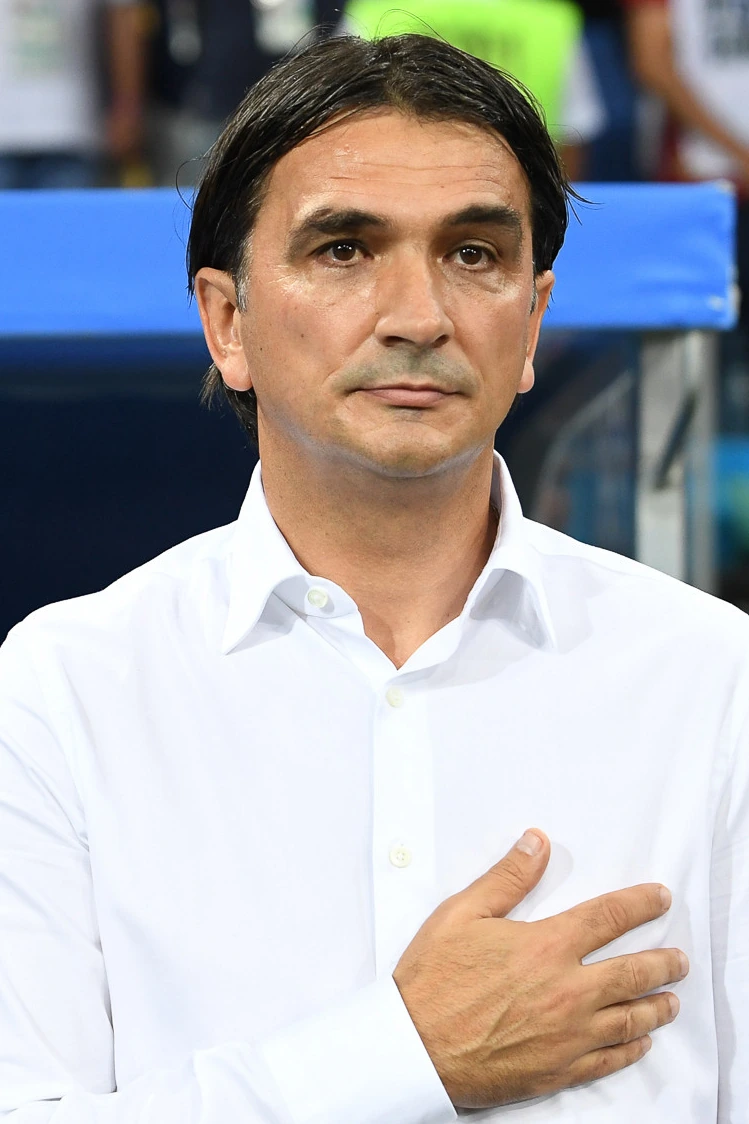
Zlatko Dalić is the head coach (izbornik) of the Croatian national football team, a role he's held since October 2017 when he stepped in following the departure of Ante Čačić. He guided Croatia to the 2018 World Cup final in Russia, where they finished as runners-up, and then to a third-place finish at the 2022 World Cup in Qatar. Those results placed him among the most successful national-team managers in Croatian football history, and they also dramatically elevated his market value and public profile. He has since extended his contract with HNS to cover the 2026 World Cup cycle, with the tournament to be held in the USA, Mexico, and Canada.
The reason net worth searches for Dalić produce inconsistent results is straightforward: he's not a club manager at a publicly traded Premier League outfit, and he doesn't have a Forbes listing or disclosed financial statement. His income is tied to federation contracts, tournament bonuses, and possibly some commercial activity, none of which is fully public. Sites trying to estimate his wealth are essentially reverse-engineering a number from partial data, which is why you end up with ranges as wide as $100,000 to $3 million depending on the source.
The Estimated Net Worth Range Today
The two most-cited aggregator sites give very different answers. CelebsMoney lists a range of $100,000 to $1 million for 2026, which seems significantly undervalued given his confirmed salary alone. PeopleAI puts the figure at approximately $2.97 million for 2026. Neither is an audited figure: CelebsMoney's own methodology notes that personal spending, taxes, real estate, and liabilities are typically private and excluded, while PeopleAI uses what it describes as 'social factors' and influence metrics rather than verified income disclosures. Both should be treated as rough guidance.
A more grounded estimate comes from building up from known inputs. At €1.5 million per year gross (roughly $1.6 million at current exchange rates), and with a tenure starting in late 2017, Dalić has now been collecting a high-level coaching salary for roughly eight years, though at varying rates: early contract periods reportedly paid around €500,000 annually, rising to €1.6 million under the July 2020 contract renewal, and settling at approximately €1.5 million gross under the current arrangement. Strip out taxes (Croatia's top marginal income tax rate applies), living expenses, and you're looking at career net savings that plausibly land in the $3–5 million range when combined with bonuses. That's the honest working estimate.
Where His Money Actually Comes From
HNS Contract Salary

The base salary from HNS is the most reliably sourced income figure. The progression looks like this: early role at roughly €500,000/year, then the July 2020 contract extension reportedly bringing him to €1.6 million annually through end of 2022, and the current arrangement reportedly at approximately €1.5 million gross per year. That rate was benchmarked by tportal in March 2026 against other World Cup coaches' salaries, where it placed him above some comparable national team managers in terms of compensation.
Tournament Performance Bonuses
This is where the numbers get more speculative but also more interesting. FIFA distributes prize money to national federations based on tournament performance, not directly to coaches. FIFA's Inside FIFA confirms that teams eliminated at the World Cup group stage receive a minimum of USD 8 million in prize money, which helps anchor the overall FIFA prize-money framework FIFA Council confirms contributions for FIFA World Cup participants. For the 2018 World Cup, HNS reportedly received $8 million for qualifying plus an additional $20 million for the silver-medal finish. Croatian media outlet bljesak.info reported that for the 2018–2023 period, the technical and coaching staff collectively received approximately 6.635 million euros from tournament-related income distribution. How much of that went specifically to Dalić isn't publicly confirmed, but as head coach he would logically receive the largest share of any staff distribution. A realistic assumption for his personal bonus income from 2018 and 2022 combined could be in the range of €1–2 million total, spread over that period.
Commercial Activity and Endorsements
There's no verified public record of significant brand endorsement deals or business investments tied to Dalić. He maintains a relatively low commercial profile compared to club managers in top leagues. It's worth noting that a Serbian outlet reported he turned down an offer of approximately €12–13 million per year to coach Qatar, which, if accurate, signals strong external market interest, but that income never materialized since he declined. No property portfolio, business ownership, or investment income has been publicly reported, so these are treated as unknown rather than zero in responsible estimates.
Why the Numbers Differ So Much Across Websites
Net worth aggregator sites use fundamentally different methods, and none of them have access to Dalić's actual bank account or tax returns. CelebsMoney typically builds estimates from career earnings aggregation and applies broad assumptions about spending and savings, with an explicit acknowledgment that private assets and liabilities are excluded. PeopleAI flags that its methodology incorporates social and influence factors, which can produce inflated estimates for public figures with high visibility regardless of their actual income. Sites like SurpriseSports include visible 'last updated' timestamps (a January 2026 update was noted on their page), but that date signals freshness, not accuracy.
The broader issue is that coaching salaries for national-team managers are not subject to the same disclosure requirements as, say, a CEO of a publicly listed company. HNS is a federation, not a corporation with shareholders demanding transparency. So every estimate is an inference model wrapped around a few publicly reported data points: the contract extension timeline, the salary figure quoted in Croatian sports media, and the FIFA prize money flows. When those inputs differ across sources, the outputs diverge enormously.
How to Check (and Update) the Number Yourself

If you want a more current or personalized estimate, here's a practical checklist to build your own:
- Confirm his active coaching status: Check the HNS official website (hns-cff.hr) for recent match-related press releases. If Dalić is quoted or listed as head coach for current qualification windows, you can assume the reported salary is still in effect.
- Set your salary base: Use €1.5 million gross/year as the current base, sourced from tportal's March 2026 benchmark. Adjust for Croatian income tax to get a net figure (roughly 40–45% marginal rate at that income level).
- Add career earnings: Run the salary timeline (€500k/year for ~2017–2020, €1.6m for 2020–2022, €1.5m from 2022 to present) and apply a conservative net savings rate of 30–40% after taxes and living expenses.
- Factor in bonus income: Use the bljesak.info staff distribution figure as a ceiling reference. Assign Dalić a portion of the 2018 and 2022 bonus pools, noting this is estimated rather than confirmed.
- Check for contract updates: As of April 2026, Dalić reportedly had not accepted a new HNS offer for the post-2026 cycle, per net.hr and tportal reporting. Any new contract announcement would reset forward-looking income assumptions.
- Cross-reference aggregators critically: Treat PeopleAI and CelebsMoney as ballpark indicators only. If their numbers differ from your salary-based model by more than 50%, weight your model more heavily unless they cite a specific source you can verify.
- Search Croatian sports media: Sportske novosti, Jutarnji list, and tportal regularly cover HNS financial matters and occasionally report salary details. Set Google Alerts for 'Dalić plaća' or 'Dalić ugovor' for ongoing updates.
How He Compares to Other Balkan Football Coaches and Public Figures
Dalić sits at the top end of what Balkan-based coaches and managers typically earn, primarily because he holds a high-profile national team role with major tournament success attached to it. For context, consider Zlatko Zahović's net worth, the Slovenian football legend who built his wealth through a playing career at Porto and other top clubs before moving into administrative roles. Zahović's wealth came from player wages rather than coaching fees, which illustrates a key regional pattern: playing careers at top clubs typically generate more accumulated wealth than coaching careers, even at the national-team level.
Comparing Dalić to other regional public figures is also instructive. Zdravko Čolić's net worth, for instance, reflects decades of music-industry earnings across the former Yugoslav market, and his accumulated wealth likely exceeds Dalić's given the longevity and commercial diversity of an entertainment career. In contrast, Žarko Pribakovic's net worth offers a useful data point on what regional sports management and coaching figures can realistically accumulate over long careers in a smaller market context.
| Figure | Role | Estimated Net Worth Range | Primary Income Source |
|---|---|---|---|
| Zlatko Dalić | Croatia national football team head coach | $3M – $5M (estimated) | HNS salary + tournament bonuses |
| Zlatko Zahović | Former footballer / sports executive | Variable; playing-career wealth base | Club salaries (Porto, etc.) |
| Žarko Pribakovic | Regional sports figure | See regional comparison data | Sports career earnings |
| Zdravko Čolić | Music artist (Balkan market) | Higher range; multi-decade career | Music, concerts, royalties |
For broader comparison within the Croatian/Balkan coaching world, it's also worth noting that other figures in regional football management can look very different financially. Zlatko Todorčevski's net worth shows what mid-tier regional coaching careers look like in financial terms, and the gap between that level and a World Cup finalist coach like Dalić is substantial. Meanwhile, actor Zlatko Burić's net worth, built through a film career spanning Scandinavia and Hollywood productions, provides an interesting cross-industry comparison: different profession, different region, but similar public-profile dynamics when it comes to wealth estimation methodology.
What You Should Take Away From All of This
The practical answer: Zlatko Dalić's net worth in April 2026 is most responsibly estimated at somewhere between $3 million and $5 million, built primarily on a coaching salary of approximately €1. Totalinfo.hr reported that Dalić’s salary is set at about €1.6 million per year as part of the agreement/continuation after negotiations. 5 million per year gross from HNS, accumulated tournament performance distributions over the 2018 and 2022 World Cup cycles, and career savings going back to his 2017 appointment. The aggregator sites you'll find via a quick search give numbers ranging from under $1 million to nearly $3 million; treat those as rough guides and weight them against the salary-based model above.
There are two things that could move this estimate significantly in the near future. First, the contract situation: as of early 2026, Dalić had not accepted HNS's offer of an extension through Euro 2028. If he leaves after the 2026 World Cup and doesn't take another high-paying role, forward income assumptions drop. If he signs with a well-resourced club or another federation, estimates climb. Second, the 2026 World Cup outcome itself: deep tournament runs generate significant bonus distributions for coaching staff, and a strong Croatian performance could add meaningfully to his career earnings total.
For ongoing tracking, bookmark this site's wealth database and check back after any major contract announcement or tournament milestone. The most reliable signal for updating the estimate is always a credible media report citing an HNS official or a Dalić interview where contract terms are discussed, not an aggregator page's automated update.
FAQ
How much would Zlatko Dalić’s net worth change if he leaves after the 2026 World Cup?
If his HNS contract ends after the 2026 World Cup and he does not secure another top-paying national-team role or a well-funded club job, your estimate should be revised downward quickly. The reason is that coaching wealth models mostly reflect a multi-year income stream, so a gap after 2026 reduces future accumulation even if prior savings were solid.
Why do net worth sites often overstate or understate his wealth versus his salary?
Most “net worth” pages treat gross salary as if it were close to what ends up invested, but gross is not what matters. A practical way to sanity-check is to assume Croatia’s high marginal income tax hits a large portion of earnings, then apply a typical savings rate on top of living expenses, rather than counting gross income as net wealth.
Does World Cup prize money directly increase Dalić’s personal net worth in a clearly measurable way?
Prize money and distribution figures are paid to federations, not paid directly to a coach as a line item. Even if HNS receives sizable World Cup-linked distributions, the share that reaches the head coach depends on internal federation allocation and staff agreements, which are rarely published in a coach-specific way.
What’s the most reliable way to judge whether a specific net worth number is credible?
Because Dalić is not a publicly reporting executive, there is no audited statement to reconcile “wealth” with income. Treat any figure outside the $3 to $5 million band as hypothesis-driven, then weight it by whether it is anchored to his known HNS compensation timeline rather than influence or “social” metrics.
How do currency conversions affect reported net worth ranges for Dalić?
Yes, exchange rates can distort estimates on aggregator sites. If a model converts € salary to USD using outdated or unusually favorable rates, the USD range can shift meaningfully even when the underlying euro income is unchanged, so compare using the same year’s rate or stick to a euro-based range when possible.
Does a newer “last updated” date on a net worth page mean the estimate is more accurate?
Be careful with “updated” dates on aggregator pages. A fresh timestamp usually means the site refreshed its algorithm inputs, not that any new official contract term or verified asset data became public, so recency is not the same as evidence.
What evidence should I prioritize if I want to update the net worth range myself?
Look for the kind of sources that specify compensation or contract terms attributed to HNS. In practice, the strongest signal is a credible sports media report that cites HNS, a coach interview, or another document-like reference to salary or renewal conditions, not an estimate article that only reuses earlier numbers.
How should I treat rumors about sponsorships or investments in his net worth calculations?
If you see claims of big endorsement income or business ownership, ask whether there is verifiable reporting that ties those deals to him personally. In his case, the article notes no confirmed public record of major brand endorsements or investments, so you should generally treat such claims as unproven unless a concrete deal is described with identifiable details.
Why can two salary-based models still give different net worth outcomes?
A coach can have significant accumulated wealth even with moderate spending, but the direction flips if the model assumes high discretionary costs. If Dalić’s lifestyle spend is higher than typical assumptions, the same salary stream yields less net worth, which can explain why two “salary-based” estimators still diverge.
What’s the common mistake people make when interpreting staff distribution numbers for national-team coaches?
His personal net worth should not be conflated with HNS finances or staff distributions. Federation allocations can benefit the coaching staff collectively, but personal net worth only grows by what Dalić actually earns and saves after taxes and living costs, so estimates should isolate the head-coach share rather than the total staff pot.
Next Article
Zlatko Zahović Net Worth Estimate: Range, Sources, and How It’s Calculated
Zlatko Zahović net worth range, income sources, and how estimates are built and verified for credibility.