
Petar Matijević is one of the wealthiest private businesspeople in the Western Balkans, with estimated net worth figures consistently placing him in the range of €1.5 billion to €1.8 billion as of April 2026. He is not a tennis player, politician, or entertainer. He is an industrialist: the Founder and CEO of Industrija mesa Matijević, a meat-industry holding company headquartered in Novi Sad, Serbia. If you landed here after a quick search, that is the Petar Matijević the data is about.
Petar Matijevic Net Worth 2026 Estimate and Income Sources

Marko Radivojević
12 Apr 2026
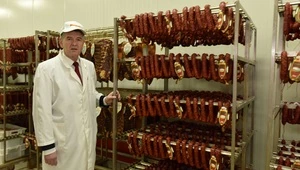
Who is Petar Matijević?
Petar Matijević built his fortune from the ground up in the Serbian food and agriculture sector. His holding company, Industrija mesa Matijević (commonly shortened to MI Matijević), is one of the largest meat-processing businesses in the region. He holds 70% ownership of the group, with the remaining 30% held by Zora Matijević. The company is based in Novi Sad and employs over 2,000 people. By 2018, the group reported revenues of €142.40 million, net income of €10.11 million, total assets of €296.34 million, and equity of €239.14 million, making it a major industrial enterprise by any Balkan standard.
But Matijević's profile has expanded well beyond processed meat. Hungarian-language Serbian outlet Magyar Szó has described him as the largest agricultural landowner in Serbia, with some reports citing up to 28,000 hectares under his ownership and up to 33,000 hectares reached in total land control, according to data from agricultural analytics platform Agrosmart. That framing, comparing him to a local Bill Gates of the agribusiness world, gives you a sense of just how dominant his land footprint is by regional standards.
What "net worth" actually means and how these estimates get made
Net worth is a straightforward concept: total assets minus total liabilities. In practice, calculating it for a private businessman like Matijević is anything but simple. His wealth is spread across privately held companies, agricultural land, commercial real estate, and infrastructure assets, none of which trade publicly on a stock exchange. There is no share price to look up. That means every estimate requires a valuation of private holdings, which involves assumptions about revenue multiples, asset appraisals, and debt levels that are not fully disclosed.
The methodology used by most regional wealth lists works like this: researchers start with the company's known financials (revenues, reported equity, asset base), apply an industry-standard valuation multiple, add known real estate and land holdings at estimated market values, then subtract any visible liabilities. The result is an approximation, not an audit. When you see a figure like €1,794,545,863, the decimal-level precision is not a sign of accuracy. It is an artifact of the calculation model, not verified financial data.
The estimated net worth range (as of April 2026)
Regional wealth lists have consistently placed Petar Matijević in the top tier of Balkan billionaires. Here is what the most cited figures actually show:
| Source / List | Estimated Wealth (EUR) | Year/Edition |
|---|---|---|
| Sloboden Pečat / Free Press Regional Top 100 | €1,562,250,181 | 2024 |
| Vijesti.me Regional Top 100 | €1,794,545,863 | 2025 |
| Sarajevo Times Regional Top 10 | €1,821,626,535 | 2025 |
Based on these figures and the trajectory of his asset acquisitions, a defensible estimated net worth range for Petar Matijević as of April 2026 is €1.6 billion to €1.85 billion. The midpoint of roughly €1.7 billion is the most reasonable working estimate. This range accounts for the typical variance between list methodologies, currency conversion differences, and the lag between asset acquisitions and list updates.
Where his wealth comes from
Matijević's wealth is not a one-source story. His income and asset base draw from several distinct pillars, each adding meaningful weight to the overall estimate.
Meat industry operations
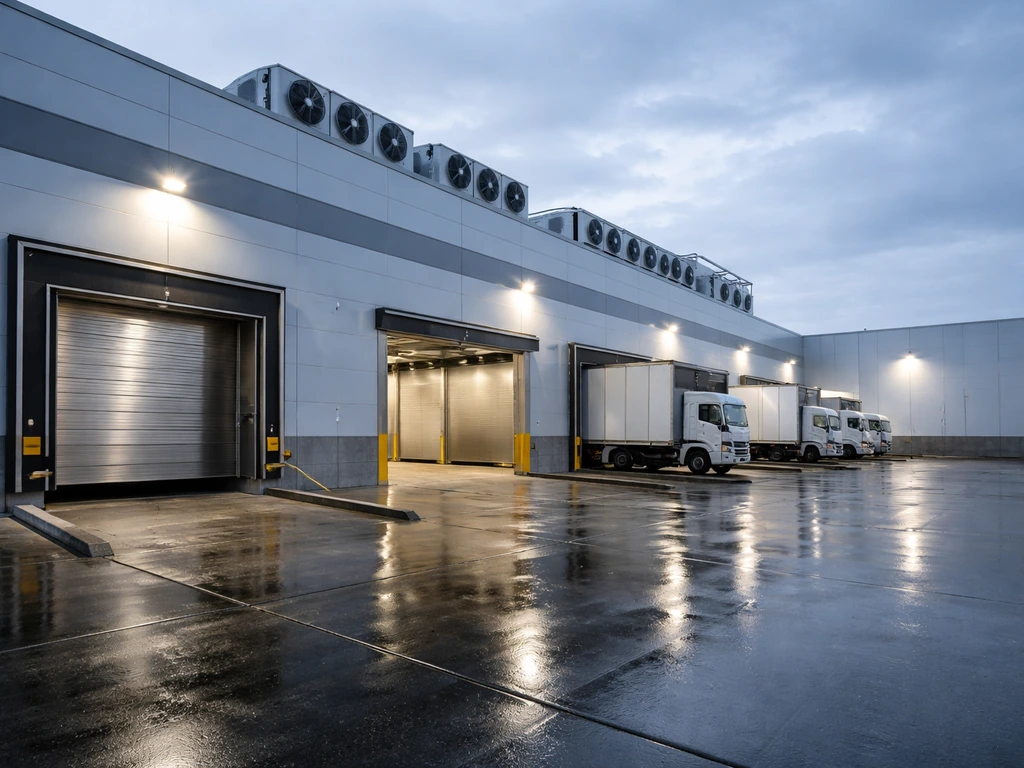
The core business is still the meat-processing group. With €142.4 million in annual revenues and €10.1 million in net income recorded back in 2018, the business has likely grown since. The holding's equity base of €239 million at that time represents the bare-minimum starting point for valuing his stake. At a conservative 2x equity multiple on 70% ownership, his share of the core operating business alone exceeded €330 million as of those older figures.
Agricultural land
This is arguably the biggest single wealth driver that traditional net worth lists underestimate. Reports indicate Matijević controls around 28,000 hectares of Serbian agricultural land. At an average market value of even €3,000 to €5,000 per hectare for arable Serbian farmland (a conservative range given prime Vojvodina agricultural land values), that land portfolio alone could represent €84 million to €140 million in assets. If the higher estimates of 33,000 hectares are accurate, the ceiling rises further.
Real estate and hospitality
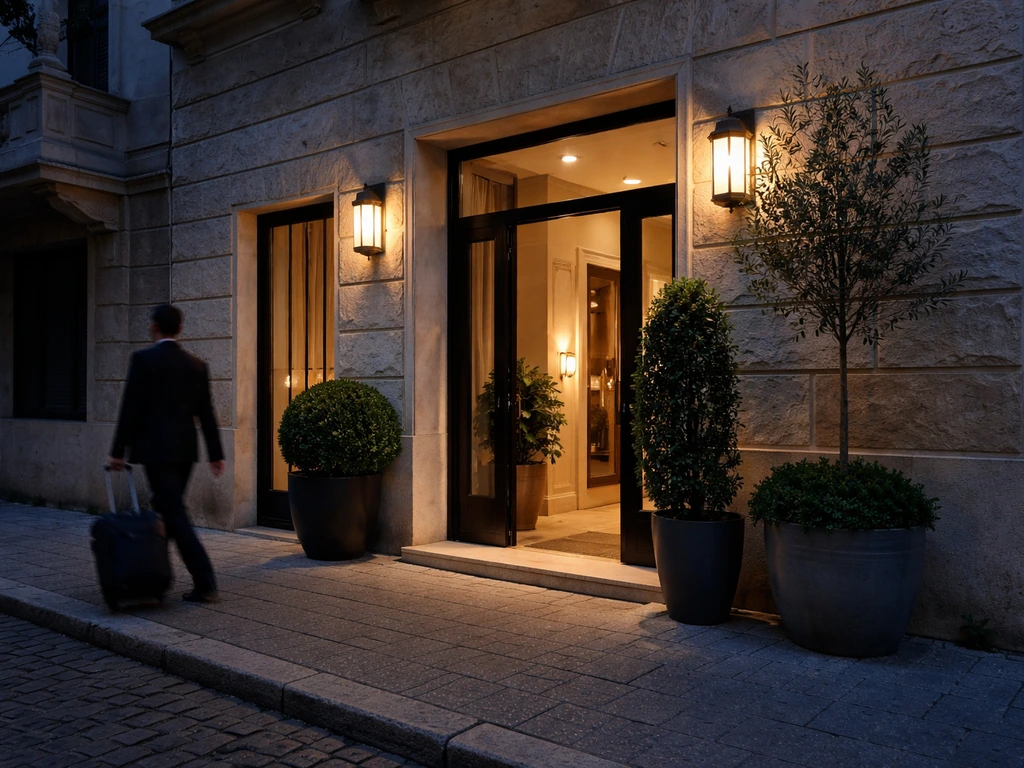
According to NIN's reporting, the Matijević group has diversified into real estate through MAT Real Estate, including hotel properties such as the Garni hotel in Belgrade. He also purchased the former Jugoeksport building in central Belgrade for 910 million dinars (approximately €7.3 million), with plans to convert it into a 4-star hotel. Additionally, the group acquired the ATP Vojvodina bus station in Novi Sad for €2.23 million. These are not enormous figures individually, but they reflect a consistent pattern of acquiring undervalued Belgrade and Vojvodina commercial real estate over time.
Retail and business infrastructure
Beyond meat and real estate, the group reportedly operates retail outlets and other business infrastructure. This kind of vertical integration, where a food producer also controls some of its retail and distribution network, adds margin and asset value that does not always show up cleanly in simplified wealth estimates.
Assets, spending, and liabilities: what shapes the number

For a private industrial group of this scale, several factors can push the real net worth number higher or lower than the headline list figures suggest. On the asset side: the meat-processing facilities and production infrastructure, the agricultural land portfolio, commercial real estate in Belgrade and Novi Sad, hospitality and hotel properties in development, and retail network holdings all contribute positively. On the liability side: industrial operations at this scale typically carry significant bank debt used to finance land acquisitions, capital equipment, and property purchases. None of the public lists disclose what debt the Matijević group carries. If long-term borrowings are substantial, the true net equity figure could be materially lower than raw asset valuations suggest. This is an important caveat for any estimate above.
Personal spending patterns are less visible for Matijević than for public figures in sports or entertainment. He does not appear on Forbes lifestyle lists or in celebrity spending coverage. His known public expenditures are primarily commercial: property acquisitions and business investments rather than yachts or luxury cars. This makes the liability side the bigger unknown in any net worth calculation.
Why different websites show different numbers
If you have already Googled Petar Matijević and seen three or four different figures, that is completely normal and expected. The variation comes from a few specific causes that are worth understanding.
- Different valuation multiples: one list might value the meat business at 8x EBITDA, another at 12x. That gap alone produces hundreds of millions of euros in difference.
- Currency conversion timing: figures calculated in Serbian dinars or other regional currencies will shift when converted to euros, depending on the exchange rate used at the time of publication.
- Different asset inclusions: some lists count only the core operating company; others include land, real estate, and subsidiary holdings.
- Data vintage: a list published in early 2024 uses different underlying financials than one published in late 2025.
- Non-transparent sourcing: sites like Celebrity Net Worth acknowledge that their estimates use financial analysis, market research, and internal sources, but do not provide a replicable calculation model. A Serbian fact-checking investigation found that such sites rely heavily on aggregation and estimation rather than auditable sourcing, which means figures can diverge significantly without either being verifiably wrong.
The practical takeaway: treat any single figure as an estimate within a range, not a precise measurement. The three major regional lists consulted here span roughly €260 million between their low and high estimates for the same person in adjacent years. That spread is your real confidence interval.
How to verify and compare with similar Balkan figures
If you want to stress-test any wealth figure you find for Matijević, here is a practical approach. First, look for the company's publicly filed financials through Serbia's Business Registers Agency (APR). The holding's revenue and equity data give you a floor for the business value. Second, cross-reference the regional wealth lists, specifically Vijesti.me's annual 100-richest list and the Sloboden Pečat regional rankings, which tend to be the most consistently updated for Balkan industrialists. Third, check for news of major asset transactions: the Jugoeksport building purchase, the ATP Vojvodina station acquisition, and any land registry changes are all public-record events that should influence estimates.
Comparing Matijević to other wealthy regional figures helps calibrate the scale. For context on how Serbian sports figures accumulate wealth, Peja Stojaković's net worth offers a useful comparison point from the basketball world, where career earnings and sponsorship income drive the figures rather than industrial ownership. At the other end of the spectrum, looking at poker player Ema Zajmović's net worth shows how even competitive earnings in niche fields register very differently against industrial wealth at Matijević's scale.
Within the business and entrepreneurial category, profiles like Petar Slišković's net worth and Petar Cvetković's net worth are worth reviewing if you are researching wealth patterns among Serbian businesspeople specifically. For a sense of how entertainment and music wealth compares, Aco Pejović's net worth provides a Balkan music industry reference point. The gap between a regional music star and a meat-industry billionaire is enormous, and seeing those numbers side by side helps readers understand just how concentrated industrial wealth is at the top of the regional rankings.
The bottom line on Petar Matijević's wealth
Petar Matijević is genuinely one of the wealthiest people in Serbia and the broader Western Balkans region. The most defensible estimate as of April 2026 sits in the €1.6 billion to €1.85 billion range, driven primarily by his controlling stake in MI Matijević, a massive agricultural land portfolio, and a growing commercial real estate footprint. The precise figure you see on any given list will vary based on methodology, data freshness, and which assets the researcher included. What does not vary meaningfully across sources is the order of magnitude: this is a billionaire-scale fortune built through three decades of industrial and agricultural consolidation in Vojvodina and beyond. Any figure significantly below €1 billion or above €2 billion should be treated with skepticism unless accompanied by clear sourcing.
FAQ
Why do different websites give different Petar Matijevic net worth numbers?
Most “net worth” pages for Petar Matijević use private-company valuation models, so the exact number can shift if a list uses different valuation multiples (for example, applying 2x vs 3x equity or earnings) or if they treat land as arable cash value versus development value. That is why credible estimates are best read as a range, not a single figure.
Is Petar Matijevic net worth the same as how much cash he has?
In private holdings, “net worth” does not equal readily accessible cash. A large share of the value can sit in land, plants, and real estate that are illiquid, and the business can also be financed with bank debt. So you should interpret “worth” as balance-sheet value, not spendable liquidity.
How much can bank debt affect Petar Matijevic net worth estimates?
Yes, debt can materially change the real figure. Even if assets are appraised at high values, heavy long-term borrowings for land purchases, equipment, and property projects reduce net equity. The article already notes that public lists rarely disclose the holding’s debt, so the liability side is the biggest uncertainty.
Do Matijević’s subsidiaries and ownership structures change how his net worth is calculated?
Indirect ownership matters. The article highlights he holds about 70% in the holding company, so if some assets are placed in other subsidiaries or partnerships, estimators may undercount or overcount depending on whether those structures are consolidated into “his” net worth.
What makes the farmland portion of Petar Matijevic net worth hard to verify?
Assumptions about land can swing the estimate more than meat-processing financials. Farmland pricing varies by quality, location, and whether it is leased, owner-operated, or tied up in legal status. If a list uses a low per-hectare value or excludes controlled land beyond formal ownership, the net worth can look lower than other sources.
How do commodity and agriculture cycles influence his wealth over time?
Two people can show the same “net worth” headline but have different risk profiles. For Matijević, exposure to commodity cycles (meat prices, feed costs) and agriculture revenues can change cash generation even if asset values look stable. That can affect how quickly estimates converge year to year.
Are his hotel and real-estate investments included right away in net worth estimates?
Yes, but it depends on whether the hotel and development assets are counted at cost, at market value, or with a discount for ongoing construction. Many wealth models treat developments conservatively until there is revenue or a confirmed valuation, which can delay a rise in the headline number.
What is a good method to sanity-check a Petar Matijevic net worth figure you find online?
A practical way is to separate “company fundamentals” from “asset claims.” The article suggests checking APR filings for revenues and equity as a floor for business value, then treating land and real estate as appraised add-ons, finally subtracting estimated liabilities if available. If no debt data is visible, widen the range rather than forcing a precise number.
Does a very precise number (with lots of decimals) mean the net worth estimate is more accurate?
Yes. If you see a figure with extra decimal precision, it typically reflects the math of the estimator (like model outputs) rather than improved underlying verification. Treat extra digits as less informative than the size of the range across sources.
What is the main driver of changes in Petar Matijevic net worth year to year?
For him, lifestyle spending is usually not the main driver of the year-to-year net worth changes. The bigger movements typically come from asset acquisitions (land, buildings) and operating profits retained in the group, while personal spending is comparatively small and harder to observe.
Next Article
Peja Stojaković Net Worth: Estimate, Sources, Breakdown
Data-driven estimate of Peja Stojaković net worth, with breakdown of NBA earnings, deals, assets, and sources