
The most credible present-day estimate for Bogoljub Karić's net worth sits in the range of approximately $1 billion to $1.1 billion USD, based on regional rich-list reporting from 2024 and 2025. That figure is far more defensible than the $21 billion figure circulating on some aggregator sites, and the gap between those two numbers is itself a useful lesson in how to read wealth estimates for Balkan business figures.
Bogoljub Karic Net Worth Estimate and Asset Breakdown

Marko Radivojević
9 Apr 2026
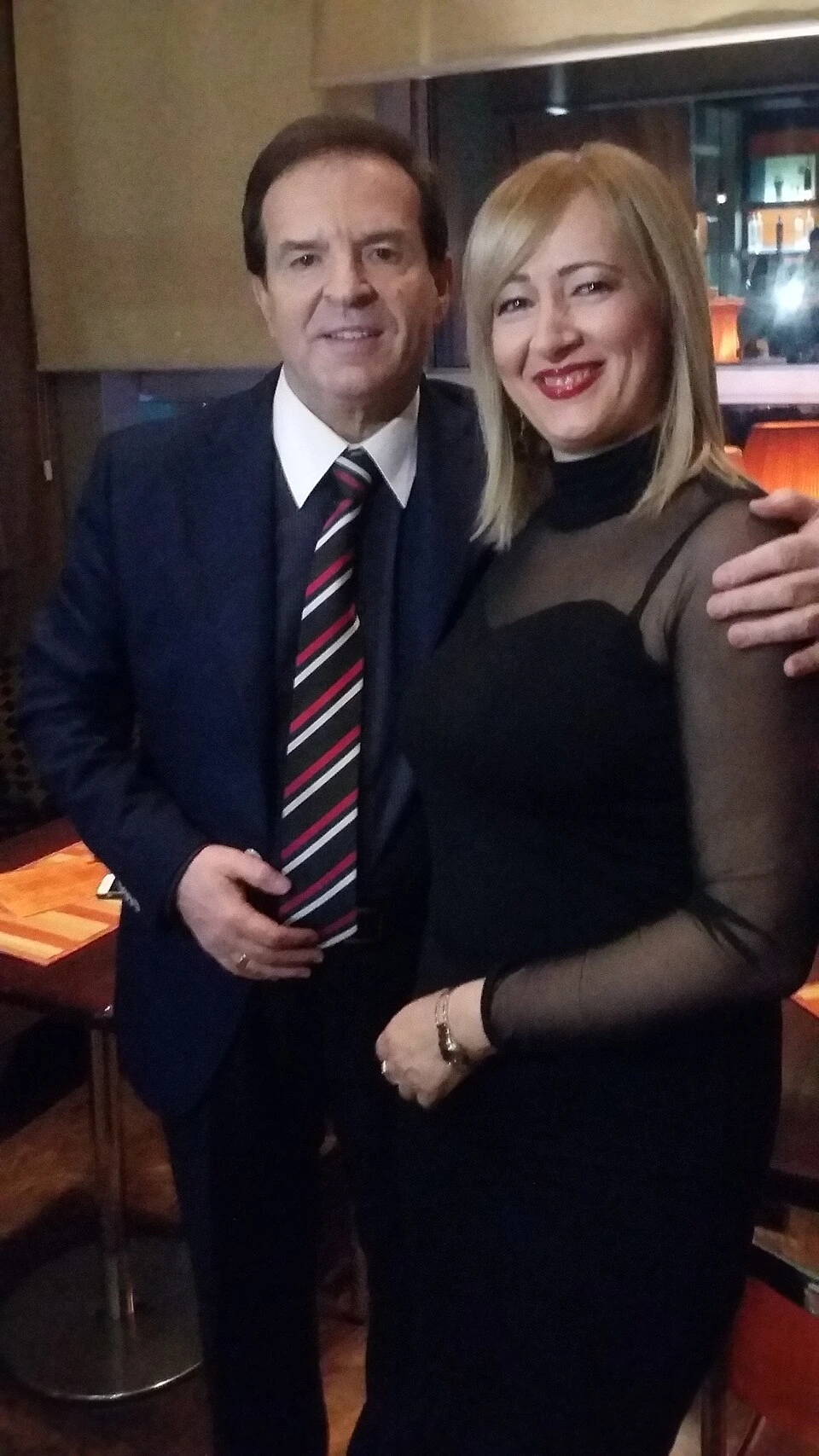
Who is Bogoljub Karić and why does everyone search his net worth?

Bogoljub Karić, born 17 January 1954, is one of the most recognizable Serbian businessmen and politicians of the post-Milošević era. Together with his brothers, he built the BK Group into a sprawling conglomerate spanning construction, manufacturing, telecommunications, banking, and media. He also served as Minister without portfolio in the Serbian government, with responsibilities that included overseeing privatisation of the country's 75 largest state companies, which made his business interests and political roles deeply intertwined and impossible to separate when estimating his wealth.
That combination of serious business scale, a high-profile political career, and a decade-long legal saga involving the Mobtel telecommunications company keeps his name in circulation whenever Serbians debate who the country's actual billionaires are. Serbian media have repeatedly placed him on national and regional rich lists, so searches for his net worth are essentially searches for a concrete answer to a genuinely contested question.
How this site estimates net worth (and why it matters here)
Estimating net worth for a Balkan businessman like Karić is different from estimating it for, say, a publicly traded CEO in the US or a tennis star whose prize money and endorsements are well documented. For context, Marin Čilić's net worth can be cross-checked against ATP prize money databases and published sponsorship deals. Karić's wealth, by contrast, blank" rel="noopener noreferrer">sits mostly inside private holding structures, real estate, and company stakes that are not marked to market on a daily basis.
The methodology used here pulls from four main inputs: credible regional rich-list publications that aggregate business intelligence (such as the Free Press top-100 list and the Vijesti regional ranking), publicly available company filing information and reported ownership stakes, verified transaction values where they exist (such as the Mobtel/Mobi 63 sale), and property and asset references from media coverage. Each input is weighted by how verifiable it is. A confirmed €1.513 billion transaction like the Telenor acquisition of Mobi 63 is a hard anchor; a narrative assertion on a celebrity net-worth aggregator with no methodology section is treated as background noise, not a data point.
Figures are presented as ranges rather than single numbers precisely because private wealth cannot be verified with the same precision as public equity holdings. When sources converge on a similar figure, confidence in the range goes up. When they diverge wildly (as they do for Karić), the article flags that divergence and explains why.
Bogoljub Karić net worth: current estimated range and breakdown

The most defensible current estimate is approximately $1 billion to $1.1 billion USD. Both the 2024 Free Press regional rich list (which lists him at $1.02 billion, attributed to BK Group) and the 2025 Vijesti top-100 ranking (which places the Karić Brothers entry at $1 billion) land in the same zone. These publications draw on regional business intelligence and are cross-checked by journalists familiar with the Serbian market, making them more credible than offshore celebrity-net-worth aggregators.
The breakdown behind that $1B figure is roughly as follows: the largest contributor is the BK Group's collection of real estate and construction assets; a secondary contributor is stakes or interests in financial and media businesses; and a smaller share reflects personal property holdings including residences in Belgrade and Minsk. The telecommunications piece, which was once potentially the biggest driver of all, was largely stripped out of the picture by the Mobtel legal saga (more on that below).
| Asset Category | Estimated Contribution | Confidence Level |
|---|---|---|
| BK Group real estate and construction | Largest share (~50-60% of total) | Moderate |
| Financial services and banking interests | Significant minority share (~20-25%) | Low-moderate |
| Media holdings (BK Televizija and related) | Smaller share (~10-15%) | Low |
| Personal property (Belgrade, Minsk) | Minor share (<5%) | Low |
| Telecommunications (post-Mobtel) | Negligible | High (effectively zero after sale) |
The major businesses and investments behind his wealth
The BK Group is the core vehicle. Built with his brothers (primarily Sreten and Dragomir), BK Group grew through the 1990s and 2000s across construction, manufacturing, and financial services. The group operated BK Televizija, one of Serbia's early private television channels, which added media reach and, critically, political influence to the family's portfolio.
The highest-profile single asset was Mobtel, Serbia's first private mobile telephone operator, which at its peak was enormously valuable in a market hungry for mobile penetration. The Karić brothers held stakes in the company alongside state ownership. When the Telenor deal went through on 31 August 2006, the full transaction for Mobi 63 was signed at €1. Serbia.gov.rs also reports that Telenor agreed to pay €1.513 billion after winning the auction for Mobi 63. 513 billion. However, the Karić family's share of those proceeds was disputed and ultimately became the subject of a criminal investigation, meaning the family did not cleanly pocket a proportional cut of that €1.5B sale the way a typical private shareholder would.
Outside telecommunications, the group maintained manufacturing operations and banking interests, though neither became as publicly visible or as well documented as the Mobtel story. Real estate development, particularly in Belgrade, remains the most tangible ongoing source of value in the portfolio today.
Income vs assets: how wealth estimates handle property and holdings

Net worth estimates for someone like Karić are almost entirely asset-based, not income-based. He does not have a salary that gets disclosed in public filings, and he does not receive prize money or endorsement payments the way a professional athlete does. Comparing methods here is illuminating: Ivo Karlović's net worth can be anchored to documented ATP earnings and known endorsement history, while Karić's estimate depends almost entirely on appraising private company stakes and real estate.
For private business owners in the Balkans, the methodology works like this: take the estimated value of significant company stakes (using comparable transaction multiples or known sale prices where available), add in documented real estate holdings at approximate market value, subtract any known liabilities or legal financial penalties, and produce a range. The honest answer is that for Karić, the liabilities column is genuinely hard to quantify because of unresolved or recently resolved legal matters, which creates meaningful uncertainty in any estimate.
The residences in Belgrade and Minsk are noted in media coverage, but no verified property valuations have been published. They are treated as minor components of total wealth rather than primary drivers, which is standard practice when property values are not independently documented.
The legal controversies and how they affect the numbers
This is the section that makes Karić's net worth uniquely difficult to pin down, and it is why the $21 billion figure from NET WORTH LEAKS is not credible. That figure appears to have been constructed by treating the Mobi 63/Telenor sale as a straightforward windfall for the Karić family, which it was not.
The Mobtel investigation began on 17 January 2006 (notably, Karić's birthday). An indictment dated 18 September 2010 was filed against Bogoljub and Sreten Karić and others for abuse of official position linked to Mobtel. The government's position was that 70% of Mobi 63 was owned by the Government of Serbia, and the Karić family's control or benefit from the company was the subject of alleged improper conduct. In other words, the Telenor sale proceeds primarily benefited the state, not the Karić family's private accounts.
Bogoljub Karić left Serbia during the investigation period and spent years abroad. On 28 December 2016, a court ordered the lifting of his detention order and the withdrawal of the warrant, effectively ending the most serious phase of the legal proceedings. That resolution matters for net worth estimates because it removed the overhang of potential criminal asset forfeiture but also confirmed that the family was not going to recover the Mobtel-linked assets.
The practical effect on the estimate: the Mobtel chapter closed as a loss, not a gain, for the Karić portfolio. The $1 billion range in the regional rich lists reflects a post-Mobtel wealth picture built on the BK Group's remaining real estate, financial, and media businesses. The $21 billion figure, by contrast, ignores the legal and ownership reality entirely, which is why it should be disregarded.
Why different websites give you wildly different numbers
The $21 billion versus $1 billion gap is an extreme example of a pattern you see across almost every high-profile Balkan figure on this site. Aggregator sites often take a dramatic peak narrative (in Karić's case, Mobtel's connection to a €1.5B sale), apply it uncritically to the subject's personal wealth, and publish a figure without a methodology section. That produces numbers that are off by an order of magnitude.
The NET WORTH LEAKS page also presents a suspiciously smooth time-series: $12.5B in 2019, $16.7B in 2020, $20.6B in 2021, and $21B in 2022. That kind of steady upward progression does not reflect how private-company wealth actually moves, and the absence of any documented source for each year's figure is a red flag. There is no asset-by-asset breakdown, no disclosed debt, and no explanation of how the number was calculated.
When you compare this to how credible regional publications approach the same subject, the difference is clear. The Free Press and Vijesti lists use regional business reporters and cross-reference company information. The result is a $1 billion figure that aligns across two independent publications in two different years. That convergence is meaningful.
How to verify, compare, and put this figure in context
If you want to stress-test the $1 billion estimate yourself, the most useful thing you can do is look at the BK Group's real estate portfolio and any available corporate filings for its subsidiaries. Cross-reference those with comparable property values in the Belgrade market. Then factor in the media and financial holdings at conservative private-company multiples. You will get a number in the same ballpark. If a site is giving you $20+ billion for Karić, ask yourself: where is that money? No known transaction, property record, or company filing supports that scale of private wealth for any Serbian national.
For regional comparisons, it helps to look at figures across professions. Athletes like Bruno Petković build wealth through contracts and endorsements that are relatively easy to verify, while politicians and businesspeople like Karić operate in less transparent environments. Entertainers offer yet another profile: Sejo Brajlović's net worth is built on a career in the music and entertainment industry, with different income patterns entirely.
For other business figures in the region, Croatian football manager Ćiro Blažević's net worth is another useful benchmark: a public figure whose wealth estimate comes primarily from a long career rather than from business holdings, which illustrates why methodology has to match the subject. And for a media/entertainment industry comparison, Bruno Jelović's net worth shows how wealth estimates work for media personalities whose income streams are more visible.
The most important thing to watch going forward with Karić's estimate is any reported change in BK Group's real estate or financial holdings, any new legal proceedings (the 2016 lifting of his warrant resolved the Mobtel chapter but does not preclude future matters), and any significant transactions involving the group's subsidiaries. Those are the events that would move the needle on the $1 billion estimate in either direction. A major property sale or new business exit could push it higher; adverse legal outcomes or forced asset disposals could push it lower.
Bottom line: use $1 billion to $1.1 billion as your working figure for Bogoljub Karić's net worth in 2025-2026. Treat anything in the $10+ billion range with heavy skepticism unless a specific, documented transaction or verified asset base is cited to support it. The figure is meaningful by any regional standard, placing him among Serbia's most prominent private wealth holders, but it is a very different kind of number than the inflated claims suggest.
FAQ
How can I verify whether the $1.0B to $1.1B working figure is still accurate in 2026?
Use the range as your baseline, then update it only when there is a verifiable “value event” (a documented property sale, a published transaction price for a stake, or a change in ownership filings for a major subsidiary). Without those triggers, shifting the estimate day to day usually reflects guesswork rather than new data.
Why is it wrong to calculate Bogoljub Karić’s net worth directly from the €1.513B Mobi 63 (Telenor) transaction?
In this case, you should not treat the €1.513B Mobi 63 sale as meaning the family automatically “received 1.513B” or a clean proportional cut. The dispute and criminal investigation over benefit means the proceeds largely did not translate into a straightforward personal windfall the way a typical private-shareholder scenario would.
What red flags should I look for when a site quotes Bogoljub Karic net worth at $20B+?
If a source claims $10B+ but cannot explain the assets behind the number (which companies, which percentage stakes, which properties, and which valuations), treat it as narrative inflation. A practical check is to ask for a line-by-line breakdown, including debts or contingent liabilities, not just a single headline figure.
Which parts of the portfolio are most likely to change the estimate over time?
Expect most volatility to come from real estate price moves and from whether BK Group’s major holdings are bought, sold, merged, or restructured. Telecommunications value was already curtailed by the Mobtel outcome, so later net worth changes are more likely to track property and non-telecom stakes.
How should I weigh conflicting rich-list reports that put him in different bands?
You can approximate the “confidence” level by comparing whether multiple independent regional lists place him in the same band and whether they cite similar underlying business themes (for example, BK Group real estate and residual stakes). When one list is an outlier and the rest converge, weight the convergence more heavily than the outlier.
How do I handle liabilities and legal uncertainty when estimating net worth for a private business family like Karić?
Don’t subtract unknown debts as a fixed number. The article’s key uncertainty is that liabilities and legal overhangs are hard to quantify, so the best approach is to model a liability range (for example, conservative versus aggressive) and keep the output as a band rather than forcing a single figure.
What kind of legal or regulatory change would most likely move the net worth estimate up or down?
If a court or regulator outcome results in asset forfeiture, or it forces BK Group to dispose of properties or stakes, the net worth range could move quickly. By contrast, procedural updates that do not affect assets (or only extend timelines) usually have less impact on valuation until an actual disposition occurs.
Why does disclosed income matter less than assets for estimating Bogoljub Karic net worth?
Separate “net worth estimate” from “income.” A person can have low disclosed personal income but still maintain high wealth through retained company value and property holdings, so you should evaluate estimated assets first (stakes and real estate) rather than looking for salary-type indicators.
What is a practical step-by-step way to do my own stress test without overestimating?
If you want to stress-test the number, start with a short list of BK Group’s major real estate and business units, then apply conservative valuation assumptions rather than the highest reported market comps. This keeps your estimate closer to the $1B band because the article’s credibility depends on verifiable anchors and cautious multiples.
Why do time-series net worth claims (like steady annual growth) often fail for private Balkan business owners?
Because wealth is tied up in private structures, small documentation gaps can cause big headline errors on aggregators. If you see a smooth yearly increase without methodological changes, treat it as unreliable unless the site shows how each year’s assets and valuations were updated.
Next Article
Ivo Karlović Net Worth Estimate: Earnings, Method, Range
Procjena neto vrijednosti Ivo Karlovića s rasponom, metodom i izvorima te usporedbom s balkanskim teniserima.