
Dejan Savićević's estimated net worth in 2026 sits in the range of $2 to $5 million, with the most commonly cited automated estimate landing around $2.91 million. That number is a starting point, not a verified figure, and understanding what drives it, what it misses, and how to pressure-test it yourself is the real value of this guide.
Dejan Savićević Net Worth: Estimates, Wealth Drivers, and How to Verify

Marko Radivojević
15 Apr 2026
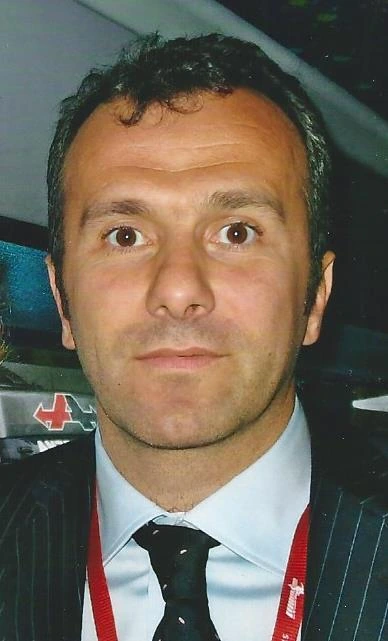
Who Dejan Savićević is and why his career shapes his wealth

Savićević is one of the most decorated footballers ever produced by the former Yugoslav region. Born in Montenegro in 1966, he came up through Budućnost (1983–1988), moved to Red Star Belgrade (1988–1992), and then made the leap that defined his financial ceiling: a transfer to AC Milan ahead of the 1992–93 season. That move cost Milan a reported ITL 10 billion, which converted at the time to roughly DM 30 million or about £9.4 million, a significant sum for the era and part of a broader Berlusconi-era transfer spending wave of approximately £34 million. He stayed at Milan through 1998, winning Serie A titles and a UEFA Champions League medal along the way, before returning to Red Star and then finishing his playing days at Rapid Wien (1999–2001).
After retiring as a player, Savićević moved into football governance. He has been President of the Football Association of Montenegro (FSCG) since 2001, initially while Montenegro was still part of the Federal Republic of Yugoslavia. He has been re-elected multiple times, including a fifth term confirmed in July 2017, and was again re-elected in 2024. He also holds a seat as a European representative on the FIFA Council, a position he has held since 2017. He previously served as Yugoslavia's national team coach, taking up the role in December 2001 with a contract that was later extended for two years to cover the UEFA EURO 2004 qualifying campaign. That combination of elite playing career plus decades of senior football governance is the foundation for any wealth estimate.
The estimated net worth today: what the numbers actually reflect
The most specific figure in circulation comes from People AI, which estimates Savićević's 2026 net worth at $2.91 million. Their methodology, which they disclose openly, is based on a combination of social influence metrics rather than audited assets or verified income statements. For context, their year-over-year estimates have climbed steadily: $1.75M (2022), $2.04M (2023), $2.33M (2024), $2.62M (2025), and $2.91M (2026). That kind of linear annual increase is a red flag for any serious researcher. It tells you the model is projecting forward using a formula, not responding to real financial events.
A more grounded way to think about it: Savićević earned at a high level during the peak years of Italian football (early-to-mid 1990s), operated in an era before modern astronomical wages but still as a top-flight Serie A and Champions League player at one of Europe's richest clubs. His post-playing income has been governance-based, likely in the low-to-mid six figures annually when you factor in federation salaries, UEFA committee allowances, and FIFA Council compensation. Factoring in career earnings, property holdings, and administrative income, a realistic range of $2 million to $5 million is defensible, with the upper end requiring confirmed business investments or real estate portfolios that have not been publicly documented in detail.
Where the money likely came from
Playing career earnings
Savićević's most valuable earning period was undoubtedly his six seasons at AC Milan (1992–1998). While exact wage figures from that era are rarely documented, a player valued at £9.4 million in transfer fees in 1992 would have commanded a significant salary at the club level, particularly under Silvio Berlusconi's ownership, which was known for aggressive spending. His earlier years at Red Star Belgrade and Budućnost were spent in the Yugoslav football system, where wages were modest by Western European standards. His stint at Rapid Wien (1999–2001) at the tail end of his career would have added to the total but at declining rates. Transfermarkt maintains a market value timeline for Savićević that can help bracket his peak valuation periods, even though it does not publish contract amounts.
Coaching and football management

His coaching income came primarily through the Yugoslavia national team role from late 2001, with a two-year contract extension taking him through the EURO 2004 cycle. National team coaching contracts at that level typically carry guaranteed base salaries plus performance bonuses, though exact figures for the Yugoslav/Serbian FA at that time were never publicly disclosed. His ongoing role as FSCG President likely comes with a combination of salary and expense allowances, supplemented by his UEFA and FIFA committee positions, which provide additional compensation and travel allowances. None of these amounts are publicly itemized, which is a key gap in any estimate.
Endorsements and media
During his playing peak, Savićević would have had access to endorsement deals in the Yugoslav and Italian markets, but there is no public documentation of major long-term brand contracts that would suggest a significant ongoing revenue stream from this source. Post-retirement media appearances and ambassador-type roles are possible contributors but are not documented at a scale that would meaningfully shift the estimate.
Business and property
Property is worth noting here, though not in a straightforwardly positive way. A report from Montenegrin outlet Vijesti.me documented that the municipality of Budva placed a mortgage on a former catering facility called Vidikovac owned by Savićević due to a tax debt of €7,000. That figure is small in absolute terms, but it signals two things: he holds real estate assets in Montenegro, and at least one of those assets has been subject to a tax liability that net worth estimators likely did not account for. Liabilities like mortgages, unpaid taxes, and legal penalties reduce net worth, and automated models almost universally ignore them.
Why different websites show different numbers
This is one of the most common sources of confusion when researching public figures in the Balkan region. Net worth estimate sites generally use one of three approaches: social signal modeling (like People AI, which explicitly discloses this), simple transfer-fee-plus-assumptions arithmetic, or scraping and aggregating other sites without independent verification. None of these methods access actual bank balances, investment portfolios, or tax records.
- Social influence models inflate estimates for figures with high online visibility, regardless of actual asset holdings.
- Transfer fee proxies assume a fixed savings rate from career earnings, which ignores lifestyle costs, inflation, currency depreciation (the Yugoslav dinar went through multiple crises), and any business losses.
- Aggregator sites copy figures from other aggregators, creating a false sense of consensus around a number that was an estimate to begin with.
- Currency and timing issues matter enormously for Balkan athletes: ITL (Italian lira), DM (Deutsche mark), Yugoslav dinar, and euro conversions across three decades introduce significant variance.
- Liabilities are almost never included, meaning that tax debts, mortgages, or legal fines (as documented in Savićević's case) are silently ignored.
The honest answer is that without a court filing, a Forbes-style asset disclosure, or a direct interview, any figure you find online for Dejan Savićević is an educated estimate. The $2.91 million figure from People AI is the most specific, but its methodology is social-signal-based, not asset-based.
How to verify and update the estimate yourself

If you want to go deeper than the headline number, here is a practical research process that applies to any Balkan public figure, not just Savićević.
- Check UEFA and FIFA official pages: These confirm his current governance roles, which are income-generating. UEFA's association page for Montenegro and his re-election announcements are reliable anchors for timeline and role verification.
- Use Transfermarkt's historical market value data: While not a salary database, it lets you identify peak valuation periods, which correlate with peak earning windows. Savićević's peak clearly falls in the early-to-mid 1990s at Milan.
- Search Montenegrin and Serbian court and property records: Platforms like the Montenegrin Real Estate Administration or regional investigative journalism sites (Vijesti.me, MANS) sometimes surface property holdings, mortgages, and tax cases that automated models miss entirely.
- Cross-reference at least three independent estimate sources and look for methodology disclosures: If a site does not explain how it calculated the figure, treat the number as unreliable.
- Factor in the liability side: Search for legal cases, tax filings, or published debt records. The Budva municipality mortgage is a real documented example of a liability that would not appear in most estimates.
- Flag the estimate date: Net worth figures change when career milestones happen (new contracts, re-elections, business exits). Savićević's 2024 re-election as FSCG President is a recent income-continuation signal that a well-maintained estimate should reflect.
- Check regional news archives: B92, Vijesti.me, and similar outlets sometimes report financial events tied to public figures that never make it into English-language databases.
How Savićević's estimated wealth compares to other Serbian and Balkan sports figures
Context matters a lot when reading a number like $2 to $5 million. Within the Balkan sports wealth landscape, that range places Savićević comfortably above average for retired football administrators but well below the wealth levels of current elite players or those who built significant business portfolios after their careers. For comparison, Dejan Stanković's net worth reflects a career that also included Serie A football followed by coaching and management, making him a natural peer-group reference point.
Basketball produces a different wealth profile in the region. Dejan Bodiroga's net worth is a useful comparison for how a dominant Balkan athlete from a team sport accumulates and manages wealth, given that Bodiroga was one of the highest-paid European basketball players of his era. The earnings structures across sports differ considerably, which is why football and basketball figures rarely benchmark directly against each other even when both operated at the top of their respective games.
For a look at how younger-generation Serbian footballers who play in elite European leagues compare, Dejan Kulusevski's net worth shows the kind of wealth gap that modern wages and commercial deals have created between 1990s-era players and today's Premier League stars. It is a stark illustration of how football economics have changed in 30 years.
Combat sports sometimes produce surprising regional wealth figures. Dejan Zlatičanin's net worth, as a professional boxer who held a WBC world title, provides a cross-discipline benchmark that shows how a world-class athlete in a less commercially dominant sport compares to a football administrator of Savićević's stature.
| Figure | Primary Role | Estimated Net Worth Range | Wealth Drivers |
|---|---|---|---|
| Dejan Savićević | Football player / FSCG President | $2M – $5M | Milan-era salaries, federation governance, property |
| Dejan Stanković | Football player / Coach / Manager | Comparable range | Serie A career, coaching contracts, management |
| Dejan Bodiroga | Basketball player / Executive | Comparable to higher | EuroLeague contracts, business investments |
| Dejan Kulusevski | Active Premier League footballer | Significantly higher | Modern wages, commercial deals, transfer fees |
| Dejan Zlatičanin | Professional boxer / WBC champion | Lower to comparable | Fight purses, regional endorsements |
Within the governance and coaching tier specifically, figures who transitioned from playing into administrative roles tend to accumulate wealth more slowly post-retirement than those who moved into commercial ventures or high-paying coaching contracts at club level. Savićević's long tenure in federation governance is a stable but not explosive income source.
Other Dejan-named figures in the region worth not confusing
Search engines sometimes surface overlapping results when researching Balkan public figures who share first names. Dejan Kovačević's net worth and Dejan Ćirović's net worth are entirely separate profiles with different career backgrounds and wealth drivers. If you are specifically researching Savićević, make sure the source you are reading is describing the right person, as name confusion is a real issue in aggregator databases that cover the wider Balkan region.
What you should actually take away from this
The $2.91 million People AI estimate for 2026 is the most specific number available, but treat it as a floor-level reference point, not a verified asset figure. A range of $2 million to $5 million is more honest given the gaps in public financial information. The real anchors for any estimate are his AC Milan transfer value (which functions as a career earnings proxy), his six-year tenure at one of Europe's richest clubs during a competitive salary era, and his ongoing income from decades of UEFA and FIFA governance roles. The liabilities, particularly the documented property mortgage in Budva, are a reminder that net worth is always assets minus liabilities, and most online estimates skip that subtraction entirely.
If you want to track this figure over time, set up news alerts for Savićević's name on Montenegrin and Serbian outlets, monitor UEFA's official FSCG governance pages for contract updates, and revisit Transfermarkt's historical data to understand the earnings timeline more precisely. Any major career event, a new term as FSCG President, a FIFA Council role change, or a documented property transaction, would be a trigger to reassess the estimate meaningfully.
FAQ
How reliable is the $2.91 million People AI estimate for Dejan Savićević net worth?
It is more reliable as a trend indicator than as a balance sheet. Because it is based on social influence signals, it can keep rising even when no new assets or income events are verified, so treat it as a speculative reference point, not a computed net worth figure.
Why do different websites give very different Dejan Savićević net worth numbers?
Most sites use one of three shortcuts, social-signal modeling, transfer-value arithmetic, or scraped aggregation. Those methods can double-count similar drivers (like prominence) and rarely subtract liabilities like taxes, lawsuits, or mortgages, which can push the results apart.
Does the documented mortgage/tax debt in Budva mean Savićević net worth is lower than reported?
It can, at least by the amount of the liability, plus any added interest or penalties if they persisted. Even though €7,000 is small relative to millions, it highlights that estimators often ignore debts entirely, which can matter if there are additional undisclosed obligations.
What kind of information would best verify Dejan Savićević net worth?
A credible verification would come from audited filings (asset and income disclosure), a court record that itemizes assets or debts, or a direct statement from Savićević that breaks down assets, businesses, and liabilities. Without that, you can only triangulate from contracts, salary ranges, and confirmed property transactions.
How can I avoid mixing up Dejan Savićević with other people named Dejan in net worth databases?
Use filters based on career identifiers, for example “Montenegro football association president” or “AC Milan 1992–1998.” Cross-check at least one unique detail like his FSCG presidency start year (2001) or his FIFA Council role (since 2017) before trusting any number.
If People AI uses social signals, what would make their estimate change over time?
Likely changes in visibility, media frequency, leadership headlines, or governance-linked events. That means an election or public appearance could shift the number even if his bankable assets remain unchanged, so compare changes against real-world career events.
Could endorsements, media work, or ambassador roles materially raise Dejan Savićević net worth beyond the $2 to $5 million range?
They could, but you would need evidence of recurring contracts with substantial payments or long-term sponsorships. In his case, the absence of documented major brand deals in public reporting is why the article treats endorsements as possible but not a dominant driver.
What is the biggest weakness in estimating net worth from transfer fees and market values?
Transfer fees proxy a player's market value at a point in time, but they do not equal what the individual earned or what he kept after taxes, agent fees, lifestyle costs, and later investments. Without contract wage data and expense context, transfer-based models can overstate personal wealth.
How should I factor in ongoing income from FSCG, UEFA, and FIFA roles when thinking about Dejan Savićević net worth?
Treat governance income as ongoing but likely steady rather than explosive, then check for updates like re-election dates, committee changes, or role adjustments. If his compensation stayed similar, the net worth should grow slowly unless there is an additional investment or property purchase.
What practical next step can I take to pressure-test any new net worth figure for Dejan Savićević?
Build a simple assets-minus-liabilities checklist using only confirmed items you can verify locally, property deeds or tax records, any publicly reported business interests, and any known debts. If you cannot verify a liability, do not assume it is zero, then see whether the new headline number still makes sense under conservative assumptions.
Next Article
Kovacic Net Worth: Which Person, Estimated Range, Breakdown
Disambiguates which Kovacic, then estimates net worth range with career income breakdown, methods, and verification tips