
Predrag Mijatović's net worth is estimated somewhere in the range of $5 million to $15 million as of April 2026. That range is wider than you might like, but it honestly reflects the available evidence: there are no audited financial disclosures for him, and the only explicit number circulating online ($1M–$5M, from a celebrity-biography site) looks too low once you properly account for his Real Madrid playing-era earnings, his UEFA Champions League bonus from the 1998 final, and three years as Real Madrid's director of football. The figure above is a considered, evidence-based estimate. Treat it as a range, not a fact.
Predrag Mijatovic Net Worth Estimate and Income Breakdown

Marko Radivojević
29 Apr 2026
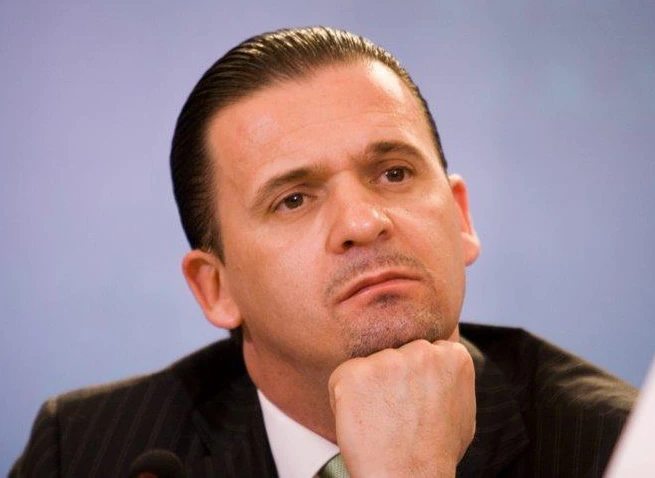
Who Predrag Mijatović is (and what 'net worth' means here)
Predrag Mijatović was born on 19 January 1969 in Titograd (now Podgorica, Montenegro). He played as a striker and forward for major clubs including Partizan, Valencia, blank" rel="noopener noreferrer">Real Madrid, Fiorentina, and Levante. He earned 65 caps for Yugoslavia and appeared at the 1998 FIFA World Cup and UEFA Euro 2000. His most famous single moment is probably the goal he scored in the 1998 UEFA Champions League final that gave Real Madrid their long-awaited seventh European title.
UEFA. com's season history for 1997/98 likewise notes that Predrag Mijatović scored in the 1998 final for Real Madrid 1998 UEFA Champions League final.
After retiring as a player, he served as Real Madrid's director of football from 2006 to 2009, departing by mutual agreement. Most recently, in October 2024 he was appointed Vice-President of FK Partizan under president Rasim Ljajić, and he has also represented clubs at UEFA Board meetings in that role.
When a wealth database like this one publishes a 'net worth' figure for a Balkan sports personality, it is always an estimated range, not an official valuation. Nobody has access to Mijatović's bank accounts, property deeds, or investment portfolios. What we can do is reconstruct an evidence-based range by working through his known income sources (playing salaries, transfer bonuses, executive compensation, ambassador fees, media work), making reasonable assumptions about spending, taxes, and lifestyle, and then stress-testing the result against public information. That is exactly the methodology used here.
How we estimate net worth for Balkan sports figures

Estimating wealth for Serbian and Balkan sports personalities is genuinely different from doing the same for American or Western European celebrities, where Forbes-style disclosures or court records sometimes surface real numbers. For a figure like Mijatović, the process is more like forensic accounting with incomplete records: you gather every verifiable career data point, apply known salary benchmarks for his era and roles, subtract taxes and estimated lifestyle costs, and arrive at a defensible range.
- Map the career timeline: playing era (clubs, peak years, transfer history), executive roles, and any post-career media or ambassador work.
- Anchor to salary benchmarks: what did Real Madrid pay top-tier forwards in the mid-to-late 1990s? What did the club pay a director of football in the mid-2000s? Use Transfermarkt data, reputable football-finance journalism, and official club records where available.
- Add documented bonuses: Champions League final winners received significant performance bonuses in 1998; UEFA ambassador arrangements, while rarely disclosed publicly, carry known fee structures in industry reporting.
- Estimate taxes and costs: Mijatović's career spanned Spain, Italy, and Montenegro, each with different tax regimes. Spanish income tax for high earners in the late 1990s was significant, which matters for net-worth calculations.
- Subtract lifestyle spend: property, travel, and family costs are real outflows. Without disclosed assets, this is the most speculative part of the calculation.
- Cross-check against known comparables: other Balkan footballers of similar era and stature provide a useful sanity check on the final range.
The key discipline here is separating what is verifiable from what is inferred. When a number changes, we flag what drove the change, rather than just updating a figure silently. That approach is what separates a credible estimate from the low-evidence numbers you find on generic celebrity-biography sites.
Predrag Mijatović net worth estimate: current range and breakdown
The best current estimate for Predrag Mijatović's net worth as of April 2026 is $5 million to $15 million. The lower end of that range assumes conservative playing-era salaries, moderate executive compensation during his Real Madrid director tenure, and significant accumulated spending over roughly 30 years since his peak earnings. The upper end reflects a scenario where Champions League bonuses, transfer-fee sell-on clauses (common in Spanish football in that era), and UEFA ambassador fees added meaningfully to his base income, and where some of that capital was preserved through property or investment.
| Income/Asset Category | Estimated Contribution | Confidence Level |
|---|---|---|
| Playing-era salaries (Valencia, Real Madrid, Fiorentina, Levante) | $4M–$9M lifetime gross | Medium — benchmarked against era salary data |
| Champions League 1998 winner bonus | $0.5M–$1M | Medium — typical winner pool distribution |
| Real Madrid director of football (2006–2009) | $1M–$3M gross | Low-medium — executive salary not disclosed |
| UEFA ambassador fees and appearances | $0.3M–$1M cumulative | Low — arrangement terms not public |
| Media, punditry, and commentary work | $0.2M–$0.5M cumulative | Low — frequency and fees not documented |
| FK Partizan VP role (from Oct 2024) | Minimal — likely nominal or low fee | Low |
| Estimated taxes, costs, and spending deducted | –$3M to –$7M | Speculative |
The $1M–$5M figure you will see on some websites almost certainly undervalues him. That range may have been anchored to post-playing-career visible activity without properly weighting the Real Madrid peak-salary years or the director role. It is worth noting that Serbian and Balkan footballer estimates are often systematically low on those types of sites because the editors use local-economy proxies rather than the actual Western European contracts these athletes held.
Where the money came from: income sources in detail
Football career salaries and bonuses

Mijatović's most financially significant years were at Valencia and Real Madrid in the 1990s. Real Madrid in that era were among the highest-paying clubs in the world, and a striker who scored the winning goal in the Champions League final would have been on a premium contract.
While the specific salary figures are not publicly documented in primary sources available today, football finance records for comparable Real Madrid players of the late 1990s suggest annual earnings in the range of $1. 5M to $3M gross at peak. His time at Valencia, Fiorentina, and Levante would have been at progressively lower levels, but still substantial by European standards.
Transfer fees (which do not go directly to players unless sell-on clauses or agent structures redirect a share) are separately tracked, but the key earnings were contract-based.
The 1998 Champions League final bonus
Scoring the winning goal in a Champions League final is not just a sporting achievement; it typically carries a direct financial reward. Real Madrid's victory bonus pool in 1998 was distributed among squad members, and a goal-scorer in the final would have received one of the larger individual shares. These bonuses were commonly in the hundreds of thousands of dollars per player for top-performing clubs in that era, and they are a real, if often uncredited, component of Mijatović's total earnings.
Real Madrid director of football role
From 2006 to 2009, Mijatović held one of the most senior non-coaching roles at one of the world's wealthiest football clubs. Directors of football at elite European clubs in that period typically earned between $400,000 and $1.5 million annually in base salary, often with performance-linked components. Over three seasons, that is a meaningful contribution to total career earnings. His departure by mutual agreement in 2009 may or may not have included a severance component; that detail is not documented in publicly available sources.
UEFA ambassador and media work
Mijatović has been documented as a UEFA ambassador, a role that typically involves appearance fees at major events, commercial representation work, and sometimes ongoing retainer arrangements. He also appears regularly in football media, providing commentary and analysis as a former Real Madrid legend. These income streams are individually modest compared to playing-era earnings, but they are ongoing and cumulative, and they matter for understanding his current financial position. His recent attendance at a UEFA Board meeting in his FK Partizan capacity also indicates continued institutional relevance, which typically sustains these commercial opportunities.
Assets, lifestyle, and the spending side of the equation

Here is where estimates get genuinely uncertain. There are no verified public disclosures of Mijatović's property holdings, vehicles, investments, or business interests. Players who spent significant time in Spain and Italy during peak earning years often invested in real estate in those markets, but that is a pattern, not a confirmed fact for him specifically. What we can say is that the lifestyle of a top-division Spanish footballer in the late 1990s, then a Real Madrid executive in the mid-2000s, was expensive: housing in Madrid, international travel, family costs, and the social expectations that come with high-profile football roles all represent real outflows.
The spending assumption built into the lower end of the $5M–$15M range accounts for a generous but realistic lifestyle spend over roughly 25 years since peak earnings, including Spanish and Italian income taxes during his playing years, which were non-trivial. The upper end assumes smarter capital preservation, possibly through property or investment vehicles that are not publicly visible. If Mijatović owns significant real estate in Montenegro or Spain, the upper end becomes more plausible. Without disclosure, we cannot confirm it.
For comparison within this region's football figures, former Yugoslav and Serbian footballers who reached similar career heights (major Western European clubs, international tournament appearances, post-career executive roles) tend to cluster in the $5M–$20M range when properly estimated. That is a useful sanity check on the range applied here.
Figures like Dragan Stojković, who had a similarly decorated career in Japan and Europe and later moved into national team management, illustrate how post-playing roles in football leadership can sustain and even grow wealth well beyond the playing years. For a broader look at how wealth estimates are discussed online for Eastern European football figures, you may also want to compare other profiles such as Dragan Primorac Dragan Stojković.
That’s a similar pattern to what many people discuss when looking up Dragan Stojković net worth, even though each career and earning profile is different.
How reliable are these numbers, and how do you verify them
Honestly, no publicly available net-worth estimate for Predrag Mijatović should be treated as highly reliable. The $1M–$5M range on celebrity-biography sites is low-evidence because those sites do not show their working. The $5M–$15M range here is more defensible because it is anchored to career benchmarks and documented roles, but it is still an estimate, not a financial audit. The honest answer is that without a Forbes-style disclosure, a court record, or a verified business filing, these numbers carry inherent uncertainty.
That said, here is how to stress-test and update the estimate yourself:
- Check Transfermarkt for documented transfer fees and contract history. While player salaries are not always on Transfermarkt, transfer values and career timelines give useful context for benchmarking earning potential.
- Search for official Real Madrid historical records and Spanish football salary journalism from the late 1990s and early 2000s. Several football economics researchers have published analyses of La Liga salary structures in that era.
- Monitor FK Partizan's official site (partizan.rs) for any disclosed compensation details related to his Vice-President role, and for any new commercial or ambassador appointments.
- Watch for interviews in Serbian, Montenegrin, or international football media where financial details sometimes surface, particularly around business ventures or charity disclosures.
- Revisit the estimate after any confirmed career change that carries compensation implications. His October 2024 appointment at Partizan was one such trigger; any new UEFA commercial role or major media contract would be another.
- Cross-reference with regional wealth-tracking sources specific to Montenegro and Serbia, where business registry filings occasionally surface for public figures involved in club management.
The bottom line for verification is this: use primary or near-primary sources (official club sites, reputable transfer databases, published football-finance research) to anchor the income side, and treat any lifestyle or asset claims from third-party sites as unverified unless a primary source backs them up. When you see a net-worth figure online that does not explain its methodology, that is a signal to discount it heavily, regardless of how confident the headline sounds. If you are comparing Dragomir Mrsic net worth claims, prioritize sources that show methodology rather than headline numbers.
FAQ
How accurate is the $5M to $15M Predrag Mijatovic net worth range compared with other websites’ lower numbers?
It is more defensible than headline-only figures, but it is still not “verified.” The main reason online numbers can be low is they often ignore peak Real Madrid contract years and undervalue end-of-career executive pay, so you should treat any site that does not show an income-and-assumptions breakdown as low-confidence.
What specific career parts most strongly influence predrag mijatovic net worth in the estimate?
The estimate is most sensitive to three blocks: peak playing salaries in the late 1990s (especially Real Madrid), a substantial 1998 squad bonus pool effect tied to Champions League performance, and executive compensation from the director of football role. Post-2009 income tends to be incremental and does not usually dominate the range.
Does Predrag Mijatovic personally earn money from transfer fees when a player is sold?
Usually, no direct player payout exists unless there is a documented sell-on clause benefiting him, or compensation is structured through an arrangement such as bonuses, consulting fees, or share-based incentives. Transfer fees are generally club revenue, so most wealth estimates should focus on his contracts and role-based pay, not transfers.
Could a severance payout in 2009 meaningfully change Predrag Mijatovic net worth?
It could, but only if there was a documented package. The article notes no public detail, so the base estimate assumes normal separation without a large, confirmable windfall. If you later find credible reporting of severance, you would shift the estimate upward slightly rather than overhaul it.
Are property and investments the main reason the range could be as high as $15M?
Potentially, but they are currently speculative. The higher end becomes more plausible if he owns real estate in Spain, Italy, or Montenegro, or has preserved capital through investments. Without disclosed asset records, that upper bound is driven by plausible capital retention rather than confirmed holdings.
How should I think about taxes and spending when estimating predrag mijatovic net worth?
For a defensible range, you need to assume Spain and Italy income taxes during playing years and then estimate lifestyle spending for a high-profile footballer and later an executive. The article’s lower end effectively assumes higher cumulative spending relative to retained capital, which pulls the net worth downward even if gross earnings were large.
Does his role as UEFA ambassador or media commentator affect current net worth estimates?
It affects the estimate only modestly. Appearance and retainer-like work can add up over time, but it usually cannot outweigh peak-era playing earnings. If you find credible evidence of long-term sponsorship deals with fixed annual payments, you would adjust the “ongoing income” part upward.
Why is comparing Predrag Mijatovic net worth to other Balkan football executives tricky?
Because wealth estimates mix different earning patterns, contract structures, and post-career roles. Similar career heights can still produce different outcomes depending on contract timing, whether executive compensation included performance components, and how aggressively assets were preserved versus spent.
What is the best way to update the estimate if new information appears?
Look for near-primary changes that affect either income or retained assets: credible reporting of executive contract terms, a confirmed severance figure, documented business ownership, or verified property disclosures. Then rerun the stress test by changing only the relevant inputs, rather than accepting new “net worth” headlines at face value.
What red flags should I watch for when someone claims a precise predrag mijatovic net worth number?
Avoid figures that do not explain methodology, do not separate gross earnings from assumptions about taxes and lifestyle, or rely on single-site claims with no evidence. A precise number without an audit trail is usually a guess, even if the amount is presented confidently.
Next Article
Nikola Kovač Net Worth: Estimate, Sources, and Income Breakdown
Nikola Kovač net worth estimate with sources, income breakdown, and how to verify the figure for the right person